


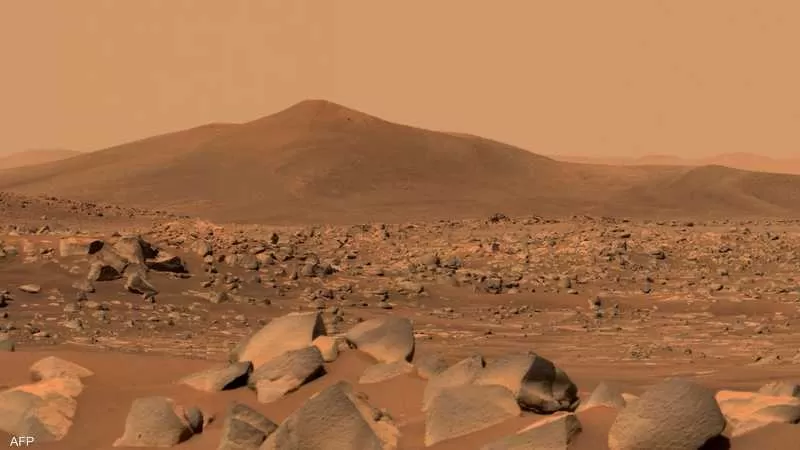
Mars: Why is it considered uninhabitable?
Arabian Sea - Exclusive
NASA has reached a new scientific discovery that may explain why no past life has been found on Mars, despite evidence indicating the existence of rivers and lakes in the past. According to the study, the Red Planet was likely doomed to remain a desert most of the time due to its lack of a key climate mechanism. It is believed that Mars currently contains all the elements necessary to support life, except for one essential element: liquid water. Despite the clear traces of dry valleys and rivers, the new findings suggest that the presence of liquid water was very temporary, as the climate was not stable long enough to allow life to evolve. Carbonate Rocks NASA's Curiosity rover recently detected rocks rich in carbonates, which are minerals that absorb carbon dioxide from the atmosphere and store it in rocks, just as it happens on Earth. The new study, led by planetary scientist Edwin Kite of the University of Chicago, showed that the presence of these rocks indicates a weak climate cycle on Mars compared to Earth. While Earth's volcanoes help pump carbon dioxide back into the atmosphere, Mars does not have this balance, leading to long-term cooling. Unstable Climate Kite explained that periods of warmth and the presence of water on the surface of Mars were rare and short-lived, followed by periods of drought lasting hundreds of millions of years, making the emergence of life in such conditions almost impossible. However, scientists do not rule out the existence of pockets of water beneath the planet's surface that have not yet been discovered. Scientists hope to obtain definitive answers by bringing rock samples from Mars to Earth in upcoming missions led by NASA and China over the next decade.