


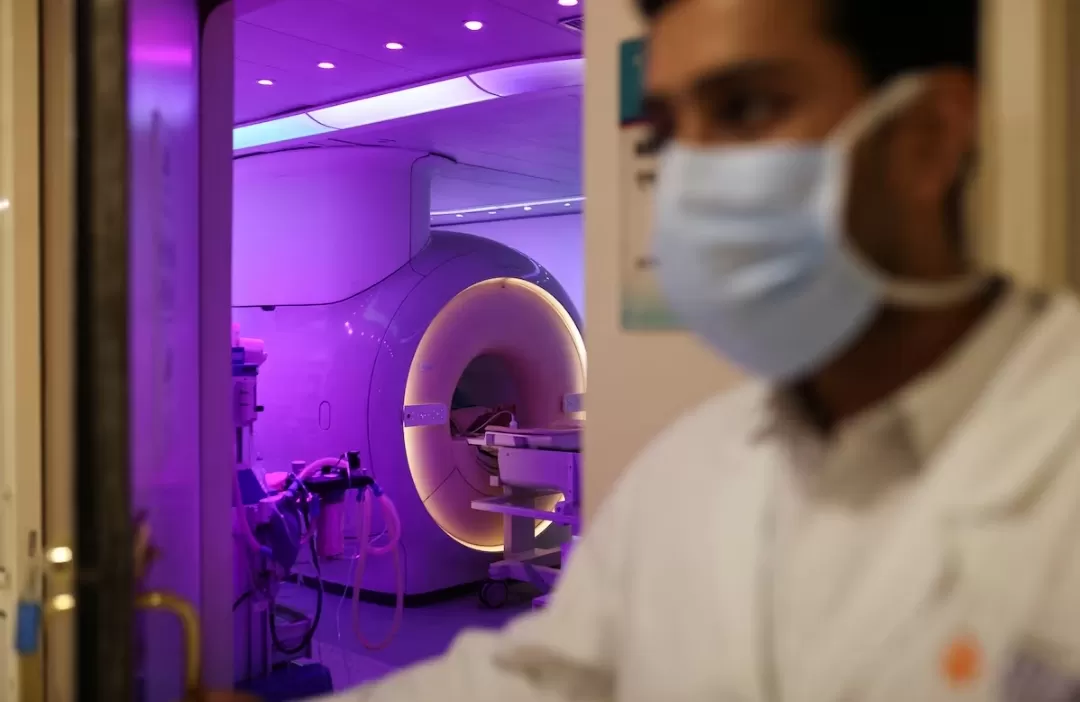
Study reveals MRI clarifies heart problems not detected by routine examinations.
Arabian Sea Newspaper - Special
Arab Sea_Reports: A new study has concluded that a new MRI testing protocol can identify patients with heart-related chest pain even though their major coronary arteries appear normal on routine tests. During a routine coronary angiography test, patients lie on a table while doctors begin injecting dye into the arteries that carry blood to the heart, a procedure to identify areas in the larger vessels where dye flow is weak or non-existent. "People may experience angina even when the arteries appear normally open," said Dr. Colin Berry, the study leader from the University of Glasgow, in a statement. He added, "When the result of angiography is negative, doctors should consider performing MRI scans to monitor blood flow while patients exercise, especially women, because they are more likely to develop angina in small vessels, which is often not detected." He went on to say, "By measuring blood flow from the cardiac MRI test, we discovered the prevalence of small blood vessel problems." During the study, 250 adults with chest pain, but whose routine tests did not show any blockage in the coronary arteries, underwent cardiac MRI tests, according to Berry's medical team at the American Heart Association's scientific meeting that recently concluded in New Orleans. Doctors and patients were informed of the results of the stress cardiac MRI test to help guide diagnosis and treatment. In the other group, treatment decisions were based only on the results of angiography using routine methods, and the result of the stress MRI was not revealed. After doctors reviewed the stress cardiac MRI images, about half of the study participants were diagnosed with angina, compared to less than one in 100 who underwent routine tests.