


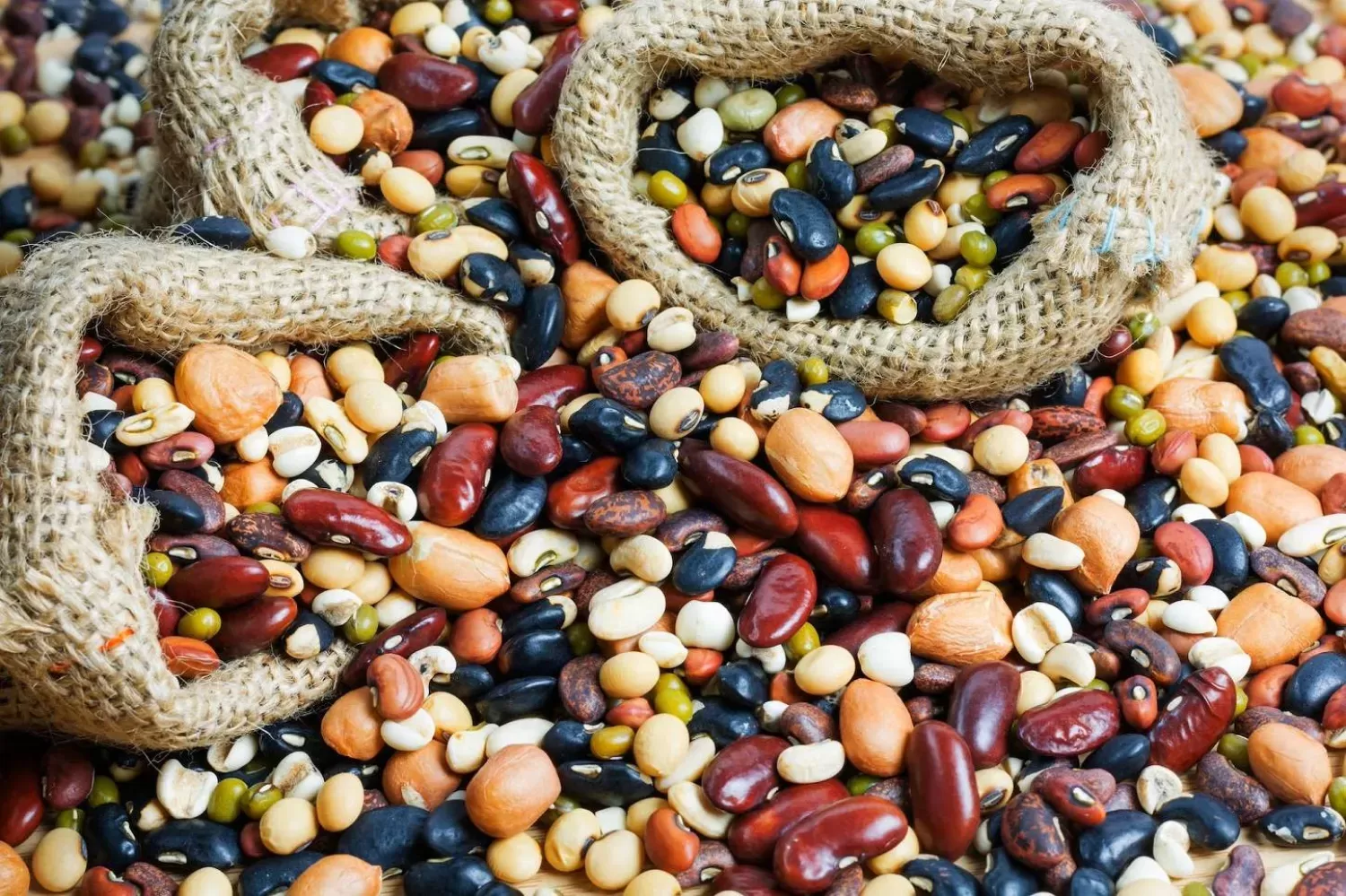
Study reveals the effectiveness of legumes in improving men's health and weight.
Arabian Sea Newspaper - Special
**Arab Sea - Follow-ups:** A Finnish study revealed that reducing the consumption of red and processed meats, and partially relying on foods made from legumes such as peas and beans, can achieve significant health benefits for men. Researchers from the University of Helsinki explained in the study, published Friday in the European Journal of Nutrition, that eating legumes contributes to lowering total cholesterol and "bad" (LDL) cholesterol levels, and also helps in weight loss for men. Men usually consume larger quantities of red and processed meats than health recommendations, and at a higher rate than women. Thanks to their high nutritional value, legumes are a suitable option to replace meat, taking into account that they do not naturally contain vitamin B12 found in animal products. Hence, the study came to verify the impact of partially relying on legumes instead of meat on men's health and micronutrient levels in the blood. The study involved 102 working-age men, who were divided into two groups. Over 6 weeks, the first group consumed 760 grams of red and processed meat weekly, equivalent to a quarter of the total protein in their diet. The second group obtained 20 percent of their total protein from foods made from peas and beans, in addition to only 200 grams of meat per week, which represents 5 percent of the total protein, the maximum recommended in a healthy diet. Participants continued to eat their usual meals, except for the meat and legumes provided by the researchers. The results showed that men who ate more legume-based foods along with a small amount of meat lost about one kilogram of weight, while the meat group lost only about 300 grams. Total and "bad" cholesterol levels also decreased in the first group, indicating that increasing legume consumption in exchange for reducing meat helps lower the risk of heart disease and diabetes, in addition to supporting weight management. In terms of nutrients, reducing meat consumption led to a decrease in vitamin B12 levels in the legume group, but it remained within safe limits by the end of the study. Their dietary iron rate also increased, while no differences in iodine levels were recorded between the two groups. The lead researcher of the study, Dr. Anne-Maria Pajari, said that the positive change in cholesterol levels was expected as a result of improving the quality of fats consumed, but the surprising thing was the noticeable weight loss, despite the participants not being encouraged to follow a diet. She added via the university's website that reducing meat consumption did not expose the participants to any short-term risk regarding essential nutrients. She continued: "I think that making moderate dietary changes towards a more sustainable direction, relying on peas, beans, and lentils, is possible for most people, especially with the ease of preparing them and the availability of recipes that encourage eating them."