

Human Rights in Europe
The Dutch Crack: A Jolt to the European Structure Regarding Israel and Gaza
Arab Sea Newspaper - Special
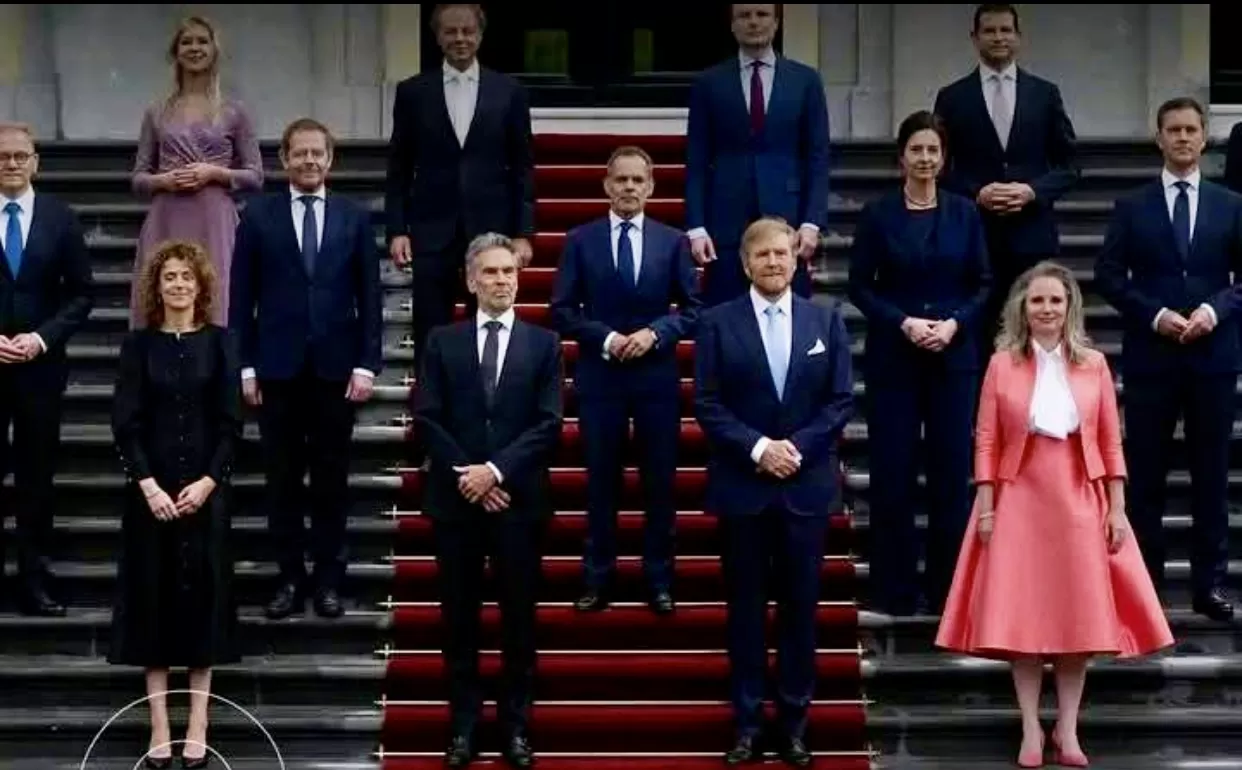
The Dutch Rift: A Jolt to the European Structure Regarding Israel and Gaza The Hague - Arabian Sea Strategic Analysis First: The Immediate Scene On the evening of Friday, August 22, 2025, a rare political storm shook the Dutch capital, The Hague: Foreign Minister Kasper Veldkamp announced his resignation after his efforts to impose a new package of sanctions on Israel failed. Within hours, he was followed by an entire bloc from his NSC (New Social Contract) party: five ministers, including the Deputy Prime Minister, and four state ministers, bringing the total to nine departures at once. In parallel, the Dutch Parliament refused to recognize the State of Palestine and rejected proposals for further pressure on Tel Aviv. This contradiction—resignations from the government versus parliamentary rejection—revealed an unprecedented strategic rift within Western Europe. Second: The Strategic Dimensions of the Dutch Decision 1) Undermining the Image of "European Cohesion" The European Union has built a reputation for itself as a "normative power" that markets the values of human rights. But resignations on the scale of an entire government team in protest against the absence of sanctions against Israel mean that this discourse is no longer just an external debate; rather, it has become an internal dividing line that threatens the stability of governments. * The Dutch example will be read in Madrid, Oslo, and Dublin as a legitimate precedent for adopting more stringent positions. * Israel, in contrast, will use the Dutch parliamentary division (refusal to recognize Palestine) to prove that "European democracies are still unable to take a unified position." 2) Activating the Judicial and Popular Track The Netherlands is not just a European country; it is the seat of the International Court of Justice and the International Criminal Court. Any political development in it will multiply the legal pressures on Israel. Court decisions (as in Belgium to stop the passage of weapons) are not isolated incidents; rather, they are indicators of a European judicial environment that is gradually tightening, driven by public anger and the accumulation of images of famine in Gaza. 3) The Ethical-Political Dimension The official declaration of famine in Gaza made any European official who refuses sanctions in a morally vulnerable defensive position. The Dutch ministers realized that history would not forgive silence, and that the cost of remaining in a hesitant government was more politically dangerous than the cost of leaving. This ethical shift may turn into a political contagion that imposes itself on other parliaments. Third: Potential Repercussions on the Course of the War in Gaza 1) The Logistic-Military Track * If the Dutch precedent expands, Israel will face more "silent strangulation" in the maintenance of aircraft or the supply of precision ammunition through European ports. * This is not a quick blow, but a "slow erosion" in operational capability, adding a layer of indirect pressure on the Israeli army. 2) The Diplomatic Track * Madrid is leading a front calling for the suspension of the European-Israeli partnership agreement, which is a much heavier economic weapon than sectoral sanctions. * If positions like those of the Netherlands and Belgium accumulate, the "sanctions climate" may become a fait accompli, even if the Union remains unable to take a unified decision. 3) The Political Track of the Palestinian Issue * Recognition of the State of Palestine will remain suspended in many parliaments, but popular and judicial pressure makes "normalizing relations with Tel Aviv" more difficult day by day. * The Dutch resignations may contribute to creating a new wave: Parliaments besieging their governments with sharp ethical choices, paving the way for a wider rift in the structure of European support for Israel. Fourth: Little-Mentioned Secrets 1. The connection of geography to interests: The port of Rotterdam is the largest seaport in Europe. Any indication of restricting the movement of weapons or goods related to Israel in it means a change in the logistical rules of the game for the war. 2. Calculations of the Atlantic balance: Washington does not want to see European "governmental uprisings" opening up files on the legitimacy of military support for Israel. American pressure may increase behind the scenes to readjust the course. 3. Israel's counter-strategy: Tel Aviv is likely to work to "stabilize silent partners" (Germany, the Czech Republic, Hungary) to undermine any European dynamic towards consensus. Fifth: Expected Strategic Outcomes * Short term (weeks): Monitoring European courts, pressure on ports, and subsidiary parliamentary decisions. * Medium term (months): Escalation of the campaign to demand the suspension of the European-Israeli partnership agreement, and linking any economic cooperation to humanitarian conditions in Gaza. * Long term (year+): Gradual disintegration of the image of "Israel as a natural ally" within Western Europe, and replacing it with the image of "Israel as a moral and political burden." Strategic Conclusion What happened in the Netherlands is not just a passing internal crisis, but a strategic earthquake striking the heart of the European Union, where the Gaza file is turning from an external issue into an internal factor of disintegration in governments. If the scenario is repeated in another European capital, the war in Gaza will enter a new phase: A phase of redefining the cost of continuing for Israel, not only militarily but politically, economically, and diplomatically.