

Hans Grundberg's Visit to Riyadh and Abu Dhabi: Between Rescue Diplomacy and a Strategy to Consolidate Influence, a Strategic Analysis
Arabian Sea Newspaper - Special
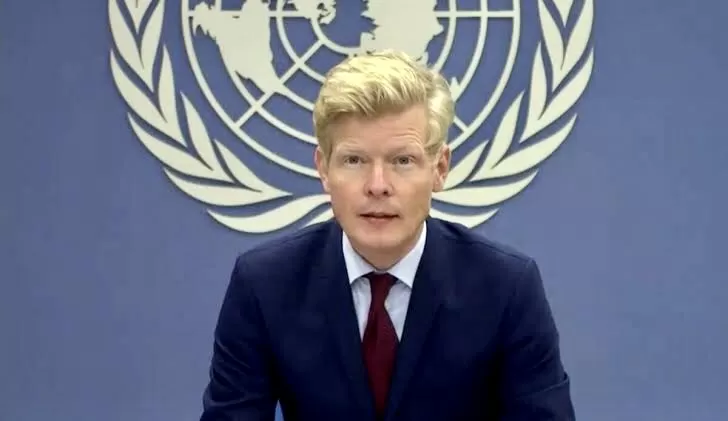
Hans Grundberg's Visit to Riyadh and Abu Dhabi: Between Rescue Diplomacy and a Strategy to Consolidate Influence, a Strategic Analysis At a time when ambiguity prevails over the Yemeni scene, the UN envoy Hans Grundberg's tour to Riyadh and Abu Dhabi came as a delicate attempt to recycle the political track before it is swallowed up by regional variables and the changing priorities of influential capitals. The visit, despite its protocol calm, carries within it a difficult UN bet on the possibility of re-launching a "postponed peace" for two years, between parties that deal with time as a negotiating weapon, not as a rescue opportunity. First: The Logic of Timing and the Significance of the Movement Grundberg chose his moment carefully. The regional scene is experiencing a strategic repositioning following developments in the Red Sea and tensions in the shipping lanes, in addition to the major powers being preoccupied with the Ukraine and Gaza files. Amid this turmoil, the United Nations realized that the Yemeni file might slip from its grasp in favor of bilateral regional understandings — Saudi-Omani or Iranian-Saudi — that do not pass through its diplomatic gateway. Hence, the tour came as an "attempt to regain the initiative" before the envoy turns into a mere witness to settlements cooked up outside his office. Second: Saudi Arabia... Between the Desire for a Safe Exit and Caution Against a Fragile Peace Riyadh today is not Riyadh in 2015. After eight years of attrition, its priorities have changed from "decisiveness" to "fortification" — that is, exiting peacefully in a way that preserves its gains and prevents the collapse of the Yemeni state. Therefore, Saudi Arabia supports Grundberg from behind the scenes, but stipulates that any agreement be comprehensive and binding, not a temporary truce that revives the war in a new guise. What worries Riyadh is not peace in itself, but an unsecured peace that may consolidate the Houthis' authority in the north and leave the south in a dangerous political and economic vacuum. Third: The Emirates... The Sea First The Emirates, for its part, deals with the crisis from a different perspective: It believes that its security begins in the Red Sea and ends at the Bab al-Mandab Strait. Therefore, it focuses on neutralizing maritime threats and ensuring control over vital ports more than engaging in the details of the internal political settlement. Its meeting with Grundberg was not a diplomatic courtesy as much as it was a soft warning message: Any peace agreement must take into account the "new maritime equation" that now determines the stability of the region more than the lines of land fronts. Fourth: Ansar Allah's Position... The Equation of Power and Economy The Houthis realize that they are in a relatively strong field position, but they are in a suffocating economic and humanitarian predicament. Therefore, they link any political concession to tangible economic guarantees: paying employee salaries, opening ports, and expanding flights from Sanaa airport. In return, they use the card of detained UN employees as a sensitive negotiating pressure card, despite widespread condemnation of this. It is a policy of the high edge: approaching escalation without falling into it, to keep the cards in their hands until the last moment. Fifth: The Secrets of the Tour — Unannounced Messages According to reliable diplomatic leaks, Grundberg carried in his bag an updated Omani proposal that includes: 1. A comprehensive ceasefire under UN supervision. 2. Establishing a joint economic committee to distribute port revenues and taxes. 3. A mutual commitment not to target oil installations or commercial ships. 4. A timetable for the release of prisoners and UN employees. But the biggest obstacle is not in the texts, but in the lack of trust between the countries that manage the conflict inside Yemen and not between the warring parties by proxy. Sixth: The Balance of Probabilities Scenario Strategic Assessment Estimate Preliminary agreement during the first half of 2026 Partial economic and security deal 55% Continued political stalemate without major escalation Maintaining the status quo with regional support 30% Collapse of the truce and return of confrontations in the event of failed Muscat negotiations or new maritime attacks 15% Seventh: Concluding Reading Grundberg's visit is not just a diplomatic tour, but a last-ditch attempt to save a UN track threatened with atrophy. He realizes that Yemen is no longer a local crisis, but a strategic knot in the heart of the Red Sea and Gulf balances. His success does not depend only on his negotiating skills, but on the ability of the major capitals to transform their interests from collision to convergence. In the end, peace in Yemen will not be made in Sanaa alone, but at the intersection of wills between Riyadh, Abu Dhabi, Muscat, Tehran, and Washington. Conclusion: The most dangerous thing in Yemen today is not the continuation of the war, but getting used to the absence of peace. The UN envoy's recent tour is a reminder to the world that time, in politics as in war, does not wait for the hesitant.