

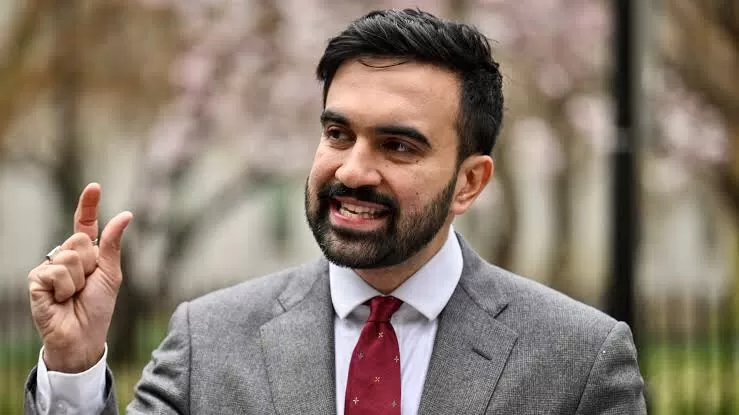
Zahran Mamdani
Zahran Mamdani: An Analytical—Strategic Informational Reading of a Game-Changing Victory
Arab Sea Newspaper - Special
Zahran Mamdani: An Analytical—Informational Strategic Reading of a Game-Changing Victory Introduction On an election night that reshaped the political influence map in the United States, Zahran Mamdani presented himself not as a fleeting candidate, but as a systematic choice for a city under the pressure of social and economic costs. His historic victory—to be the first Muslim and Greek of South Asian descent to hold the position of Mayor of New York—represents not just a symbolic shift, but an opening to a stage that requires precise implementation strategies, balancing financial pressures and social hopes. 1. Programmatic Differentiation: From Promises to Policy Tools Mamdani's electoral framework focuses on five clear axes: rent freeze and affordable housing construction, free public transportation (free buses), raising the minimum wage, progressive taxes to finance services, and social welfare programs such as childcare. These packages are not random; they are an attempt to formulate an integrated solution to raise the cost of living in a resource-rich and expensive city. Analysis of Tools: • Rent freeze provides immediate relief to those affected, but it weakens the market signal for landlords' profits and risks reducing long-term investment in maintenance. • Free buses reduce the daily burden on families and stimulate public transportation, but their implementation requires sustainable and dynamic funding alternatives to deal with increased demand. 2. Structure of the Political Alliance and Electoral Strategy Mamdani's success did not come from a vacuum: it was the product of an accumulated youth mobilization, building its support bases in multiple neighborhoods, and investing in digital messaging and popular funding. This mobilization constitutes valuable energy for the implementation phase, but it also puts time pressure—young voters expect quick results. Mamdani also won thanks to alliances with progressive lists and prominent figures within the Democratic Party, which gave him legitimacy and partial immunity from his traditional opponents. 3. Logic of Funding: The Dilemma of Sustainability Between Ambition and Realism Ambitious policies require renewable resources: either increasing revenues (taxes on the rich and corporations), reallocating budgets, or a mix of federal and local interventions. The danger here is twofold: the first is economic—higher taxes may weaken business activity or push it into adaptations that reduce jobs; the second is political—opposition from powerful interests can hinder legislation or investment. Therefore, the new administration needs a phased financial plan: temporary budgets, social investment funds, and public-private partnerships with robust governance and transparency mechanisms. 4. Proposed Executive Priorities: An 18-Month Roadmap To reduce the risk of early failure, we propose a phased implementation roadmap that is focused and measured by results: 1. Two Months—Announcing a Temporary Housing Rescue Package: A specific freeze on rents for the most affected segments with temporary exceptions to maintain maintenance and emergency repair. Establishing a compensation mechanism for affected small homeowners. 2. 6 Months—Launching the Free Bus Program Experimentally: Limiting experimental lines to neighborhoods with a specific density, measuring the change in demand, and collecting real cost data before expanding. 3. 12 Months—Collaborative Housing Plan: Accelerating the licensing of affordable housing construction by simplifying procedures and incentives for developers contracting on affordable housing quotas. 4. 18 Months—Progressive Tax Package with Small Business Protection: Imposing progressive taxes on large profits and liquidating parts of the city's assets that do not affect basic services to fund social programs. This map is based on two principles: experimentation (pilot → measurement → expansion) and flexibility (financial and legislative flexibility). 5. Political and Social Risks That Must Be Managed Professionally • Resistance from landlords and the real estate sector: Requires open communication and compensatory incentives, otherwise policies will face judicial challenges or executive disruptions. • Public patience: Winning with promises does not equal activating results; therefore, transparent monthly communication with performance indicators (KPI) will maintain voter confidence. • Political exploitation by the opposition: Mamdani's opponents will exert media and legal pressure; therefore, legal and political teams must be ready for tactical and thoughtful responses. 6. The Geopolitical and Symbolic Lesson: The City as a Global Platform Mamdani's victory sends an international message about the diversity of the economic and cultural capital; but it also makes New York a laboratory for progressive policies that may be measured globally. Therefore, his administration must invest in this dimension: partnerships with global cities with successful housing and transportation policies, and attracting investment forums that balance local messages and international opportunities. 7. Short and Constructive Strategic Recommendations 1. Measure Results Transparently: Publish quarterly reports on the impact of rent freezes, the costs of free transportation, and the number of housing units added. 2. Build an Executive and Political Coalition: Involve representatives from small landlords, labor unions, and representatives of the tech space to develop practical and implementable solutions. 3. Smart Communication Programs: Awareness campaigns that show the short- and medium-term benefits of policies for society as a whole, not just election promises. 4. Rely on Experimentation and Data: Do not expand nationally before proving the model on a limited local scale. Symbolic-Strategic Conclusion Zahran Mamdani does not inherit just a city, but a large workshop of economic and social accumulations. A victory of this magnitude opens a rare opportunity—but it does not guarantee success. The path to making New York a new model of economic justice requires the art of political management as much as it requires the rigor of economic policies. If he succeeds, his name will be recorded in the books of urban renewal; and if he fails, the lessons will be for his opponents and analytical commentators alike. The important thing is that joy and symbolism turn into measurable indicators, codified plans, and tactical alliances that move the city from a slogan to a tangible reality.