

Developments in the Israeli aggression on Gaza
From Doha to International Outrage: How the Israeli Strike Upended the Peace Equation
Arabian Sea Newspaper - Special
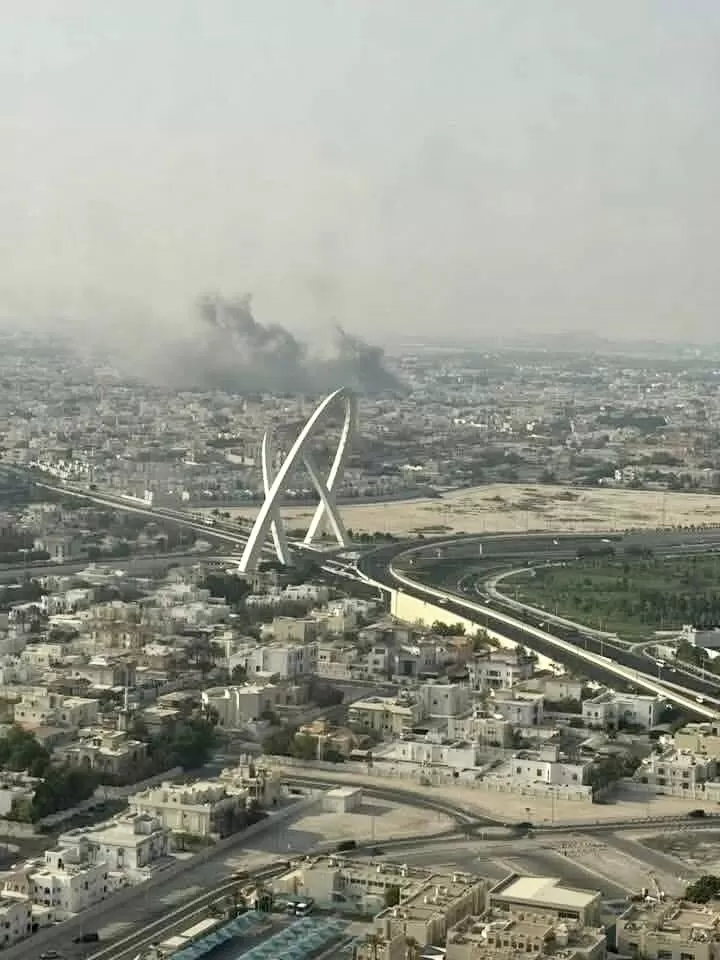
From Doha to International Outrage: How the Israeli Strike Upended the Peace Equation Strategic Analysis - Arabian Sea Current Situation In a precedent that almost redefines the rules of engagement in the region, Israel carried out a precise air strike inside the heart of Doha, targeting a high-level delegation from the Hamas leadership while it was engaged in indirect negotiations on a ceasefire in Gaza. Although the top leadership survived the direct targeting, the operation killed five of the movement's cadres, including the son of Khalil al-Hayya, one of the most prominent architects of the negotiations. This development was not merely a technical military action, but a diplomatic and political earthquake that shook the foundations of the regional mediation equation; the conflict moved from the borders of Gaza and its surroundings to a new theater: a capital known for its role as a platform for mediations and balances, suddenly turning into an open confrontation arena, thus opening a new page in a battle that transcends geography to a global strategic dimension that affects the roles of mediators and the concept of regional security itself. Objectives in the Balance of Strategy * Israel: Its military objective was not limited to assassinating individuals, but to redefining the rules of the game. The strike is a deterrent message that says: no one is immune, even in the heart of Doha. Israel also seeks to impose a new equation that undermines the sanctity of negotiations as a safe haven, and places the mediators — Qatar and Egypt — before a double responsibility in curbing Hamas and subjecting it to the conditions of de-escalation. * Hamas: For its part, the movement realizes that the attack — despite its cost — can turn into internal mobilization fuel. It raises the slogan "The blood of leaders is the price of resistance," and employs the losses to enhance the legitimacy of the confrontation, while being keen to continue on the path of negotiations to show political steadfastness and non-defeat in the face of Israeli pressure. * Qatar: The mediating state finds itself facing an existential challenge to its diplomatic role. It is forced to defend its sovereignty and prestige, and at the same time prevent the collapse of its image as a bridge of balance between the West and the resistance. Any failure here means a decline in its status as one of the few remaining pillars of Arab mediation. * United States: Washington is playing a game of walking on the edge: unlimited support for Israel on the one hand, while trying to control its momentum on the other. The deeper goal is to maintain the fragile political path it sponsors with Qatar and Egypt, and avoid its collapse, which could ignite the region and cause Washington to lose control of the pace of escalation. Behind the Scenes * Israeli Timing Calculations: The strike was not random, but came at a very sensitive political moment; the Gaza truce negotiations were entering a stage of testing intentions. Israel wanted to say that it has the ability to turn the tables even at the height of the negotiation process, to impose its own rhythm on the scene. * Late American Notification: Notifying Washington of the operation after it was too late opens two doors for interpretation: either Tel Aviv deliberately put the American administration before a fait accompli to extract forced acceptance, or there is a deep flaw in the security coordination channels between the two sides — which is a dangerous matter in a relationship built on what is supposed to be "absolute strategic harmony." * The Qatari Test: The strike put Qatar before a rare sovereignty test. The capital, which has built its reputation on neutrality and mediation, suddenly found itself the scene of a bloody conflict. Any leniency in the response or weakness in protecting its role will lead to the erosion of its image as a neutral mediator, and perhaps open the door for the entry of other forces — such as Turkey — to share its mediation space. * Hamas Between Symbolism and Organization: On the structural level, the movement did not suffer a direct leadership collapse; the top leadership survived. But on the symbolic level, it received a severe blow: the breaking of the illusion of a "safe place." Doha is no longer an impregnable fortress, which will force it to rethink the nature of its movements and diplomatic options. What happened in Doha was not just a military attack, but a deliberate operation that revealed the fragility of the balances between allies, and put Qatar, Hamas, and Washington before tests that go beyond the limits of closed rooms to affect their image and strategic position in the regional system. Outcomes 1. Re-engineering Mediation: The strike in Doha will force Qatar to demand international security and diplomatic guarantees to ensure that its territory is not violated again. This may open the way for Turkey to strengthen its presence as a balancing mediator, or even for the entry of European powers looking for a foothold in the peace equation. 2. Diplomatic Escalation Against Israel: International condemnations are likely to turn into broader political isolation campaigns, especially after Turkey described the attack as "state terrorism." Israel may find itself facing unprecedented pressure in international institutions, even from traditional partners who have begun to grumble about its tactics. 3. The Hamas Dilemma: The movement is facing a sharp strategic choice: * Continuing negotiations to confirm its political sobriety, * Or withdrawing to strengthen the narrative of "resistance without conditions." Whatever the decision, Hamas will pay a heavy price, whether in terms of political confidence or popular legitimacy. 4. A Test for the Trump Administration: The White House is facing increasing internal pressure from Congress and the media, accusing it of "mismanaging coordination" with Israel. This may force the administration to reconsider the mechanisms of strategic control of the relationship with Tel Aviv, and perhaps to impose clearer red lines. 5. The Specter of Regional Escalation: If Iran or its proxies (the Houthis, Hezbollah) decide to respond with simultaneous operations, the region may slide into a wider circle of multi-front conflict. Then the Doha strike will turn from an exceptional incident into a spark to reshape the maps of war in the Middle East. The tragedy that occurred in Doha is not the end of an event, but the beginning of major transformations. It is a watershed moment that redefines mediation, tests the limits of deterrence, and reveals the fragility of alliances. In all cases: Israel broke an unwritten rule: "Mediating capitals are safe," and targeted the heart of Doha. * Qatar is in a very critical position: it cannot remain silent to preserve sovereignty, nor escalate for fear of losing its role. * Arab public opinion is inflamed, seeing that the strike was not only on Gaza, but on the "Arab home" itself. * The Arab response will be weaker than the size of the event, and will likely remain within the framework of condemnation and diplomacy, with sporadic attempts to exploit the situation politically. Israel is betting on this weakness and realizes that the Arabs are divided, so it has put everyone before a new equation: "No sanctity for any capital, even if it is a mediating capital." * The entire region is now on the threshold of a stage whose title is: no safe haven, and no absolute guarantees. 📌 Strategic Conclusion Doha is no longer just a capital for mediation or a neutral negotiating platform; it has turned into a proxy conflict front, revealing that the war is no longer confined to the Gazan field or regional borders. Israel wanted to redefine the nature of the confrontation: it is no longer just about land and weapons, but extends to negotiation halls and mediation rooms. This strike carried a clear message: no red lines, even in the heart of safe capitals. As a result, the regional system is entering a new phase whose title is the breaking of traditional immunities, where military force intersects with diplomacy in one arena. What happened is not a passing event, but an indicator of the birth of a different regional equation, which will have consequences at the level of security, politics, and the balance of power.