

Developments in the Israeli aggression on Gaza.
Yemen Between Sanaa Funerals and Red Sea Missiles - Morning - Sanaa - News and Analysis - Arabian Sea
Arabian Sea Newspaper - Special
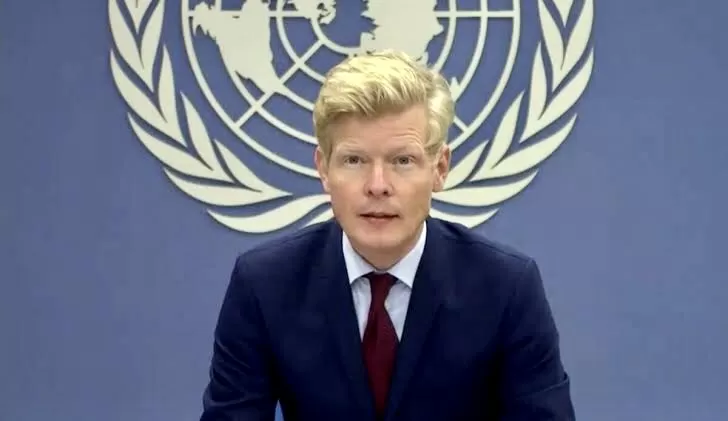
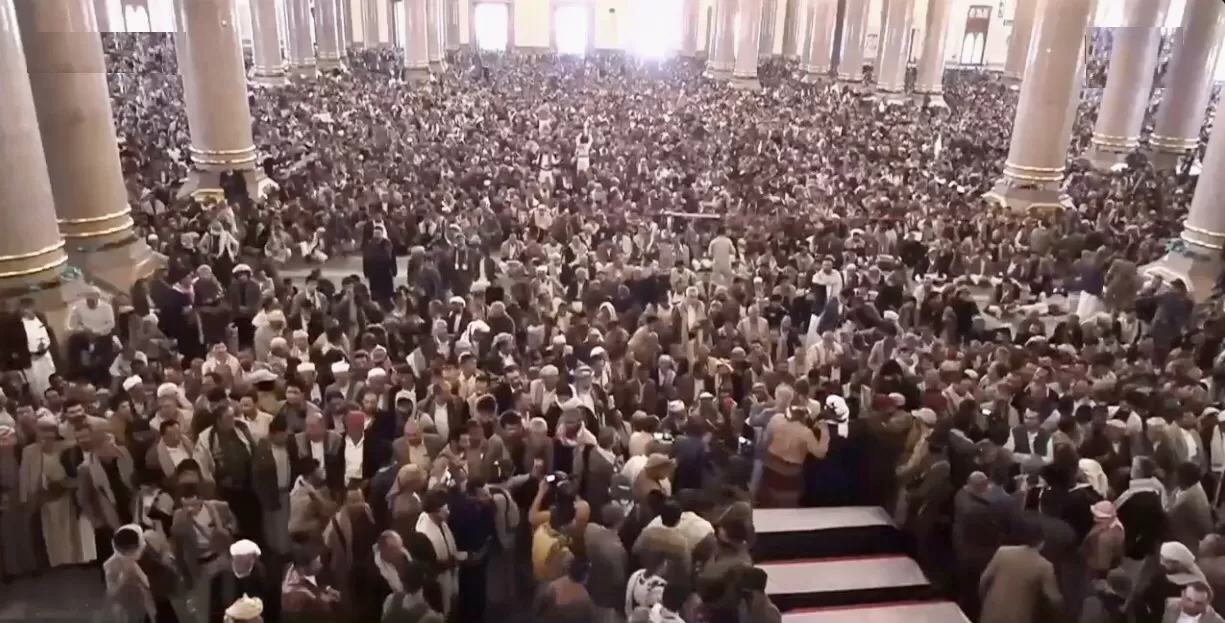
Yemen Between Sana'a Funerals and Red Sea Missiles Morning - Sana'a - News and Analysis - Arabian Sea Tuesday, September 2, 2025, was no ordinary day in Yemen; the political symbolism of funerals intertwined with missile messages in the Red Sea and the resounding raids on United Nations offices. Three major events, seemingly disparate, but integrated in their messages, outline a new phase of the Yemeni conflict within a regional environment saturated with tensions. First: The Houthi Funeral.. From Loss to Mobilization The mass funeral of Houthi leaders in Sana'a was a show of force par excellence, not only to bid farewell to the dead, but to turn the tragedy into a lever for internal mobilization. • Internally: The goal is to restore the revolutionary legitimacy of the group after the Israeli strike that killed the head of government and a number of its ministers. • Externally: The message to the adversaries is that "loss does not mean defeat," but rather doubling the motives for revenge. Through thousands of mourners and the field symbolism of Al-Sabeen Square, the group wanted to say that it is stronger after every blow. Second: Missiles in the Red Sea.. A Shift in the Battle The Houthi attack on the Israeli oil tanker Scarlet Ray, despite its direct failure, represents a qualitative leap in the strategy of maritime deterrence: • The aim is not only to hit the target, but to prove symbolic control over vital sea lanes. • These operations place the Houthis at the heart of the regional equation for maritime security, and directly link Yemen to the broader Middle East conflict. It is a double message: "We are part of the axis of confrontation, and we are not a secondary local party." Third: The United Nations Under Pressure The storming of the United Nations offices and the detention of its employees opens a new front for the group: • Using international institutions as a bargaining chip in any future negotiations. • Creating mutual pressure with Western capitals that see this as a challenge to the prestige of international legitimacy. But this path is fraught with risks, as it may lead to further isolation and the cessation of humanitarian support, which exacerbates the crisis on the ground. Fourth: The Missiles That Fell in Saudi Arabia In a remarkable development, ballistic missiles were launched from Sana'a towards Israel, but they fell inside Saudi territory. This event reveals three dimensions: • Military: Confirms the extension of the range of Houthi missile capabilities, albeit inaccurately. • Regional: Exposes Saudi Arabia to direct risks, even though it is not the declared target. • Strategic: Raises the level of tension, and creates the possibility of Riyadh being dragged into a new, undesirable confrontation. Comprehensive Strategic Reading The Impact Dimension Security-Military: The Houthis' transition from defense to regional offense (missiles, sea, air messages). Political-Media: Employing funerals and popular symbolism in re-producing the narrative of "resistance." Humanitarian-Diplomatic: Targeting the United Nations undermines the chances of a settlement and threatens to increase sanctions and isolation. Conclusion Yemen today is no longer a local or even a limited regional file, but has become a strategic knot in the Middle East equation. The Houthi group is redefining itself as a regional power through: • Mobilizational funerals. • Cross-border missiles. • Speculation in the Red Sea. • Confronting the international community through the United Nations. It is a multi-dimensional battle, which portends that the next stage will be more complex and internationalized, with dangerous possibilities for the region to slide more comprehensively towards a comprehensive escalation. . The Houthis are redefining themselves as a regional player that cannot be ignored, using blood, the sea, and negative diplomacy as integrated tools to reposition themselves. Yes, the next stage is likely to be more internationalized and complex, as the repercussions will extend beyond the borders of Yemen to the Red Sea, the Arabian Peninsula, and perhaps the maps of international influence.