

Developments in the Iranian Nuclear File
Iran between the "European Trigger" and the Obsession of Withdrawing from the Nuclear Non-Proliferation Treaty
Arab Sea Newspaper - Special
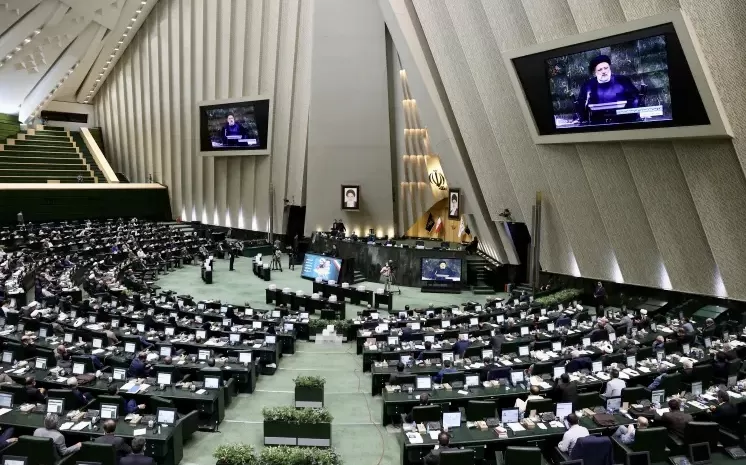
Iran between the "European Trigger" and the Obsession with Withdrawing from the Nuclear Non-Proliferation Treaty Arabian Sea - Strategic Analysis In a pivotal moment in the international conflict, the West has reactivated the "trigger" mechanism against Iran, which practically means reimposing comprehensive economic sanctions and renewing a suffocating siege on its vital resources, amid escalating military and political tensions in the Middle East. The Iranian Parliament responded quickly with a clear signal: studying the option of withdrawing from the Nuclear Non-Proliferation Treaty (NPT), a step that, if taken, would open the door to a new strategic phase, more complex and dangerous. The Deep Meaning of the European Decision Activating the "trigger" cannot be read in isolation from the scene of the war in Gaza and Western pressures to contain what it calls "Tehran's regional influence." But more importantly, the West, by restoring the weapon of maximum sanctions, risks pushing Iran to the option of "breaking the ceiling" and freeing itself from its nuclear obligations, which for decades have been a relative safety valve in the equation of stability. Iran Following in North Korea's Footsteps? History offers a precedent that cannot be ignored: when North Korea withdrew from the Non-Proliferation Treaty in 2003, no one expected it to quickly become an actual nuclear power, but it did, causing a strategic earthquake that changed the structure of security in East Asia. Today, if Iran withdraws, the repercussions will be deeper and more dangerous: • Geopolitical Location: Iran is not a marginal state, but is located in the heart of the Middle East, adjacent to the Gulf and Israel, where global energy arteries intersect. • Gaza War: Unlike North Korea, which moved in a relatively stable regional context, Iran is moving in the midst of a raging war, making its decision a direct pressure card on Washington and Tel Aviv. • Regional Axis Network: Iran is not alone, but leads a system of allied forces in Yemen, Iraq, Lebanon and Syria, which means that its decision will be reflected on multiple fronts at once. Possible Outcomes: Between Deterrence and Escalation 1. Deterrence Scenario: Iran's withdrawal may push major powers to open a comprehensive negotiation channel that reshapes the nuclear balance in the region, and perhaps impose a major settlement that includes the war in Gaza. 2. Escalation Scenario: In contrast, the withdrawal may trigger a Middle Eastern nuclear arms race, starting with Israel, which has an undeclared nuclear arsenal, and passing through Saudi Arabia, which may request an American nuclear umbrella or develop its own project. Strategic Conclusion Iran today stands at a historical crossroads: between remaining within a treaty that restricts its movement and keeps it hostage to sanctions, or withdrawing, which gives it a tremendous pressure card but may open the doors to an unprecedented confrontation. The decision will not be merely technical or legal, but an existential choice that will determine the shape of the Middle East for decades to come, and accurately draw the balance of power in a world being rearranged to the rhythm of wars and sieges.