
An Analytical Reading of Dr. Mahmoud al-Mashhadani's Speech: Confusion and Politicization of Sensitive Files
Arabian Sea - Exclusive
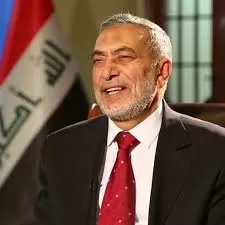
Naji Al-Gazzi / Writer and Political Researcher The statements of the Speaker of Parliament, Dr. Mahmoud Al-Mashhadani, in his recent interview with Dijlah TV do not reflect a constitutional position that is supposed to represent balance and legitimacy, but rather reveal a troubled discourse that adopts a logic of threat and skepticism, more than it reflects a concern for the state and its institutions. The man is proficient in the language of de-escalation, but he does not hesitate to use the language of threat. He speaks in the name of the state, but brandishes the card of the component; he calls for civil peace, while suggesting an imminent explosion at every turn. This article attempts to deconstruct Dr. Al-Mashhadani's discourse, not from the standpoint of personalization, but to understand the political structure it expresses; a structure that glorifies the state in public, fortifies itself with the component in secret, and opens the doors to emergency governments, while claiming commitment to democracy. *Defeatist Tone - and a Discourse Lacking Coherence* Talking about a "state of emergency," a "potential security collapse," and "imminent popular demonstrations" expresses a tendency to exaggerate security and political concerns in order to create a general sense of danger. This type of discourse is usually used to justify the disruption of democratic processes or the imposition of exceptional options outside the framework of national consensus. On the one hand, he describes Parliament as "miserable," and on the other hand, he warns against undermining the identity of the component he heads. He attacks political forces and seeks to flirt with others, and speaks of Iraqi identity with "sarcasm," which prompted deputies to demand his dismissal, at a time when the country needs statesmen, not crisis men. *Discourse of Chaos - and Politicization of the Prisoners' File* Linking his continuation in politics to the "release of the last innocent prisoner" is a clear transformation of a judicial file into a political issue conditioned on his remaining in office, which deprives him of neutrality and gives the impression of using justice as a tool for bargaining, not for fairness. Also, his statement "If we were in Nineveh in 2014, we would have become ISIS so that none of us would be slaughtered" contains a dangerous justification for the behavior of terrorist groups, instead of clearly identifying the criminal and the victim. His repeated warnings of a "security explosion," a "potential state of emergency," and portraying the political division as an imminent collapse, are tools of political pressure more than a professional diagnosis of the crisis. They are intended to stir up public opinion or pressure opponents through exaggeration and intimidation, especially when he says: "We do not want to hand the gun to our son so that he hits us," in a shocking analogy to the Popular Mobilization Forces (PMF). *The Popular Mobilization Forces and the Clear Duality* In the PMF file, Al-Mashhadani adopts a discourse that reflects a marked duality: he acknowledges the need to confine weapons to the state, but he rejects any "solution" for the PMF and is content with calling for its "rationalization." This hesitation reflects a dilemma in the security perception, where political forces focus on the balance of power within the state, not on building a professional security system. Talking about the PMF sometimes as an ideological force, and sometimes as a tool threatened with external dissolution, expresses political emotion more than a strategic vision for national security. *Khor Abdullah Agreement* Al-Mashhadani adopted a cautious political position on the issue of the Khor Abdullah agreement with Kuwait. While he adopts the popular and parliamentary position of rejection, he also speaks of international repercussions and regional and international pressures, especially from Kuwait, which has international pressure tools and lobbies. He seeks to extricate Parliament from the corner of accusation of treason or dereliction, through a strategy of: Formal parliamentary rejection, and referring the matter to the government and the Federal Court to bear responsibility. He is trying to save Parliament from the consequences of a decision it was not originally responsible for in the past, and at the same time, he does not want to lose relations with Kuwait or with the international community. *Movement within the Sunni Component* Dr. Al-Mashhadani reveals a new trend within the Sunni component to form what he called a "political umbrella" similar to the Shiite "Coordination Framework," to control the Sunni political decision and make it central rather than chaotic. He believes that the Sunni component needs internal organization to distance it from dependence on conflicting entities and make it capable of unified negotiation on state presidencies or sovereign files. Among the most provocative proposals in Al-Mashhadani's discourse is the idea of the Sunni component relinquishing the presidency of Parliament in favor of the presidency of the Republic, not from the standpoint of the classic division of influence between the components, but from a strategic perspective aimed at reshaping the "political identity of the Sunnis" within the Iraqi system. Al-Mashhadani does not view the position of President of the Republic as a traditional honorary position, but as a sovereign and symbolic platform that can expand its powers and transform it into an executive political actor with a role in controlling balances. This proposal carries in its essence a shift from the parliamentary oversight role to the sovereign executive action, and seeks to bring the Sunnis into the heart of national decision-making, not as a parliamentary objection force, but as a partner in signing fateful decisions, including the prisoners' file and the issues of executions, which are files directly related to the presidency of the Republic in terms of ratification or suspension of implementation. The discourse also does not hide a deep desire to re-engineer the executive authority itself, by distributing its roles between the Prime Minister and the President of the Republic, so that the executive singularity is broken, and the equation of governance is reformulated in a more balanced and representative manner, especially in the post-Sadrist movement and the confusion of Shiite alliances. In this sense, what Dr. Al-Mashhadani is proposing is not limited to rearranging positions, but alludes to a more comprehensive political project to redefine the function of the Sunni component within the Iraqi state, and integrate it into the heart of sovereign decision-making, beyond the share of seats to the presence of identity, role, and decision. *The Sadrist Movement... A Time Bomb* Al-Mashhadani expresses genuine concern about the absence of the Sadrist movement from the political process. He considers it an essential part of the internal balance, and its absence means a disruption of the Shiite equation, which the Sunnis and Kurds are watching from afar. The absence of the Sadrists - according to his analysis - will deprive the political system of its representative legitimacy, and will tempt neighboring countries and the international community to intervene or impose their perceptions. This is a superficial fallacy that the Sunni component has always wished for in order to strike the internal balance. *Relationship with the Kurdish Region* Al-Mashhadani clearly pointed to the escalating crisis of confidence between the center and the region, especially on the issue of salaries and the timing of their delivery. He believes that the government was able to provide a flexible legal solution without humiliating the Kurds or pushing them to think about withdrawing from the political process. He warns of the possibility of the Kurds leaving the game if the central mentality continues to deal with them in a narrow spirit. *Between Withdrawal and Staying* Despite his emphasis on not intending to run again for the presidency of Parliament, he leaves the door open to running for the presidency of the Republic, provided that the decision is unanimous from the "Sunni umbrella." He speaks in the language of the "political father," but he does not hide that he is still an active player, and knows when to return and when to withdraw. *The Capital Belt Under Threat of Neglect* Al-Mashhadani concludes with a local vision laden with illusion and skepticism, where he stresses that the Baghdad belt is undergoing dangerous demographic changes, some of which are the result of administrative errors and some of which are influenced by security or political entities, which threatens a social-security explosion if urgent treatment is not carried out. The symbolic message he wants to pass is that Baghdad is the heart, and if the belt explodes, Iraq explodes.