

Iranian Foreign Ministry speaks of "Washington lobby," war, and relationship with Saudi Arabia.
Arab Sea Newspaper - Special
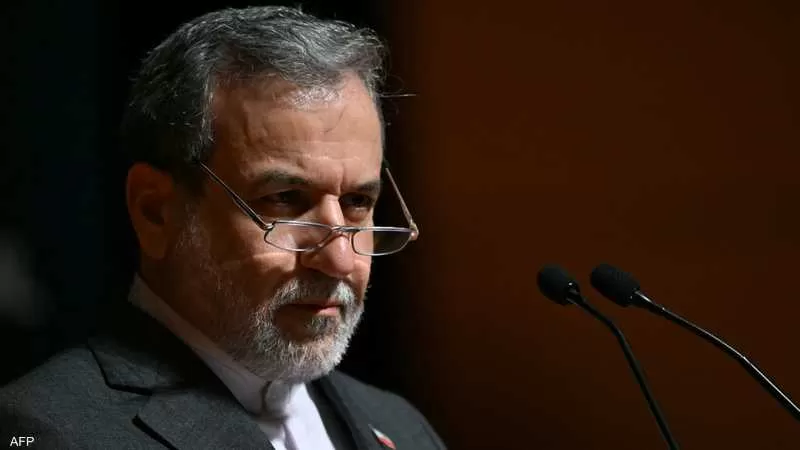
Arab Gulf - Follow-ups: Iranian Foreign Minister Abbas Araqchi addressed a number of regional and international issues on Wednesday, discussing developments in relations with Saudi Arabia, the reasons for avoiding war in the region, and diplomacy in the face of threats, especially in light of the pressures related to the Iranian nuclear file. Military Response Araqchi affirmed that his country's ability to deliver a decisive military response played a pivotal role in deterring enemies and preventing the outbreak of a comprehensive war in the past periods, stressing that this force, along with diplomatic action, was a crucial element in maintaining the country's security and stability. In an interview with the "IRNA" television channel, he said: "During the past year, we faced a war atmosphere. Perhaps before this twelve-day war, we were on the brink of war at least three times. In those times, diplomacy was active and played its role." He added: "When we assess the reasons for not starting the war, we cannot be satisfied with the diplomacy factor alone, but the ability of our armed forces to respond strongly and decisively was the main factor in deterring the enemy. It was this ability that ended the war, and it was what made the enemy despair of the military confrontation option." He considered that: "Iran's ability to defend itself and deliver a clear deterrence message was and still is the basic guarantee to prevent war, in addition to the role of diplomacy that moved effectively in critical times." "Washington Lobby" Araqchi affirmed that Iran presented several operational plans before the outbreak of the war during negotiations with the United States, with the aim of finding a solution regarding its nuclear program. He explained that the United States was from the beginning determined that Iran should not have the ability to manufacture nuclear weapons, pointing out that some in Washington indicated that this desire means applying a policy of "zero enrichment," that is, preventing Iran completely from enriching uranium. He added that Tehran was ready to discuss several plans that would reconcile the right to enrichment and not possessing nuclear weapons, and these plans were seriously studied during the negotiations. However, Araqchi affirmed that there is a strong lobby in Washington that pressed to prevent reaching any agreement other than the "zero enrichment" demand. He pointed out that this lobby is what pushed the American administration to be strict, which prevented reaching compromise solutions, despite the Iranian side's readiness for that. Relations with Saudi Arabia Regarding relations with Saudi Arabia, Araqchi affirmed that the relationship between Tehran and Riyadh has witnessed a remarkable development during the past few years, despite the challenges facing the region, pointing out that this improvement does not necessarily mean the disappearance of all differences between the two sides. Araqchi said in a press statement: "Our relations with Saudi Arabia have witnessed a remarkable development during the past few years, despite all the challenges that the region has witnessed, and we have a better understanding of each other. This does not mean at all that our differences have been resolved. The intensity of our differences has decreased in some issues, and resolved in others, and decreased in others, but there are still differences over various regional issues, and this is normal." He added: "The Kingdom of Saudi Arabia is a large country in the Islamic world, and it is a large regional country like Iran, and regional issues must be resolved in coordination between these two powers and the other powers in the region. There are differences of opinion, but there should be no hostility." Cooperation "Atomic Energy" Regarding cooperation with the International Atomic Energy Agency, Araqchi affirmed that his country cannot "completely end" its cooperation with the agency, after it suspended the inspections carried out by the UN agency. Araqchi affirmed that the return of the International Atomic Energy Agency inspectors to Iranian nuclear sites depends on a decision from the Supreme National Security Council. Western powers and Israel accuse Iran of seeking to obtain nuclear weapons, while Tehran denies this. Last month, Iran officially suspended its cooperation with the International Atomic Energy Agency, citing the agency's failure to condemn Israeli and American strikes on its nuclear sites in June during the 12-day war launched by Israel. Araqchi said: "We cannot end cooperation with the agency completely," explaining that replacing "fuel in the Bushehr nuclear power plant" must be done in the coming weeks and will require "the presence of inspectors" from the International Atomic Energy Agency. He affirmed that "the return of inspectors will be possible under a law issued by Parliament, by a decision of the Supreme National Security Council." On June 13, Israel launched a surprise attack on Iranian territory and carried out hundreds of strikes on military and nuclear sites, resulting in the death of scientists linked to the Iranian nuclear program, as well as senior military officials. Iran responded by launching missile and drone attacks on Israel. On June 24, the United States, which also carried out attacks on nuclear sites in Iran, announced a cessation of hostilities. The Israeli attack led to the suspension of indirect nuclear negotiations between Tehran and Washington, which began last April.