


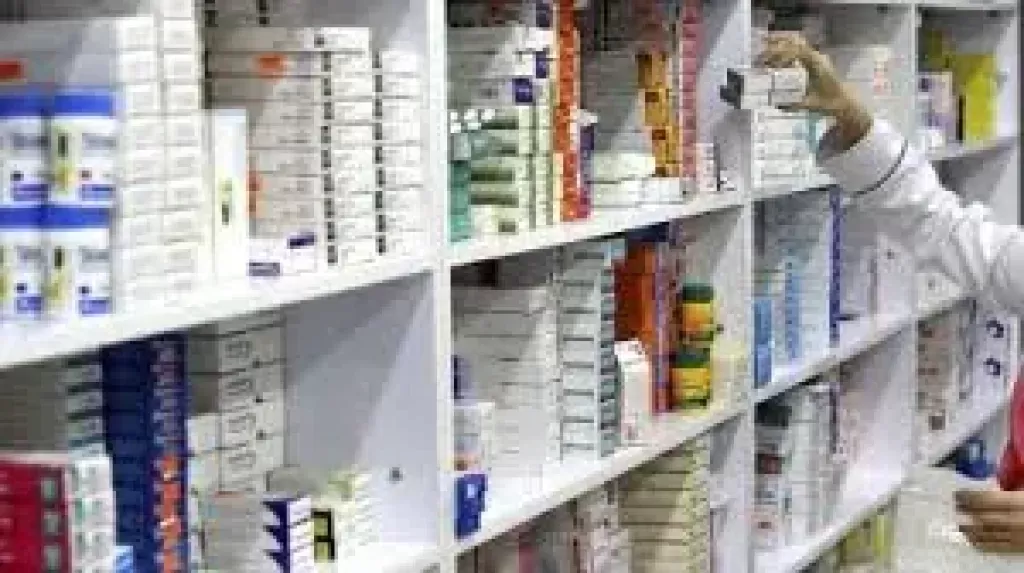
47,000 riyals for 3 dollars! A drug price scandal in Aden shocks patients.
Arab Sea Newspaper - Follow-ups
Arab Sea - The Yemeni Scene: In an incident that serves as a wake-up call for the health of millions, a Yemeni citizen revealed a shocking price difference for Isoptin 240 mg, a medication used to treat blood pressure disorders and angina. The price of a box (30 tablets) in Aden pharmacies reached 47,000 Yemeni rials, while it does not exceed 170 Egyptian pounds in the Arab Republic of Egypt – equivalent to about 3 US dollars, or less than 7,000 Yemeni rials at the prevailing rate. This difference, estimated at more than six times the original price, not only shocked the citizen but also ignited widespread anger among patients in the temporary capital, Aden, who are already suffering from a rapidly collapsing economy and a skyrocketing rise in the prices of essential medicines. A Journey of Exploration Reveals Potential Corruption It began when citizen "Yassin. A" (who requested anonymity) went to a pharmacy on Arwa Street in the Crater district, searching for Isoptin, a medication he had been using for years. But the surprise came when he was informed that the price of the box had become 47,000 rials, while he used to buy it for only 12,000 rials two years ago. Yassin says: "I was shocked. I couldn't believe that a common and essential medicine like this could reach such an insane price. I asked the pharmacist to check the price, so he checked his internal system and confirmed that the price was official and unified in all the pharmacies he deals with." Yassin did not stop there, so he decided to check the price in another country. He contacted a relative in Cairo and asked him to buy the box from a local pharmacy. The response was amazing: "The medicine is available everywhere, and its price is only 170 Egyptian pounds," which is equivalent to 2.7 US dollars. Using the dollar exchange rate (7,500 rials in the parallel market), its price in Egypt does not exceed 6,750 Yemeni rials – meaning a difference of more than 40,000 rials per box. Drug Prices in Aden: Is There Any Oversight? This case is not an exception, but rather reflects a widespread reality in the Yemeni drug market, where many medicines are witnessing unjustified increases in the absence of almost any oversight. Despite the Ministry of Health issuing periodic pricing lists, these lists are often ignored in the field and replaced by "market" prices set by traders and importers. Economists attribute this increase to several factors, including: Monopoly of some companies on importing medicines. Manipulation in the distribution chain that doubles the price several times before it reaches the pharmacy. Absence of customs control or collusion of some parties with suppliers. Exploitation of the economic crisis and the weakness of regulatory bodies. An unofficial statistic from the "Health for All" organization (2023) indicated that more than 60% of essential medicines in Aden are sold at prices exceeding the official price by more than 300%. Patients Pay the Price of Corruption Dr. Ahmed Nasser, a consultant cardiologist, confirms: "We are not talking about a luxury drug or a rare treatment, but about a common drug used daily by thousands of patients. The huge price difference between Aden and the exporting countries indicates that there is organized manipulation in the supply chain, whether through forging invoices, importing through unofficial channels, or monopolizing the market." He added that these increases force patients to stop taking the medicine or resort to lower quality alternatives, which endangers their lives. Demands for Urgent Intervention In light of the escalating public anger, civil society organizations and activists have called for an urgent investigation into the mechanism of importing and pricing medicines. They demanded that the Ministry of Health and regulatory authorities conduct a comprehensive review of the announced price lists, hold accountable pharmacies and companies that impose exorbitant prices, impose strict control over import outlets, and establish a transparent system for tracking medicines from the source to the pharmacy.