

Report: 85 children lost their lives... The humanitarian crisis in Yemen surpasses that in Gaza amid international neglect.
Arab Sea Newspaper - Follow-ups
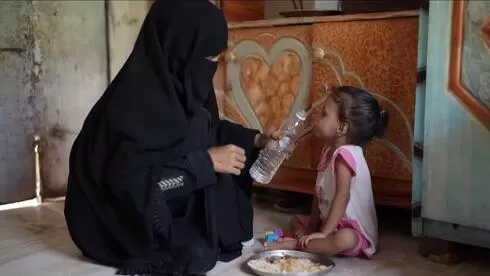
Arabian Sea - Yemen - Follow-ups: Yemen is facing one of the worst humanitarian crises in the world, with an estimated 85,000 children under the age of five having died from hunger and malnutrition since the outbreak of the civil war in 2014. Although the scale of the disaster far exceeds the hunger crisis in Gaza, the international community largely continues to turn a blind eye to it. A Yemeni source opposed to the Iranian-backed Houthi group told the Associated Press: "While Gaza is home to about two million people, the Houthis are imposing a siege on 20 million Yemenis. This hunger is not collateral damage, but a systematic tool for control and blackmail." Since the Houthis seized large swathes of Yemeni territory in 2014, after wresting it from the internationally recognized government, the country has been witnessing a devastating conflict involving a Saudi-led coalition. Despite a truce reached in April 2022, fighting resumed late last year after the Houthis engaged in hostilities against Israel, further exacerbating the humanitarian disaster. Between 2014 and 2018, Save the Children estimated that about 85,000 children died from severe malnutrition without receiving treatment. According to "Yemen Future". The source said: "Since then, obtaining reliable data has become extremely difficult, given the restrictions imposed by the Houthis on relief operations." UNICEF warned in its August 2024 report of a critical increase in malnutrition rates in areas under the control of the Yemeni government, especially on the west coast near Houthi-controlled areas. According to the Integrated Food Security Phase Classification (IPC), cases of acute malnutrition among children under the age of five in those areas increased by 34% compared to 2023. The number of affected children is estimated at more than 600,000, including 120,000 suffering from severe acute malnutrition. About 223,000 pregnant and lactating women also recorded cases of acute malnutrition during the past year. Despite the widespread suffering in their areas of control, Houthi leaders rarely acknowledge the existence of a humanitarian crisis. In his recent speeches, the group's leader, Abdul Malik al-Houthi, condemned the international community's inaction in dealing with hunger in Gaza, but did not address the ongoing famine inside Yemen. Aid organizations accuse the Houthi group of deliberately obstructing the delivery of humanitarian aid and diverting supplies for its own activities. A Yemeni source said: "The Houthis are turning international aid into a source of funding for their war efforts, by stealing supplies and imposing taxes on imports. This has left millions vulnerable to hunger and disease." The Houthis also use hunger as a tool of punishment against tribes that show resistance to their authority, and force residents into forced recruitment, including child recruitment, exploiting the ongoing conflicts in Yemen and the war in Gaza. The same source said: "This is the biggest humanitarian tragedy of our time, fueled by political decisions aimed at destabilizing Yemen and turning it into a proxy for Iran. The international community should act immediately to prevent the use of food as a weapon of war." Humanitarian organizations are warning of a sharp decline in funding for relief efforts in Yemen. A coalition of 116 aid organizations recently reported that the 2025 Yemen Humanitarian Response Program has only less than 10% of the necessary funding, which significantly hinders the ability of organizations to deliver aid. Matters are further complicated by the Houthis' detention of a number of UN staff and aid workers, some of whom have died in detention. Doctors and hospital staff report that internal conflicts and corruption within Houthi-controlled institutions are hampering the provision of health care amid disease outbreaks. A Yemeni medical worker, requesting anonymity, said: "We are losing medical staff due to arbitrary dismissals, and they are being replaced by incompetent Houthi loyalists, and this will worsen the catastrophic health situation." The Norwegian Refugee Council estimates that about 15 million Yemenis lack adequate access to clean water, further exacerbating the humanitarian crisis. At the same time, Houthi officials have threatened to escalate naval attacks on ships linked to Israeli ports. Houthi spokesman Yahya Saree said: "We warn all companies dealing with Israeli ports to stop, otherwise their ships will be attacked anywhere we can reach." While millions of Yemenis face starvation, the spread of disease, and forced displacement, this crisis remains largely absent from international attention, overshadowed by other global conflicts, despite its catastrophic scale.