

Costly alternatives destroy the port of Hodeidah... reflected in the account of the South.
Arabian Sea Newspaper - Special
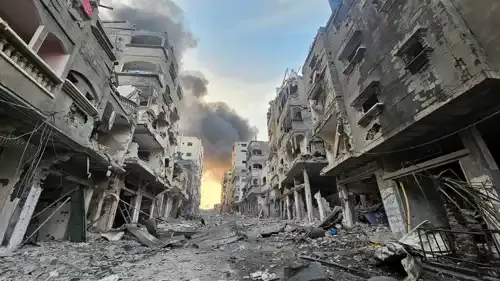
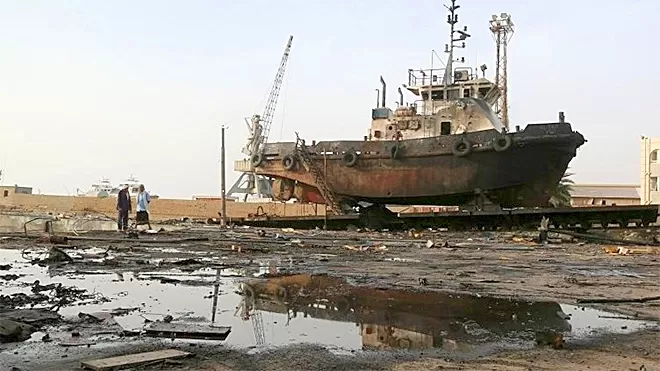
Al Hudaydah ((Arabian Sea)) Follow-ups: Targeting the port of Al Hudaydah has caused a major disruption in the flow of food supplies to the Houthi-controlled areas, according to Mohammed Saleh Al-Kassadi, Head of the Department of Financial and Banking Sciences at Hadhramaut University, in a statement to Anadolu Agency. He added that this disruption "led to the smuggling of goods from areas under the legitimate government, as well as the theft of gas to Houthi-controlled areas due to the cessation of Iranian supplies coming from the ports of Al-Salif and Al Hudaydah, which created a gas crisis in the liberated areas." He continued, "Most of the population has become dependent on solar energy as a primary source of electricity, after traditional energy sources became almost non-existent since the outbreak of the war." He added that this heavy reliance on alternative energy reflects the extent of the collapse in the energy infrastructure and highlights the fragility of the daily living conditions of the Yemeni citizen. Al-Kassadi said that "more than 70 percent of Yemenis are concentrated in Houthi-controlled areas, and "therefore, with the destruction of the infrastructure of the port of Al Hudaydah, the flow of goods is now done through costly primitive methods." He stressed that this "is reflected in the prices of finished goods in the markets, which depend on importing most of their needs." He pointed out that the main fuel tank at the port was bombed since the beginning of the year, and there is no strategic stock currently to cover the demand, and "reliance is being placed on private stations that have limited tanks, but they are only sufficient for a short period." He said that the latest Israeli bombing of the port of Al Hudaydah, on July 21, contributed to the rise in the price of a liter of fuel to about one dollar (compared to about 50 cents in the areas of the legitimate government), in the absence of alternatives. In total, Tel Aviv has launched 12 attacks on Yemen since October 7, 2023, while the Houthi group confirms that it will continue to attack Israel until it ends the war of genocide against the Palestinians in the Gaza Strip. Al-Kassadi warned that the complete closure of the port and airport, with the disruption of air traffic and aid, will lead to a further rise in prices. He added that this situation may push more Yemenis into the poverty line, especially with the shrinking labor market and the economic recession resulting from the destruction of infrastructure. The United Nations has previously warned that the humanitarian situation in Yemen is heading towards further deterioration. In January, the organization and its partners launched the 2025 Yemen Humanitarian Response Plan, where 19.5 million people need assistance, an increase of 1.3 million people compared to last year. Joyce Msuya, Deputy Head of the UN Office for the Coordination of Humanitarian Affairs (OCHA), said at the time that more than 17 million Yemenis are unable to meet their basic food needs. Msuya expressed concern about the most vulnerable groups, especially women, girls, and the 4.8 million displaced persons. Houthi Restrictions: According to political researcher Ali Al-Absi, the Houthi group imposes on traders in the areas it controls to import food supplies through this port exclusively, which enhances the centrality of Al Hudaydah in securing the country's needs. Al-Absi added to Anadolu that the food and oil stock is only sufficient for months. He stated that food or oil supplies are stored in unqualified places, such as open yards, and other areas unsuitable for storage. He continued: The crisis may be alleviated if the Houthis ease the restrictions imposed on traders by allowing them to import goods through the ports of the liberated areas, such as Aden (south) or Al-Mukha (southwest). He added: However, prices will rise in any case, due to multiple taxes and long land transport costs. Al-Absi pointed out that most citizens in Houthi-controlled areas do not receive regular salaries and depend on selling their property or remittances from expatriates. He added: This coincides with the rise in the prices of basic commodities in these areas compared to the areas of the legitimate government, which puts millions of people in an almost non-existent living situation. He pointed out that some cities suffer from power outages for consecutive days, and others rely on expensive private generators, while cities such as Taiz (southwest) lack water completely, which exacerbates the deterioration of the humanitarian situation. Al-Absi said that Sana'a airport, although it is not a major gateway for food supplies, "played an important role in bringing in medicines and medical aid." He concluded by stressing that "disrupting the airport means exacerbating the shortage in the health sector, at a time when there is a growing need for medical services."