

Report: Unprecedented financial distress pushes Houthis to use "threat card" against Riyadh.
Arab Sea Newspaper - Yemen Future - The Economist - Special Translation:
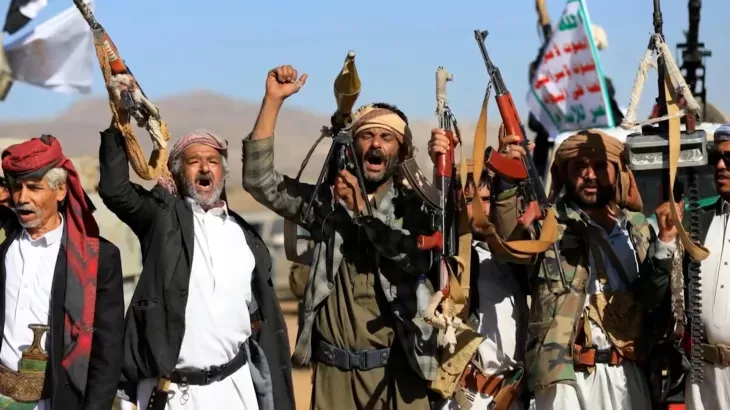
On November 3rd, lunchtime in the Saudi capital was interrupted by the wail of sirens. Officials said it was just a routine test (a similar exercise was conducted in 2021). But the sounds of alarms and phone alerts were also a reminder of the unresolved war on the kingdom's southern border. In 2014, the Houthis—an Iranian-backed militia that had waged a long insurgency against the Yemeni government—emerged from their stronghold in the north of the country and eventually managed to seize Sanaa, the capital, and most other major cities. The following year, Saudi Arabia formed an Arab coalition to repel the Houthis, but the operation quickly turned into a quagmire. More than a decade later, the Houthis still control most of western Yemen, where about three-quarters of the population lives. A UN-sponsored ceasefire between the kingdom and the Houthis has largely held for nearly four years, with the militia not launching attacks on Saudi cities since 2022. However, reaching a comprehensive agreement to end the war has remained elusive, largely due to Houthi intransigence; whenever Saudi Arabia makes a concession, the militia uses it to demand more. But since October 7, 2023, the Houthis have been preoccupied with other priorities; they began launching missiles and drones at Israel following its invasion of Gaza, in a show of solidarity with the Palestinians that also served as a way to divert attention from their internal mismanagement. However, the ceasefire in Gaza, which came into effect on October 10, temporarily halted their campaign against Israel. Some diplomats fear that the Houthis will now refocus their attention on Saudi Arabia. The Houthis have already escalated their rhetoric towards the kingdom. In September, Abdul Malik al-Houthi, the group's reclusive leader, accused Saudi Arabia of colluding with Israel. Last month, the group's media warned of a resumption of cross-border attacks if Saudi Arabia did not lift what they described as the "economic strangulation" of Yemen. This rhetoric reveals the real reason behind the threats: the Houthis are facing a severe financial crisis. There are several reasons for this; Israeli strikes—in response to Houthi attacks—destroyed ports, cement factories, and other businesses that generated revenue for the group. US sanctions have also cut off important financial flows. Although accurate data is scarce, some Yemeni analysts see evidence of a decline in remittances to Houthi-controlled areas, as a result of the exhaustion of Yemeni communities abroad and tighter restrictions on transfers. The group still has illicit sources of income, from drug smuggling to operations related to digital currencies. But it is also under severe pressure; in some months it pays reduced salaries, and in others it pays nothing. Wadhah al-Awlaki, an economist at the Sana'a Center for Strategic Studies, estimates that food and fuel imports in Houthi areas fell by 20% and 27% respectively until August, compared to the same period last year. The peace agreement negotiated over the past few years includes a temporary commitment from Saudi Arabia to pay public sector salaries in Houthi-controlled areas. Even if a final agreement cannot be reached, the Houthis may hope to use threats to push the kingdom to "buy" calm. However, this brinkmanship could backfire. By the time the Saudi-Houthi ceasefire came into effect in 2022, the war in Yemen had exhausted the kingdom's allies; thousands of Yemeni civilians had been killed by poorly targeted Saudi strikes, while others had died of hunger and disease. Joe Biden restricted arms sales to Saudi Arabia shortly after taking office in 2021. By that time, the United Arab Emirates, the most capable member of the Saudi-led coalition, had already withdrawn most of its forces. But the situation today looks very different; both Saudi Arabia and the UAE have good relations with Donald Trump, who earlier this year ordered a seven-week bombing campaign against the Houthis to stop their attacks on commercial ships. The US President has declared Saudi Arabia a major non-NATO ally and signed a defense agreement with the kingdom during Crown Prince Mohammed bin Salman's visit to the White House on November 18. He may face pressure to intervene if Saudi Arabia is attacked again. Israel, for its part, may decide to escalate its air strikes against the Houthis, not only to weaken an adversary, but also to strengthen its relations with the Gulf states that were damaged during the Gaza war. The war in Yemen has receded from the international agenda in the past two years. But that may not last; there are fears that the Houthis have become more experienced after two years of attacks on Israel. Recruitment rates are said to have increased, although not all of it is voluntary, as the group practices forced conscription and uses child soldiers. And its leaders are less willing to compromise than ever before. "Everyone thought they could manage the situation in Yemen, but that is no longer possible," says one diplomat. To read the article from its original site: https://www.economist.com/middle-east-and-africa/2025/11/27/mired-in-financial-crisis-the-houthis-resume-threats-to-saudi-arabia