

Historic Resolution in the Security Council: Passage of the American Plan for Gaza
Arab Sea Newspaper - Special
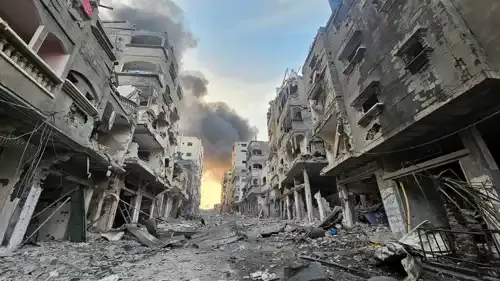
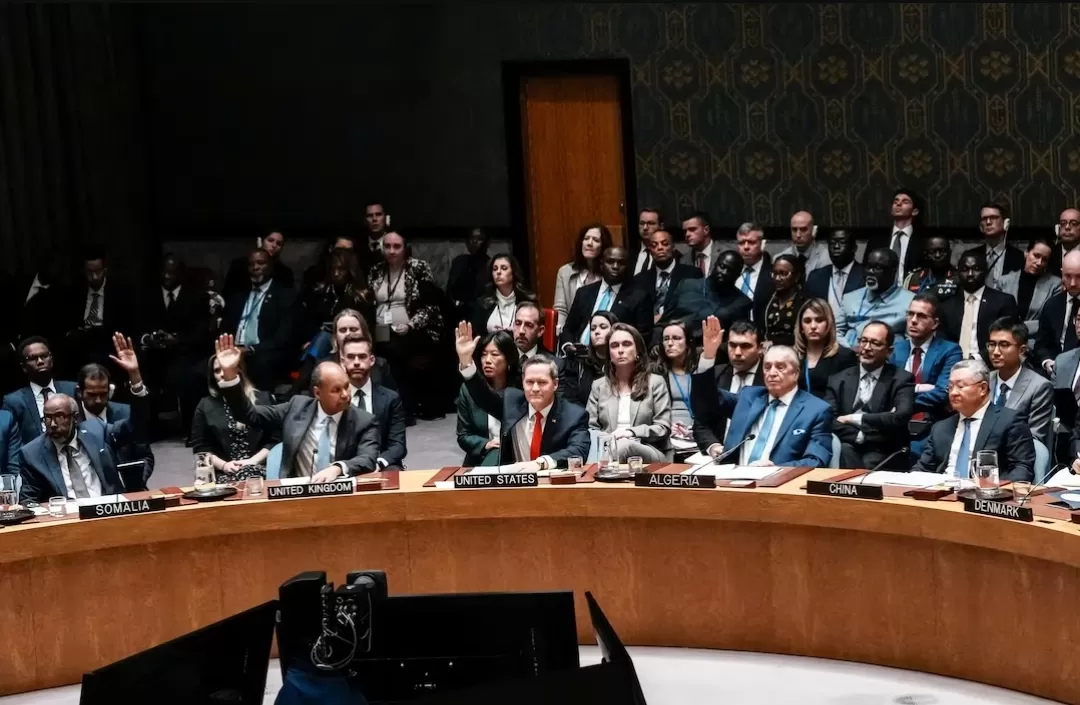
**Arab Gulf_Reports:** The UN Security Council yesterday, Monday, approved a draft resolution, formulated by the United States, endorsing President Donald Trump's plan to end the war in Gaza and allowing the deployment of an international stabilization force to the Palestinian territory. Israel and Hamas agreed last month to the first phase of Trump's 20-point plan to end the war in Gaza. The first phase stipulated a ceasefire after a two-year war between the two sides, in addition to the release and handover of the remaining living and deceased Israeli hostages in Gaza in exchange for Palestinian prisoners and detainees. The UN resolution is seen as an important step in legitimizing the transitional government and reassuring countries considering sending troops to the Strip. The resolution also stipulated that member states can participate in the so-called Peace Council, which the resolution says will be a transitional authority overseeing the reconstruction and economic recovery of Gaza. The resolution authorizes the establishment of an international stabilization force, which will undertake the disarmament process in Gaza, including the disposal of weapons and the destruction of military infrastructure. Hamas affirmed that it would not give up its weapons, and considered its fight against Israel a legitimate resistance, which could put the armed group on a collision course with the international force authorized by the resolution. In a statement issued following the adoption of the draft resolution, Hamas said, "The resolution imposes an international trusteeship mechanism on the Gaza Strip, which is rejected by our people, its forces, and its factions." It added, "Assigning the international force tasks and roles inside the Gaza Strip, including disarming the resistance, removes its neutrality and turns it into a party to the conflict in favor of the occupation." Trump's 20-point plan was included as an annex to the resolution. The US Ambassador to the United Nations, Mike Waltz, said that the resolution "draws a possible path for Palestinian self-determination... as missiles are replaced with olive branches, and there is an opportunity to agree on a political horizon." Waltz added to the Council before the vote that the draft resolution dismantles Hamas's grip and ensures that Gaza rises away from the specter of terrorism in prosperity and security. Russia, which has the right of veto in the Security Council, had previously indicated the possibility of opposing the draft resolution, but it abstained from voting, allowing it to be approved. The Russian and Chinese ambassadors to the United Nations said that the resolution does not give the United Nations a clear role in the future of Gaza. China also abstained from voting. Russian Ambassador Vasily Nebenzya told the Council after the vote that, in essence, the Council is giving its blessing to an American initiative based on Washington's promises, which gives full control of the Gaza Strip to the Peace Council and international stabilization forces, about whose mechanisms we know nothing so far. The Palestinian Authority issued a statement welcoming the resolution and expressing its readiness to participate in its implementation. The statement stressed the need to work immediately to implement this resolution on the ground in a way that ensures the return of normal life, the protection of our people in the Gaza Strip, the prevention of displacement, the complete withdrawal of the occupation forces, reconstruction, the cessation of undermining the two-state solution, and the prevention of annexation. Diplomats said that the Authority's approval of the resolution last week was a key factor in preventing Russia from using its veto. Trump celebrated the vote, describing it as a truly historic moment in a post on social media. He wrote, "The members of the Council, and many other exciting announcements, will be announced in the coming weeks." The resolution sparked widespread controversy in Israel because it refers to the possibility of a future Palestinian state. The text of the resolution stipulates that conditions may eventually be ripe for a serious path towards Palestinian self-determination and the establishment of a state once the Palestinian Authority implements a reform program and progress is made on the redevelopment of Gaza. The resolution stated that the United States will establish a dialogue between Israel and the Palestinians to agree on a political horizon for peaceful and prosperous coexistence. Israeli Prime Minister Benjamin Netanyahu, under pressure from right-wing parties in his government, said on Sunday that Israel remains opposed to the establishment of a Palestinian state and pledged to disarm Gaza "the easy way or the hard way," and Hamas has so far refused to disarm. A group of Palestinian factions led by Hamas issued a statement on Sunday evening against the resolution, describing it as a dangerous step towards imposing foreign tutelage on the Strip, and said that the proposed resolution serves Israeli interests.