

Delaying the opening of the Rafah crossing threatens the lives of thousands of patients in Gaza.
Arab Sea Newspaper - Special
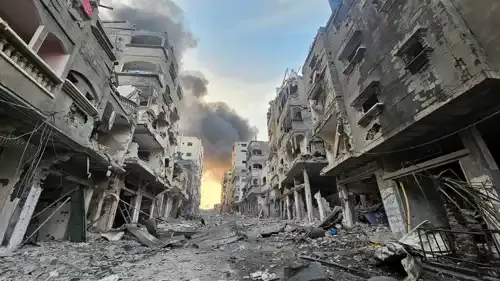
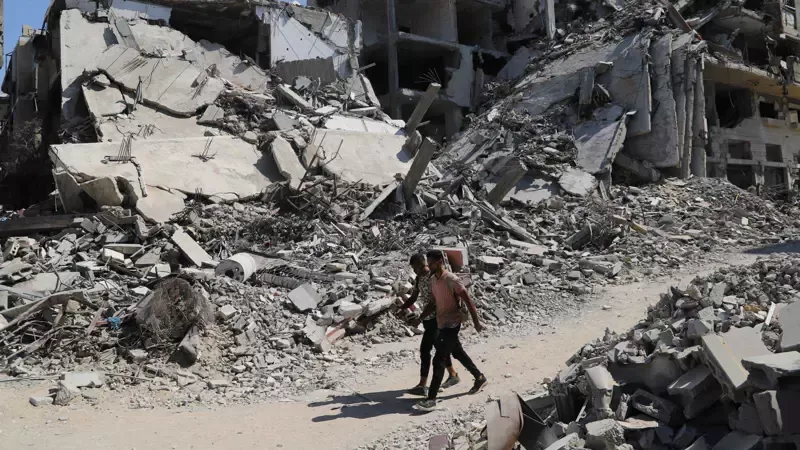
**Arab Gulf - Follow-ups:** Doctors and humanitarian organizations warn that the continued closure of the Rafah crossing is exacerbating the health crisis in the Gaza Strip, where thousands of patients face the risk of death due to their inability to leave for treatment. The delay comes amid catastrophic humanitarian conditions and a severe shortage of medicines and medical supplies due to the ongoing siege and military escalation. Dozens of injured and sick people have joined the list of victims, amid the inability of local hospitals to provide health care, after the destruction of most medical facilities in the Gaza Strip. The number of patients waiting for referrals for treatment abroad is estimated at more than 20,000, of whom about a thousand have died, including dozens of children, as a result of their inability to leave the Strip in time. The spokesman for Al-Aqsa Martyrs Hospital, Khalil Al-Daqran, said that "Israel continues to ignore the humanitarian protocol since the declaration of a ceasefire last October, as it has not committed to bringing in medical supplies, nor to evacuating patients for treatment abroad." Al-Daqran explained that "about 20,000 patients are in urgent need of traveling to receive treatment outside Gaza, including 14,500 cases with completed procedures, and more than 4,000 children." He added, "Israel has been procrastinating for the second year in a row in allowing them to leave, which has caused the death of nearly a thousand patients who were waiting for treatment for two years due to the closure of the Rafah crossing." He continued, "The medical aid that is being brought in does not meet the minimum needs required to operate the health system," pointing out that the continued closure of the crossings threatens a humanitarian catastrophe and an increase in the number of victims among patients and the injured, specifically kidney and cancer patients, for example, but not limited to. Al-Daqran appealed to the international community and the sponsors of humanitarian agreements to pressure the mediators to open the crossings immediately and completely, warning that the delay in this file means "a postponed death" for thousands of patients in the Strip. Muhammad Sarsour, a young man in his thirties suffering from quadriplegia, was unable to survive after the siege and the closure of the crossings deprived him of the opportunity to receive treatment outside the Gaza Strip, after two failed attempts by his family to obtain a permit to leave, and he died in a hospital in Gaza City. His father, Ali Sarsour, said, "Muhammad was born with quadriplegia and needed special care. His body cannot withstand any health deterioration. During the war, he contracted a lung virus. We tried to get him out for treatment, but the crossings are closed." The father recounts the details of his son's last days: "He was breathing with great difficulty, putting his head on my chest as if begging for air. We were waiting for the crossings to open to save him, but the closure ended his life." Muhammad's story encapsulates the suffering of tens of thousands of patients in the Gaza Strip, who are waiting for medical referrals to travel, amid the inability of local hospitals to provide adequate care. Israel links the opening of the Rafah crossing to arrangements related to the subsequent stages of the ceasefire agreement in the Gaza Strip, and stipulates that this be after Hamas hands over all the bodies of the Israeli hostages who were in its possession. It also objects to the presence of elements of the Palestinian Authority on the Palestinian side of the Rafah crossing. In previous statements, the Special Envoy of the Palestinian Presidency, former Palestinian Prime Minister, Muhammad Shtayyeh, said that "the Rafah crossing is a lifeline between us and Egypt, and there is an Egyptian-Palestinian understanding on the matter, and there is an agreement in force, and all we want is the implementation of the agreement." Shtayyeh accused Israel of trying to create a fait accompli at the border between Rafah and Egypt, adding, "This fait accompli must end so that the crossing operates according to the clear mechanism." He added, "Thousands of people are stranded outside the Gaza Strip waiting to return. The Rafah crossing is one of the important arteries of life in the Gaza Strip, and this crossing must be opened, as well as all other crossings."