

By attacking "Ramon," do the Houthis possess new technologies?
Arabian Sea Newspaper - Special
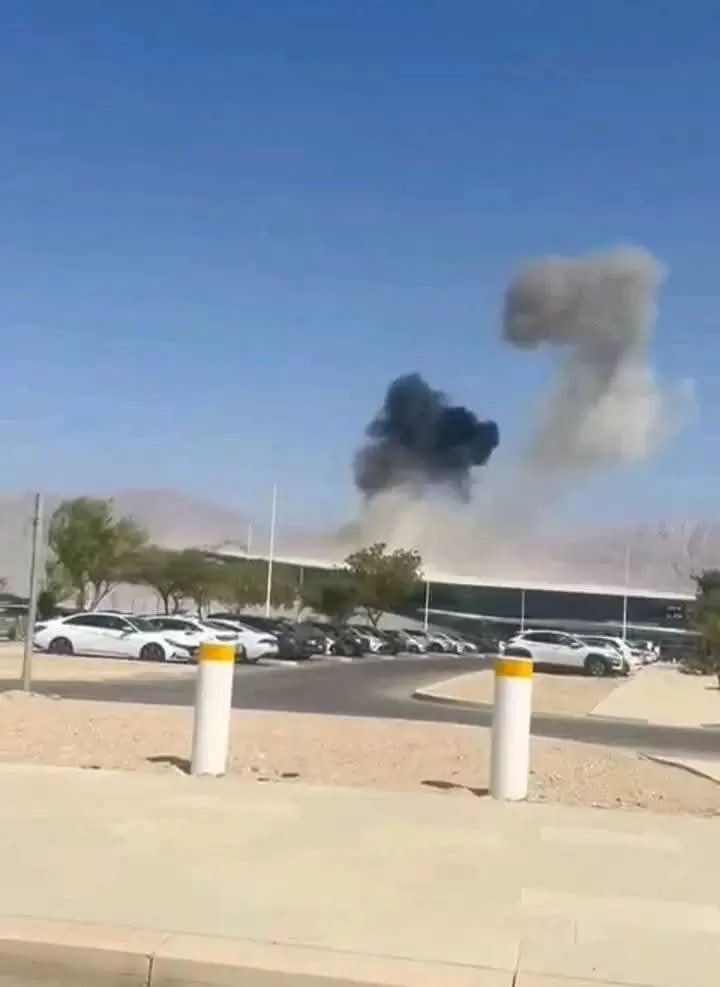
**Arab Sea - Follow-ups:** Experts say that the Houthi aerial attack on Ramon Airport in southern Israel "revealed new levels of advanced military technologies that the militia is now using to confront Tel Aviv's escalating strikes in the recent period." On Sunday, the Houthi militia carried out a "wide-ranging military operation with several drones" targeting various areas in Israel, one of which managed to penetrate air defenses and fall on Ramon Airport in the Negev for the first time, injuring 8 people and causing material damage, in addition to the temporary suspension of flights. This incident is the second of its kind in which the Israeli army's defenses have failed in less than 3 weeks to counter Houthi projectiles, after a "hypersonic" fragmentation missile fell in the yard of an Israeli house on August 22. According to initial investigations conducted by the Israeli army into the reason for not intercepting the drone in "Ramon," the air force systems detected the aircraft, "but did not classify it as a hostile drone, and as a result, the interception systems were not activated." In the official statement claiming responsibility for the recent attack, the military spokesman for the Houthis, Yahya Saree, confirmed yesterday, Sunday, that their forces are working to "develop the performance of their weapons to be more effective and efficient, and that they will escalate their military operations." Ali al-Dahab, an expert in military and strategic affairs, believes that the difference in the recent Houthi attack "may be due to their obtaining new explosive technologies, whether related to some drones or missiles with fragmentation warheads, as the latest that the Houthis have so far." He said that these advanced technologies enable some drones to hide and escape from radars, or at least distract the different levels of defense that Israel possesses, in addition to the fragmentation property of some missiles." He wondered about the parties behind supporting the Houthis with these advanced capabilities that few countries possess, "Therefore, the circle of answers expands to discover that the matter is not limited to Iran alone, but includes other international actors whose interests conflict with the West." Al-Dahab pointed to the possibility of shortcomings in Israel's monitoring of projectiles, "but it remains very possible that Tel Aviv allows some of them to fall on its remote areas or sites with little damage, in order to ease Western media pressure on it, and then seeks to create justifications for using excessive force against the Houthis in the future." It was remarkable in the recent Houthi statement that they did not mention the type of drones used in yesterday's attack, which had previously happened in the missile bombardment that the militia addressed in detail, weeks ago, for Israel to later announce that it was carrying a fragmented explosive warhead, in an unprecedented operation. Following the attack on Ramon Airport, Houthi leaders hinted at the launch of a new phase of strikes on Israel, not limited to airports and ports only, but extending to various civilian and service facilities and institutions and economic targets. These rapid developments between the two sides come days after the most violent Israeli strikes that targeted a leadership meeting site in Sanaa, resulting in the death of the head of the militia government and a number of its members. Political analyst Abdul Salam Muhammad believes that the military escalation is inseparable from the political and regional dimensions, especially in light of the Houthis' continued provision of justifications for Israel to raise the pace of its operations in Yemen. It is worth mentioning that Israel, after its operations recently shifted from targeting sources of funding and heading towards some leaders in the unrecognized Houthi government, "Therefore, I do not rule out the continuation of Israeli operations in imposing a new reality in Yemen through its air forces." Abdul Salam explained that as much as there are fears of Israel exploiting the Houthis' operations to justify its long-term military presence in the Red Sea and near the Bab al-Mandab Strait, operations against the Houthis could escalate to include targeting important leaders with ties to the Iranian Revolutionary Guard, headed by Abdul Malik al-Houthi.