

London: British organization confirms the continued supply of Iranian weapons to the Houthis, enabling them to carry out attacks.
Arabian Sea Newspaper - Special
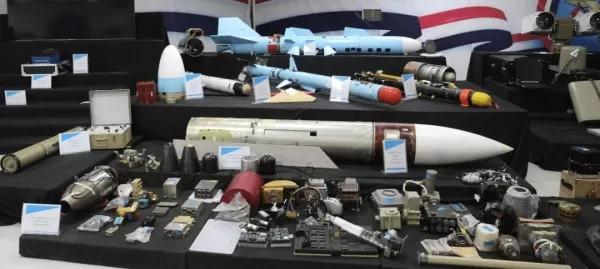
Arabian Sea - Yemen Future: A British organization specializing in tracking arms sources has confirmed that the Houthi group remains linked to an Iranian arms supply network to enhance its military capabilities and continue carrying out attacks. The Conflict Armament Research (CAR) organization said in its field report for September: "The Houthis continue to rely on external support to strengthen their air defenses and carry out attacks, including against ships in the Red Sea." The report added that the organization's documents regarding the maritime interdiction operation recently carried out successfully by forces allied with the internationally recognized Yemeni government "revealed an unprecedented number of advanced missiles, including a range of anti-ship systems, the analysis of which proves that a large part of them is closely linked to Iranian supply networks." The organization pointed out that the seizure took place on June 25, 2025, of a shipment weighing 700 tons of weapons, on board a dhow sailing from Djibouti to the port of Salif, which is under the control of the Houthis in northwestern Yemen. The US Central Command (CENTCOM) described the interception, which occurred two days after Iran and Israel agreed to a ceasefire to end a 12-day conflict between the two countries, as "the largest seizure of advanced Iranian conventional weapons in the history of the National Resistance Forces." The report explained that in July 2025, the organization sent a field investigation team to Yemen to document a sample of the seized shipment, which included "a wide range of weapons and components not previously observed in previous seizures, including: anti-ship missiles, and surface-to-air missiles (SAM), along with their components, such as jet engines and search and navigation units used in Houthi missile systems, in addition to drone units. These missile systems were of the latest Iranian models, which were not previously known to exist in the group's stockpiles." It added that the seized shipment was very carefully hidden, as "the weapons were placed inside industrial machines, and some components were stored inside vehicle batteries and air tanks that had been cut and re-welded. The shipping documents attached to the shipment indicate that it contains agricultural products, machinery and fertilizers, without any reference to weapons or related materials." The organization noted that its focused investigation proved the seized shipment's connection to Iranian supply networks, despite Tehran's denial of its involvement in this smuggling operation, as "many of the seized weapons and components bear Iranian manufacturing marks, and some are linked to its government institutions, in addition to their conformity with equipment that was confiscated in previous operations that were heading to the Houthis. The shipment also contained components similar to those used in other Iranian weapons systems that we have documented in different regions around the world." The report stated that the Houthi group has been using missiles and drones to target commercial ships and international naval vessels in the Red Sea since October 2023, "and the seizure highlights the group's continued need to resupply anti-ship and air defense missiles to maintain the credibility of its maritime threat and throughout the region, particularly in light of recent airstrikes against Houthi targets that have damaged these capabilities." The Conflict Armament Research organization concluded that this interception of Iranian-linked arms supplies provides clear evidence that external support remains a major factor in enabling the Houthi group to continue its military operations that threaten maritime and regional security in general, and also illustrates the group's limited capabilities to manufacture and build advanced weapons systems.