

Former Indian diplomat: China caused the "demolition" of 24 rounds of dialogue through its closeness with Pakistan.
Arab Sea Newspaper - Special
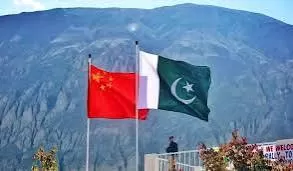
Arab Sea - Follow-ups: Former Indian diplomat Amit Kumar said that despite the tangible rapprochement and intensive negotiations between New Delhi and Beijing to enhance economic and diplomatic cooperation, China's continued support for Pakistan undermines any potential progress in bilateral relations, especially after the two countries held more than 24 rounds of dialogue. Kumar pointed out that this rapprochement leaves tensions in place and makes the security file very sensitive, and also makes the reopening of land and air borders and the facilitation of trade and technology exchange more complicated. The former Indian diplomat affirmed that his country benefits from cooperation with China in light of a growing trade deficit in favor of Beijing, as India imports strategic equipment and products, while the Indian market is among the largest consumer markets in the world. Kumar explained that India seeks to access Chinese technologies to support its opportunities in industry and energy, and at the same time monitors China's rapid growth militarily and economically and considers it a constant source of threat. 24 rounds of dialogue Kumar mentioned that border negotiations are still ongoing, as the two countries have held more than 24 rounds of dialogue without reaching a final demarcation of the borders, which leaves tensions in place and makes the security file very sensitive. He added: "The closer India gets to rapprochement with the West, the more China escalates its attempts to undermine Indian influence in neighboring countries, through its direct support for Afghanistan, Pakistan, and South Asian countries, and strengthening its military presence in the Indian Ocean." In his statements, Kumar revealed that "China has succeeded since 2010 in penetrating Indian territory twice, and that India is concerned about the expansion of Beijing's presence in West Asia, the Organization of Islamic Cooperation, the Gulf countries, and Iran," and others. He also pointed to Chinese initiatives in India's neighboring countries such as Nepal, Bangladesh, Sri Lanka, the Maldives, Bhutan and Myanmar, considering this part of a strategy to encircle India. The former Indian diplomat affirmed that China considers India's membership in the Quad alliance led by Washington as a threat to regional security, even though India is not a country bordering the Pacific Ocean. Economic Corridor For his part, Ahmed Hosni, a researcher in Asian affairs, explained that China's continued support for Pakistan turns any economic rapprochement with India into a conditional and limited path, noting that New Delhi sees the Chinese-Pakistani economic corridor project, and political and military support for Islamabad, as strategic pressure tools more than just development partnerships. Hosni affirmed that this reality pushes India to strengthen its alliances with the West and the Quad group, and diversify sources of technology and trade, which makes economic relations with Beijing fragile and linked to broader security and geopolitical files. Expansion of the Chinese Navy Hosni also pointed out that the Chinese Navy is expanding rapidly in the Indian Ocean, which raises increasing concerns among the Indian military establishment, and leads to an increase in the pace of security cooperation between India, the United States, Australia and Japan. The researcher in Asian affairs added that the Chinese military expansion in the Indian Ocean, through ports and logistical bases such as Gwadar, Djibouti and Hambantota, gives Beijing a growing ability to monitor and secure energy and navigation routes, which reduces India's naval superiority and turns the ocean into an open arena for competition, and explained that this situation requires New Delhi to strengthen its naval power, expand its defense partnerships, and develop deterrence and intelligence capabilities to ensure the protection of its strategic interests. American Pressure He added: "American pressure on India has increased with the imposition of customs duties of 50%, preventing the purchase of Russian oil and weapons, and restricting trade operations with Russia and China." At the same time, Trump believes that his interventions were the reason for stopping the recent war between India and Pakistan, and is waiting for his nomination for the Nobel Peace Prize, similar to Pakistan's nominations." The Indian diplomat continued, explaining that China's influence now extends to the Afghan capital, Kabul, by improving relations with the Taliban despite its previous criticisms of them, which further complicates the political scene in the region. The Biggest Concern The new tripartite alliance between China, Pakistan and Afghanistan is considered the biggest source of concern for India, and may radically change the equations of influence in South Asia. Returning to history, the diplomat affirmed that China seized Tibet from India in the 1950s with the contribution of Prime Minister Nehru's policies, then attacked India in 1962 and seized vast areas of Indian territory, and still claims ownership of the entire Indian state of Arunachal Pradesh. He added that India has witnessed Chinese incursions into its territory since 2010, and that all of this illustrates the extent of the complexity and accumulated historical conflict between the two countries.