

The Lebanese judiciary faces a difficult test... Law or immunity?
Arab Sea Newspaper - Special
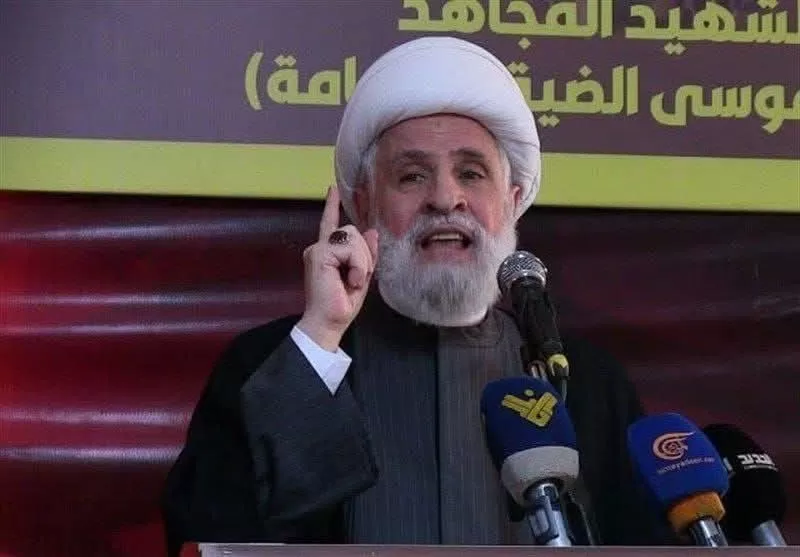
Arab Gulf - Follow-ups: Amid escalating political and security tensions in Lebanon, the Lebanese judiciary faces a difficult test in dealing with a prominent figure such as the Secretary-General of Hezbollah, Naim Qassem. Who had previously sparked widespread controversy after stating that disarming the party could lead to civil war, prompting a number of deputies and political figures to go to the judiciary to file a criminal complaint against him, considering that his statements constitute a threat to civil peace and constitutional authority. In a legal move considered the first of its kind at this level, Lebanese deputies and political figures filed a criminal complaint before the Public Prosecution Office of Cassation in Beirut against Naim Qassem. This step comes against the backdrop of his recent statements linking the issue of disarming the party to igniting internal strife, according to what the lawyer and head of the Change Movement party, Elie Mahfouz, explained during his talk to the "Ninth" program on Sky News Arabia. Mahfouz said: "Personally, in my political capacity and as a legal representative for the people of Ain al-Remmaneh who were attacked by Hezbollah militia gunmen, I previously filed a direct complaint against Hassan Nasrallah, and today the complaint is directed against Naim Qassem. The goal is clear: any citizen who violates the law must be referred to the judiciary, regardless of their size or political influence." He added that the complaint was officially accepted and registered with the registry of the Public Prosecution Office of Cassation, and it is now awaiting referral to one of the branches of the judicial police, whether the Criminal Investigation Department, the Judicial Police, or any gendarmerie station, to conduct the necessary investigations. A message to the judiciary and Lebanese sovereignty Mahfouz believes that submitting this complaint is not just a symbolic step, but rather "a clear message to the Lebanese judiciary and to anyone who thinks of violating the Lebanese Penal Code." He added: "You cannot claim the state's sovereignty if there is someone who is working outside the law, receiving orders and money from a foreign entity, and participating in military activities inside Lebanon, while remaining immune from legal accountability." Mahfouz stressed that the complaint comes at a sensitive time, as the military and political influence of Hezbollah intersects with state institutions, which makes the issue a real test of the judiciary's ability to deal with armed figures with political weight as any ordinary citizen. Political division and the reality of power in Lebanon Mahfouz explained that Lebanon's political history has always been fraught with divisions, as some militias, including Hezbollah, were able to influence presidential and governmental entitlements. He said: "Former presidents and ministers were made by this militia, which disrupted more than one government over the past years and imposed its rules on the Lebanese political scene." Despite these historical facts, Mahfouz stressed that the current situation is different, considering that Hezbollah is today facing all Lebanese, and that the complaint submitted to the judiciary aims to prevent any attempt to repeat the scenario of the civil war that the recent statements of Naim Qassem chronicled. Hezbollah and weapons: between inside and outside Mahfouz touched on the issue of Hezbollah's weapons, considering that "it has become an internal killing machine more than a tool for defending Lebanon," adding: "This weapon has not contributed to protecting any of the party's leaders or enhancing the stability of the state, but rather it was a means of consolidating internal gains at the expense of the law and sovereignty." He pointed out that the party, despite its participation in official entitlements such as the election of the President of the Republic, its military and political influence remains outside the scope of the law, which makes moving the judiciary against it an important step to restore the balance between state institutions and armed forces. Legal procedures and challenges Mahfouz confirmed that the complaint submission procedures were followed accurately, and that the legal documents were submitted to the judiciary: "We went down to the Justice Palace with the papers, the law, and the documents, and the more they persist, the more we will push the case forward." He explained that the goal is to avoid being drawn into an armed conflict or civil war, while preserving the legal right to hold accountable anyone who violates the law. Despite this, the Lebanese judiciary faces a real challenge in terms of balancing the law with the political and military influence of Hezbollah, especially with the presence of ministers representing the party within the government, which raises questions about the extent to which institutions are able to enforce the law on militia leaders. Confronting the highest ceiling of authority Mahfouz raised a fundamental question regarding the presence of Hezbollah ministers in the government, saying: "If the party has representatives inside parliament and the government, why are they left to exercise influence outside the law, while the judiciary and other politicians are accused?" He added that this dilemma indicates the complexity of the Lebanese scene, where the executive authority intersects with military and militia power, which makes the application of the law extremely difficult. A step towards changing the rules of the game Despite all the difficulties, Mahfouz considered that the complaint represents a qualitative step towards imposing the rule of law on all citizens, regardless of their political position or the military influence they enjoy: "Today there is an opportunity for the judiciary to prove that it can deal with a militia leader like any ordinary citizen, and this is a real test of the credibility of the Lebanese state." He stressed that this legal step represents a clear message to all political forces in Lebanon: "No party or militia can violate the law, and whoever does so will be subject to legal accountability, no matter how large or influential it is." The case filed by deputies and political figures against Naim Qassem represents a real test for Lebanese state institutions, especially the judiciary, in confronting the military and political influence of Hezbollah. While some see it as a bold step towards enforcing law and justice, others see it as a difficult test of the state's ability to hold armed forces accountable internally. The debate on how to deal with immune or semi-immune militia leaders has not ended yet, but what is clear is that moving the judiciary against a figure like Naim Qassem sends a strong message that the law can be a tool for balancing power and sovereignty, and that the era of impunity may be coming to an end.