

U.S. Diplomatic Visit to Lebanon: An Arena of Balance Between Sovereignty and Resistance
Arab Sea Newspaper - Special
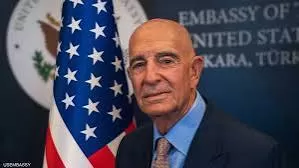
Arab Sea - Follow-ups: In a sensitive moment in the contemporary history of Lebanon, American envoys Thomas Barack and Morgan Ortagus arrived in Beirut on an official visit aimed at influencing the delicate balance between Lebanese sovereignty and regional security changes. The visit, which includes intensive meetings with President Nabih Berri and Prime Minister Nawaf Salam, comes amid sharp disagreements over Hezbollah's resistance weapons against Israel, an issue that has not lost its sensitivity since the Taif Agreement to this day. This visit constitutes a direct test of the "miniature international system" in Lebanon, where American influence intersects with armed resistance that is considered a real partner in national security, making any Washingtonian step fraught with political and social risks. The envoys aim to redraw the lines of the relationship between Lebanon and the United States by encouraging dialogue on the state's obligations towards its institutions and providing guarantees to keep Hezbollah within the framework of the state without prejudice to its resistance project. Strategic analysis reveals that Washington is now seeking to market a model of "balanced pressure": supporting the state, economic stimulus, and the threat of military and diplomatic options, in an attempt to impose new equations without igniting a direct confrontation with the resistance. In return, Lebanon faces a double challenge: Maintaining its internal sovereignty and institutions, and ensuring the stability of its regional relations, in light of increasing pressure from multiple parties. This visit is not just an ordinary diplomatic event, but a precise strategic station that reflects Lebanon's role as a testing ground for major balances between American soft power and the "right to resist" that embodies part of the identity of the Lebanese state. The final results may reshape the political landscape and determine the limits of American influence in the Middle East in exchange for the interests of the resistance and Lebanon's right to protect its lands.