

Iranian explosives in the hands of the Houthis threaten Yemen.
Arab Sea Newspaper - Special
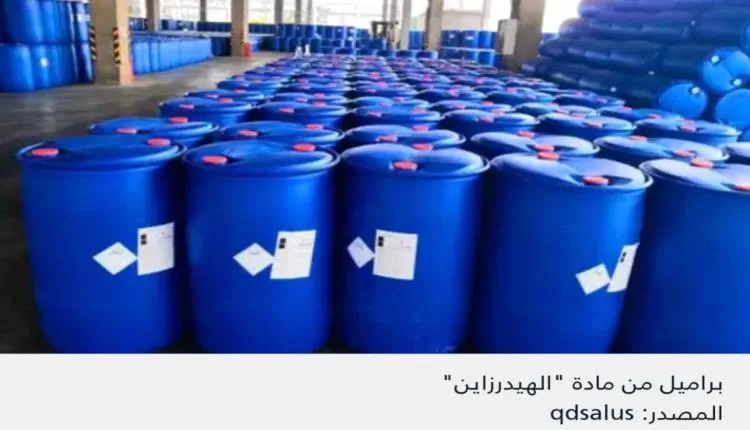
**Arab Gulf_Ashraf Khalifa:** Confessions from a cell smuggling Iranian weapons to the Houthi militia revealed details of Tehran supplying its arm in Yemen with sensitive chemical and biological materials, most notably the substance "hydrazine," which is used in the manufacture of missiles and explosives. *Hydrazine* Hydrazine is a colorless, inorganic chemical compound with the chemical formula (H₂N-NH₂), and a pungent odor. It is characterized by being soluble in water and alcohol, and is highly and dangerously toxic. Hydrazine is considered flammable and explosive in the air quickly, and generates a large amount of heat, as it reacts violently with oxidizing and metallic materials. The compound "hydrazine" is used in many industries, such as insecticides, agricultural pesticides, and some organic compounds. It is used as rocket fuel in rocket engines and spacecraft, due to its oxidizing and flammable properties. Hydrazine is not a traditional chemical weapon like other known poisonous gases such as (chlorine and sarin), but it has properties that can be exploited in chemical warfare. The method of using it as a chemical weapon lies in using it as a poisonous gas when vaporized and heated, or spraying it on specific areas, especially if it is combined and mixed with other substances to intensify the toxicity. It may also be used in missile equipment or precision projectiles, especially if it is developed for guided launch technologies. Hydrazine leaves several toxic health effects if inhaled or comes into contact with the skin, as it causes irritation of the respiratory system and eyes, in addition to skin burns, as well as causing liver and kidney poisoning when exposed to high doses of it, in addition to causing severe cough and pulmonary fibrosis, as well as causing death in the event of intensive exposure to it. Hydrazine is subject to strict control in most countries, as it can be quickly converted into rocket fuel or used as a toxic weapon. Many international agreements have classified it as a "dangerous" chemical substance, but it is not included in the list of prohibited chemical weapons. Hydrazine is not a common or strategic weapon, but it represents a tactical danger to groups seeking to develop homemade chemical weapons, or intending to use toxic rocket fuel, taking advantage of its effect on the surrounding area when it explodes. *Dangerous indicators* The military spokesman for the Yemeni "Joint Forces," Lieutenant Colonel Waddah al-Dubaysh, said that "there are dangerous indications of attempts by the Houthis to possess chemical and biological capabilities, with direct support from Iran, with the aim of using them in a way that violates international and humanitarian law, and is consistent with the definition of a war crime, as civilians will be the most affected." Lieutenant Colonel Al-Dubaysh added in a statement to "Erem News" that "the materials that the Houthis are seeking to obtain include incendiary gases, poisons, and biological agents, capable of causing mass fatalities and serious damage, which may cause widespread environmental pollution, including marine pollution, and its effects extend for many years on Yemen and neighboring regions." He continued: "The Houthi militia's transition to using chemical and biological weapons at the military level constitutes a strategic threat to civil and regional peace, and complicates any humanitarian response." He pointed out that "the Houthis' goals include creating a state of intimidation, expanding their influence, and imposing a balance of power in their favor, without regard to civilian or legal damages, as this includes psychological warfare, and transferring the threat to brotherly Arab countries and targeting their interests." *Dangerous escalation* The spokesman for the "National Resistance" forces, Brigadier General Sadiq Dwaid, had warned in previous statements this week of Houthi efforts to possess chemical and biological weapons funded by Tehran. He considered this a "dangerous escalation" at the regional level, in light of Tehran's complete dependence on its arm in Yemen, after losing its most prominent arms in Lebanon, Syria and Iraq.