

Monitoring media freedoms discusses mechanisms for redressing journalists and integrating their issues into transitional justice tracks.
Arab Sea Newspaper - News Updates
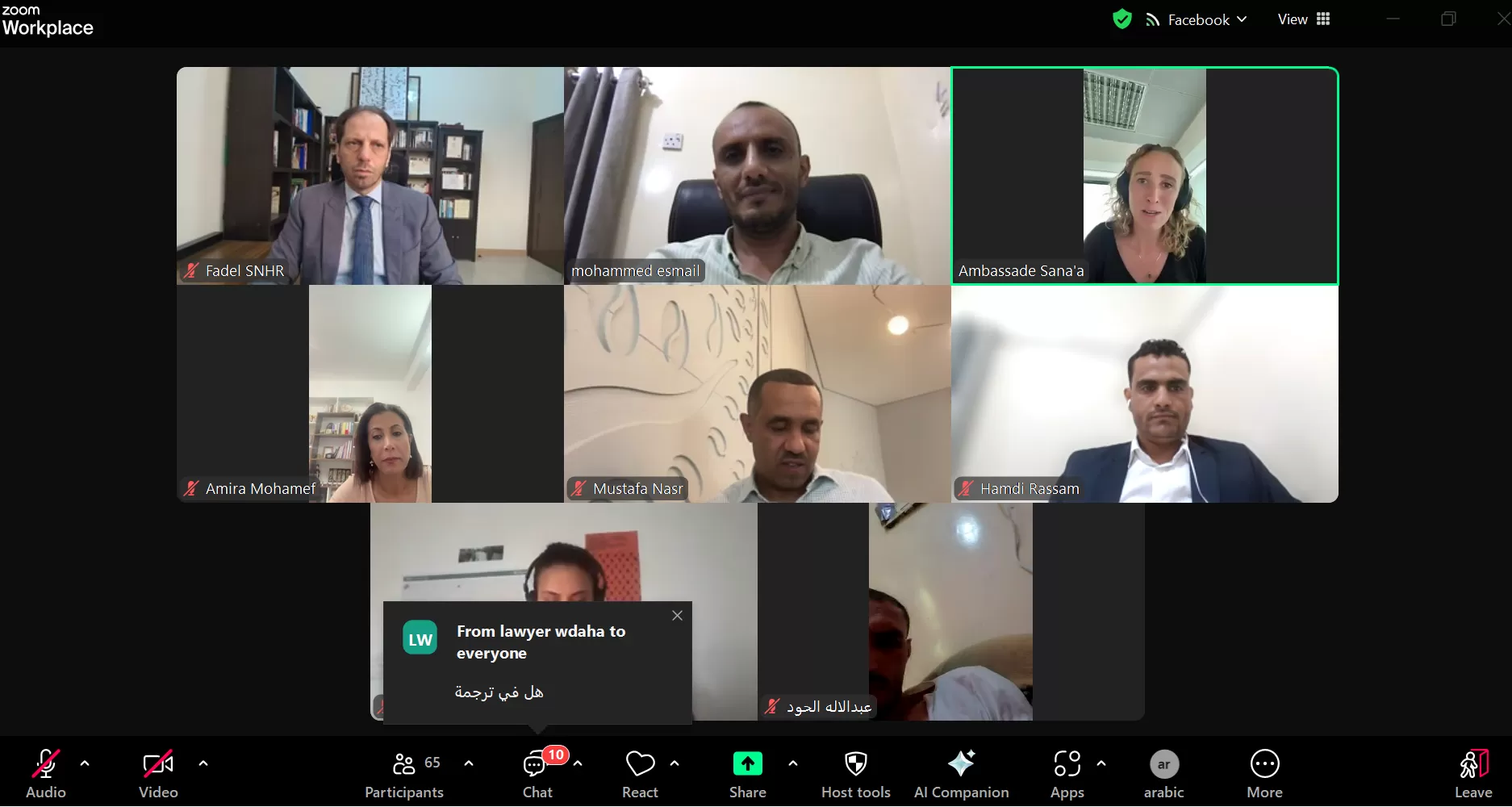
Arabian Sea - Yemen - Follow-ups: The Media Freedoms Observatory (Your Observatory), affiliated with the Center for Economic Studies and Media, discussed in an extensive seminar the mechanisms for redressing Yemeni journalists and integrating their issues into transitional justice pathways, after a decade of violations against the profession and its workers, including murder, arbitrary arrests, enforced disappearances, and torture. The Executive Director of the Center, Muhammad Ismail, said at the opening of the event that what journalists have been subjected to was not a passing event, but rather part of a systematic pattern to silence independent voices and weaken the right to access the truth. He explained that the discussions come in the context of preparing an analytical paper aimed at ensuring that journalists' issues reach transitional justice pathways. For her part, Yenta Veldman, Human Rights, Security and Rule of Law Officer at the Embassy of the Kingdom of the Netherlands to Yemen, called on journalists and human rights organizations to continue the dialogue and convey the stories and experiences of victims, stressing her country's support for transitional justice efforts and its keenness to raise the issue of journalists in international forums. In a presentation on the reality of journalism, lawyer and human rights activist Raghad al-Muqatri reviewed the reasons for the escalation of violations and ways to document them, pointing to the legal and institutional gaps that hinder the redress of journalists, and stressing that the integration of their issues into transitional justice is necessary to ensure a future based on accountability and reparation. The seminar witnessed direct testimonies from journalists Muhammad al-Salahi and Muzahim Bajaber about their experiences in arbitrary detention, enforced disappearance, and torture, and the effects they had on their personal and professional lives, demanding their right to redress. The Tunisian journalist Amira Muhammad, Vice-President of the General Federation of Arab Journalists, and the Executive Director of the Syrian Network for Human Rights, Fadl Abdul Ghani, also presented the experiences of Tunisia and Syria in integrating journalists' issues into transitional justice, with reference to the challenges and the importance of exchanging regional and international experiences. At the conclusion of the event, which was attended by more than 80 participants, the attendees agreed on a number of priorities, most notably reforming judicial and security institutions, building a comprehensive national narrative, and enhancing journalists' awareness of documentation and transitional justice mechanisms, to ensure accountability and reparation. It is worth mentioning that the Media Freedoms Observatory is an independent monitoring and information platform that aims to document and publish everything related to freedom of opinion and expression in various Yemeni regions, in addition to analyzing and advocating for journalists' issues at the local and international levels.