

Yemen: Weather Forecast Administration Clarifies Reasons for Dust Storms in Aden
Arab Sea Newspaper - Special
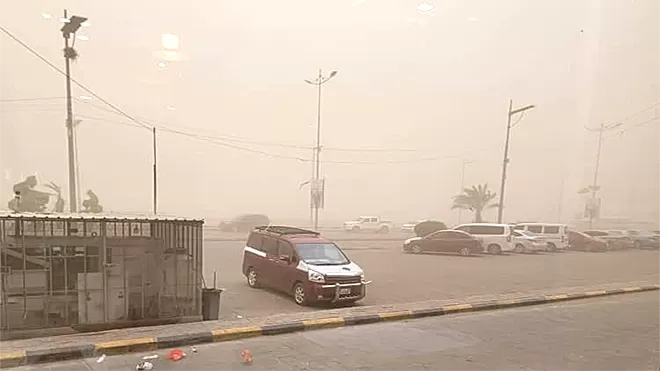
Arab Sea_Aden_Alaa Bader The capital, Aden, is exposed from time to time to dust and sandstorms that affect air quality and horizontal visibility, which is attributed to a number of weather and geographical factors. In this regard, "Bahr Al Arab Newspaper" met with the Director of the Air Forecast Department at the General Authority of Civil Aviation and Meteorology, Ali Jamal Bataysir, to talk to him about this phenomenon. Bataysir said: "The most important causes of sand and dust storms are the southwest monsoon winds during the summer months, especially in July and August, where the southwest monsoon winds are active as a result of the extension of the Indian seasonal low, which leads to an increase in wind speed over the southern coastal areas, including Aden Governorate, thus stirring up sand and dust, calling on those who suffer from shortness of breath (asthma) and car drivers on long roads to take caution from these sands that form suddenly in the air, whether in cities or in remote dirt areas." He added that the descending winds from the strong descending cumulonimbus clouds resulting from the cumulonimbus thunderclouds formed over the northern highlands adjacent to Aden contribute to stirring up dust and dirt, as a result of their rush towards the south towards the coasts, which increases the chances of dust storms forming, adding that the city of Aden is located on the southern coastal strip, which makes it vulnerable to the impact of active winds that work to stir up sand from the surrounding areas, and these factors cause a decrease in horizontal visibility and the formation of what is known as "stirred dust and sand." The Director of the Air Forecast Department explained that dust waves transported from the northern and northeastern desert areas lead to an increase in the concentration of dust particles in the atmosphere of Aden Governorate and neighboring areas, especially during the extension of northern and northeastern air currents, in addition to the weakness of vegetation cover in the surrounding areas, along with soil drought resulting from lack of rain, in making the soil easy to crumble and move with the wind, which increases the likelihood of dust storms occurring when the wind is active. The air expert confirmed that climate changes such as rising temperatures and increasing dry periods lead to an increase in the frequency of dust waves and sandstorms, and the extension of their impact to areas that were previously less vulnerable, including Aden.