
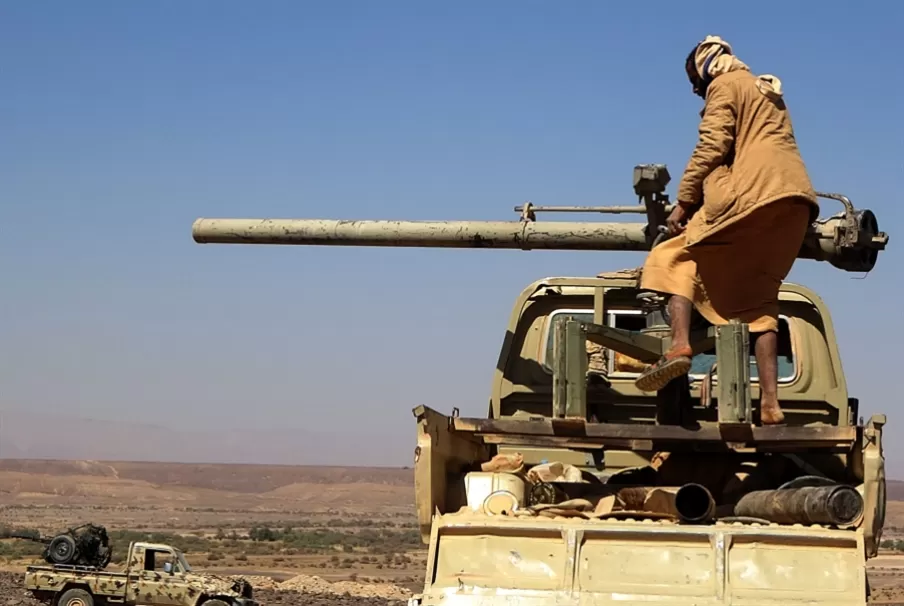
The power struggle between Islah and the UAE escalates in Marib, Shabwa, and Hadramout.
Arabian Sea Newspaper - Special
Arabian Sea - Yemen - Special: The Yemeni arena is witnessing an escalation in political and military tensions, amid what appears to be a growing power struggle between the Yemeni Islah Party (affiliated with the Muslim Brotherhood) and the United Arab Emirates, Saudi Arabia's partner in the coalition to support legitimacy. This conflict takes on multiple dimensions, most notably the competition for control of oil and gas resources in the governorates of Marib, Shabwa, and Hadramout. According to informed sources, the tensions erupted against the backdrop of the Islah Party's attempt to attract leading figures in the General People's Congress, politically and militarily, which the UAE considered a direct threat to the balance of power in strategic areas, especially in Marib and Taiz. The sources reported that a growing dispute is taking place behind the scenes between Sheikh Sultan al-Arada, the governor of Marib and a prominent leader in the Islah Party, and Emirati leaders in the coalition, against the backdrop of competition over the management of oil and gas wells and the direction of their revenues. The sources say that the UAE has pushed a number of leaders loyal to former President Ali Abdullah Saleh, most notably Brigadier General Tariq Mohammed Abdullah Saleh, to areas under the control of the Islah Party in recent months, in a move that was considered a prelude to reducing the party's influence and perhaps removing it, similar to what happened previously in the temporary capital, Aden. Data indicate that the UAE has begun practical moves to establish armed formations under the name "Maribi Elite," which includes recruits loyal to the former president, similar to the elite forces in Shabwa and Hadramout, which observers considered an indication of an Emirati trend to reshape the balance of power in the east of the country, and contain the tribal and military influence of Islah. In return, the sources confirmed that the Islah Party has begun to take precautionary measures to confront the Emirati moves, which included tightening security measures inside the city of Marib, installing advanced monitoring systems, in addition to forming security cells to monitor the movements of coalition officers, and trying to win over some of them through various means, including accusations of involving them in drug use through security elements entrenched in the coalition camps. In a related context, sources close to the member of the Presidential Council, the governor of Marib, revealed that Sheikh Sultan al-Arada was summoned to Riyadh at the end of last December, where he was subjected to investigations by the leadership of the legitimate government and the coalition, against the backdrop of accusations made by former President Abd Rabbo Mansour Hadi, related to al-Arada's refusal to supply the governorate's revenues to the Central Bank in Aden. Al-Arada also faced - according to the same sources - Emirati accusations of using Marib's revenues to support Islah Party elements and extremist groups, as well as managing black market networks for oil derivatives, and facilitating the control of armed organizations over some oil fields in Shabwa and Hadramout. Observers believe that this conflict is likely to become more complex, in light of the conflicting interests between the parties of the Yemeni legitimacy itself, and the absence of a unified vision within the coalition regarding the future of managing resources and wealth in the liberated areas.