

British Minister: We affirm our partnership with Yemen and seek to enhance security and stability in the region.
Arab Sea Newspaper - Follow-ups
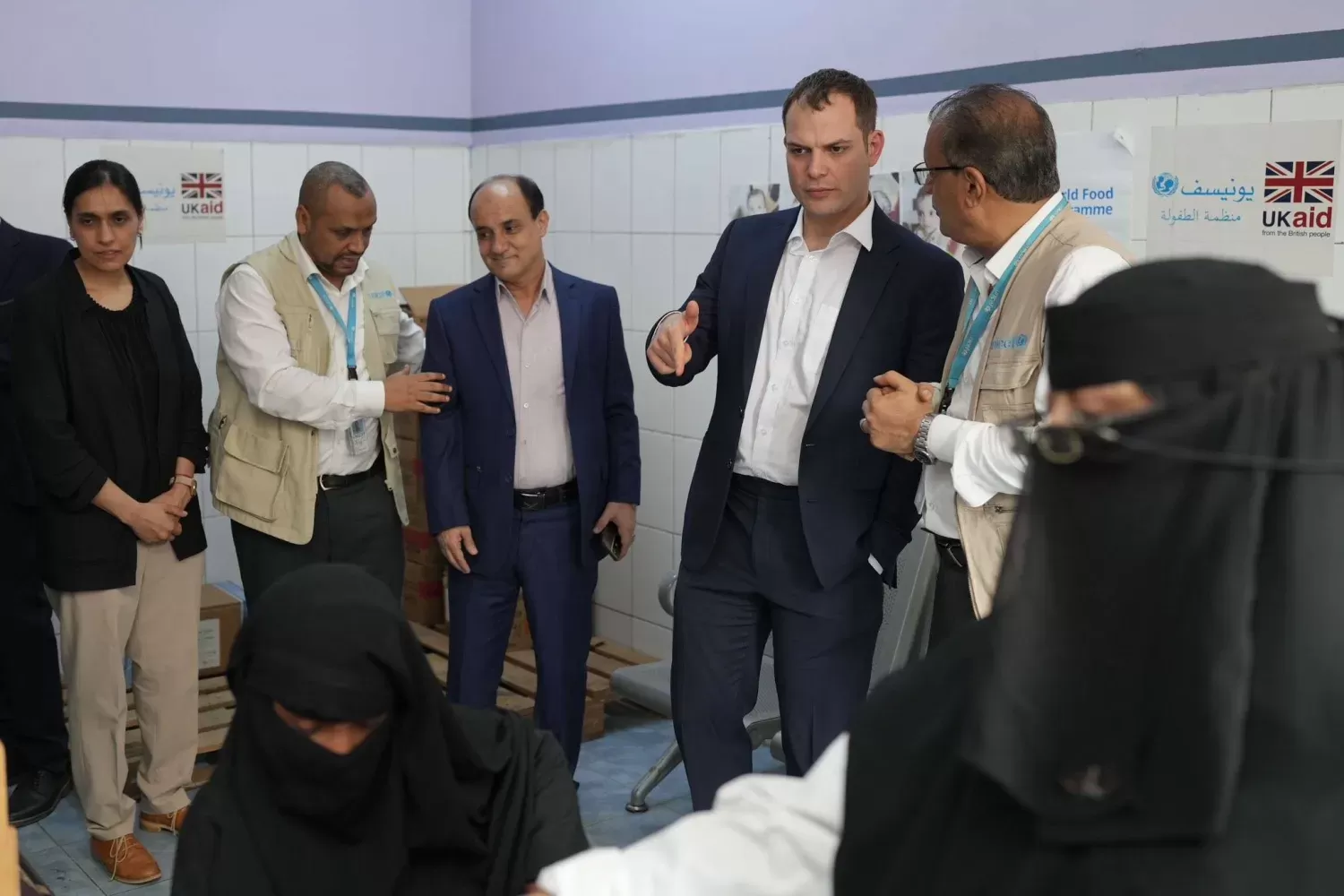
British Foreign Office Minister for the Middle East, Hemish Faulkner, visited the temporary Yemeni capital, Aden, on Tuesday, November 18, 2025, in his first visit to the city since taking office, becoming the highest-ranking British official to visit Aden since former Foreign Secretary Jeremy Hunt's visit in 2019. During his meeting with Yemeni officials, the Minister affirmed that the aim of the visit is to strengthen the British partnership with the Yemeni government and raise the level of practical coordination in various security, development, and humanitarian files. Faulkner said that the United Kingdom maintains all necessary channels of communication with the various parties to ensure its full presence in the region, but he declined to disclose details of these contacts, according to "Al-Sharq Al-Awsat." The Minister began his visit by inspecting a health center in a camp for displaced persons in Aden, before heading to the headquarters of the Yemeni Coast Guard, where he praised the joint efforts in monitoring and securing maritime navigation, adding that cooperation with Yemen contributes to protecting the interests of 55 countries around the world and reduces maritime threats resulting from Houthi attacks on ships. Faulkner pointed out that the United Kingdom supported the Yemeni Coast Guard in September 2025 with $4 million to renew boats and provide communication equipment, stressing that this aid is used effectively in maritime operations, including intercepting shipments that could be used for military purposes. The Minister stressed that maritime security alone is not enough to resolve the Yemeni crisis, explaining that resolving the conflict requires a comprehensive political solution and necessitates regional and international coordination, with the involvement of the Yemeni government in the restabilization process. For their part, Yemeni researchers described the political situation as still complex, as Mahmoud Shahra, an associate fellow at the Royal Institute of International Affairs, believes that changing the balance of power on the ground is the key to advancing the peace process, while researcher Maysaa Shujaa al-Din pointed out that addressing the Yemeni crisis requires simultaneous political, military, and development efforts, with the understanding that Yemen is not a priority for all regional and international parties. The visit witnessed meetings between Minister Faulkner and the Chairman of the Presidential Leadership Council, Dr. Rashad Al-Alimi, the Prime Minister, the Minister of Foreign Affairs, and the Supreme Commander of the Yemeni Coast Guard, where they discussed all issues related to maritime security, the humanitarian situation, and supporting Yemeni capabilities in the areas of development and stability. Faulkner affirmed that the United Kingdom appreciates the efforts of the Yemeni government and regional partners, noting that cooperation with Saudi Arabia and the UAE in these files is an essential element to support security and stability in Yemen and the region. The Minister concluded his visit by affirming that his country is committed to supporting Yemen in overcoming the humanitarian and security repercussions of the conflict, while working to consolidate partnerships and enhance joint cooperation to ensure a stable and secure future for the Red Sea and Yemen in general.