
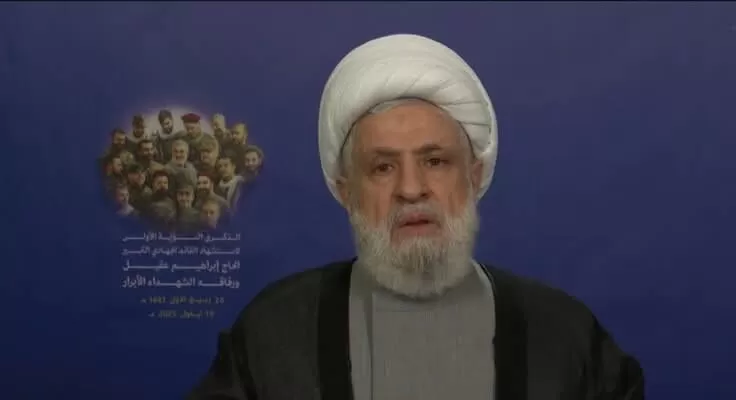
Naim Qassem calls on Saudi Arabia to "forget the past" and form a front against Israel.
Arabian Sea Newspaper - Special
Arab Gulf - Follow-ups: Following years of animosity that affected the Kingdom's relationship with Lebanon, the Secretary-General of the Lebanese Hezbollah group, Naim Qassem, called on Saudi Arabia on Friday to "open a new page," put aside differences, and form a united front against Israel. Since 2016, Saudi Arabia and other Gulf states have designated Hezbollah as a terrorist organization. In the past few months, Riyadh has joined Washington and Hezbollah's opponents within Lebanon in pressuring the Lebanese government to disarm the group, which was largely undermined by last year's war with Israel. In a televised speech, Qassem said that regional powers should view Israel, not Hezbollah, as the main threat to the Middle East, and suggested "clearing relations" with Riyadh. Qassem continued, "We assure you that the resistance's weapon is directed at the Israeli enemy, not at Lebanon, Saudi Arabia, or any place or entity in the world." He pointed out that dialogue "will freeze the differences that occurred in the past, at least in this exceptional stage, in order to confront Israel and curb Israel," and said that pressure on Hezbollah is "a net gain for Israel." It is worth mentioning that Saudi Arabia previously spent billions on Lebanon, deposited funds in the central bank, and helped rebuild the south after the 2006 war between Hezbollah and Israel, but Hezbollah's influence has increased in Lebanon and the region with the help of Iran. Relations deteriorated sharply in 2021 when Saudi Arabia expelled the Lebanese ambassador, recalled its envoy, and banned Lebanese imports. A statement in Saudi media at the time said that the Hezbollah group controls decision-making in the Lebanese state. Hassan Nasrallah, the Secretary-General of Hezbollah at the time, described Saudi Crown Prince Mohammed bin Salman as a "terrorist" and repeatedly criticized Saudi Arabia's role in Yemen. But the past few months have witnessed seismic political shifts in the region, with Israel bombing Hezbollah last year, Nasrallah's death, and the opposition overthrowing Bashar al-Assad, the group's Syrian ally, in December.