

Developments in the Defense Agreement Between Pakistan and Saudi Arabia
Pakistan: Defense Agreement with Saudi Arabia Includes Nuclear Capabilities
Arabian Sea Newspaper - Special
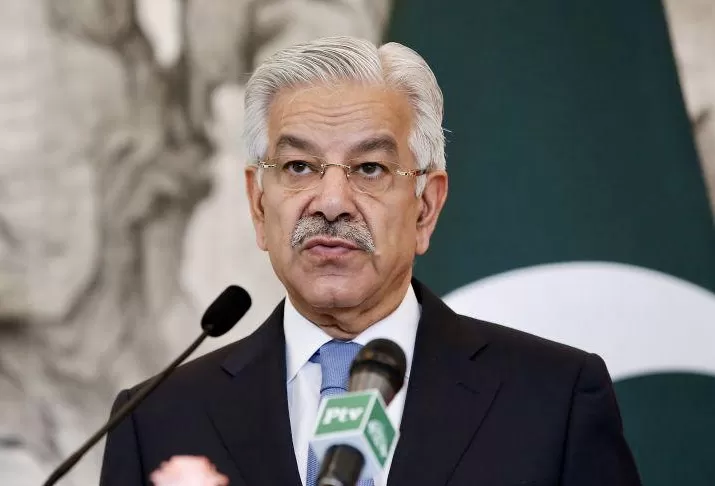
Pakistan: Defense Agreement with Saudi Arabia Includes Nuclear Capabilities Islamabad - Bahar Alarab Pakistani Defense Minister Khawaja Muhammad Asif announced today, Friday, that his country's nuclear capabilities may fall within the scope of the joint strategic defense agreement recently signed with the Kingdom of Saudi Arabia. Asif said in statements to the Pakistani "Geo News" channel that "Pakistan's nuclear capabilities can certainly be used within the framework of this agreement," stressing that the agreement is purely defensive in nature and does not target any particular country. Regarding the possibility of other Arab countries joining the agreement, the Pakistani minister explained that "the doors are open," but he declined to confirm the existence of practical steps in this direction at present. Asif affirmed that "the joint defense of the lands and peoples of Islamic countries is a fundamental right," pointing out that the agreement with Saudi Arabia aims to build a collective deterrent umbrella to confront any potential aggression. These are the first statements of their kind to link the defense agreement signed between Riyadh and Islamabad to the possibility of benefiting from Pakistani nuclear capabilities, which gives the agreement broad strategic dimensions that go beyond traditional military cooperation. Strategic Dimensions and Potential Transformations Observers believe that the Pakistani Defense Minister's reference to the possibility of employing nuclear capabilities within the framework of the defense agreement with Saudi Arabia represents a qualitative shift in regional deterrence equations. These statements carry direct messages to both Iran, which is strengthening its regional influence through armed proxies in Yemen, Lebanon, and Iraq, and India, which is Pakistan's primary strategic rival in South Asia. This move is also expected to raise particular sensitivity among the United States and the West, who view with concern any expansion of nuclear cooperation outside the framework of international treaties, especially in light of China's involvement as a major player in the Pakistani-Saudi alliance. Analysts believe that introducing the nuclear dimension into the Riyadh-Islamabad agreement does not necessarily mean direct nuclear armament, but it adds significant symbolic and strategic weight to the agreement, which may redraw the balance of power in the Gulf and South Asia alike.