

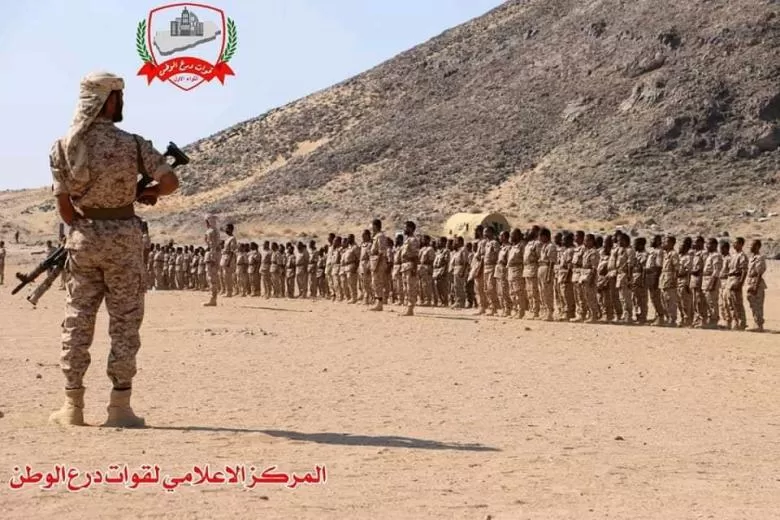
Yemen: "Nation Shield" forces take over securing the international (Al-Wadia'a - Al-Abur) road.
Arab Sea Newspaper - News Updates
Arabian Sea - Yemen - Follow-ups: The second brigade of the "Nation Shield" forces, supported by Saudi Arabia, launched its deployment yesterday, Tuesday, on the Al-Wadia'a - Al-Abr line in the Hadramaut desert, in a move said to aim to "enhance security and protect international roads." The move came days after the visit of the Chief of the General Staff, Lieutenant-General Sagheer bin Aziz, to the command of the Second Brigade of the Nation Shield in the Al-Wadia'a area and his meeting with the commander of the Second Brigade of the Nation Shield forces, Colonel Fahd Issa Ba Mumin. According to military sources, the move came based on directives from the Minister of Defense, and resulted in the handover of points and sites belonging to the 23rd Mechanized Brigade, led by Brigadier General Abdullah Muazeb, on the vital road, to those forces. The sources indicated that this step comes within a broader deployment plan for these forces, which includes the Al-Khasha'a areas and the Al-Abr - Al-Aqla line, while additional tasks are assigned to the "Emergency Forces" on the Al-Abr - Al-Ruwaik line towards Safer. The "Nation Shield" forces consist of Salafi formations that were absorbed into this new force, which was established by a presidential decree in January 2023, to become a reserve force affiliated with the Supreme Commander of the Armed Forces, President Rashad Al-Alimi. During the past period, a number of its brigades were established and deployed in governorates far from the front lines with the Houthis, such as Al-Mahra and Hadramaut, while units of them took over positions in Wadi Hadramaut, under the pretext of calming tensions with the Southern Transitional Council. The Al-Wadia'a - Al-Abr - Marib line represents the most important and only open land crossing between Yemen and Saudi Arabia since the years of the war, and it is the lifeline for the city of Marib and the army forces stationed there, in addition to more than two million displaced people, according to official statistics, in light of the Houthis encircling the governorate from three sides. Goods and basic supplies pass through this artery, and people move from and to it, whether towards the governorates under the government or to Saudi Arabia. Military sources told "Al-Masdar Online" that the ongoing arrangements include the deployment of units from the "Nation Shield" in large areas of the Hadramaut desert, so that "southern forces from the Nation Shield" will take over tasks on the Al-Abr - Al-Aqla line towards Shabwa, while other formations called "Emergency Forces" will be deployed on the road leading to Safer, where the most important oil and gas facilities are located. These movements open the door to interpretations that go beyond the idea of "securing roads" to a redistribution of roles and influence among the military forces in the region. What is controversial is not only the presence of new formations on the international road, but also the timing, location, and political context, as the Southern Transitional Council intensifies its campaigns to demand the withdrawal of the First Military Region forces from Hadramaut, which it sees as an obstacle to its project to complete control over the eastern governorates within the country's division project. In return, questions are raised about the feasibility of replacing new forces with the regular army affiliated with the General Staff and the Ministry of Defense, and the repercussions of this on the future of the neighboring governorates. If the international road has remained the only outlet for Marib for years, then rearranging it in this way may raise questions about how these movements will affect the besieged governorate, and on the future of its supply lines, which represent its lifeline.