

The U.S. military confirms its presence in Syria and its non-withdrawal.
Arabian Sea Newspaper - Special
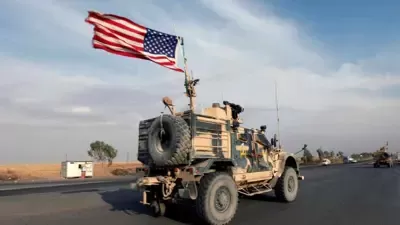
Arab Gulf - Follow-ups: The U.S. military has confirmed its military presence in some of its bases located in northeastern Syria, contrary to previous statements by the U.S. administration about reducing its military presence in Syria, as part of a plan that began implementation last May. Syrian sources reported that the U.S. military has been working in recent days to strengthen its presence in some bases, including a base in Al-Hasakah Governorate, which was supplied with medium and heavy equipment and weapons, and hundreds of armored vehicles and military vehicles "Bradley and Hummer" that it decided to withdraw from Iraq. The sources explained that the field movements observed for the U.S. forces in Al-Hasakah confirm the strengthening of its presence in the governorate controlled by the Syrian Democratic Forces (SDF). The sources confirmed that the U.S. military conducted patrols in areas where there are no military bases, including Deir ez-Zor Governorate and Ain al-Arab "Kobani," indicating the expansion of the army in its areas of presence, which represents a retreat from its previous plans to withdraw from northeastern Syria. Previous statements showed a divergence in the views of the political and military institutions in the United States regarding the military presence in Syria, but the return of activity to the movement of forces reflects that the political vision is beginning to approach the position of the military establishment that supports the continuation of the presence, especially with the increasing activity of ISIS in these areas since the beginning of 2025. With the return of intense activity of the U.S. military in the northeastern governorates of Syria, sources suggest that these areas will become a central base for the U.S. military presence, similar to its presence in the Kurdistan region of Iraq. The escalating tensions in Syria have been reflected in the calculations of all players in the Syrian scene, foremost among them the United States, where speculation has emerged about the likelihood of postponing the withdrawal of its forces from the country, as was scheduled within a gradual plan that began implementation in May 2025. Western diplomatic sources closely following the Syrian issue revealed earlier that the deteriorating security situation and fears of increased sectarian and ethnic tensions prompted the U.S. administration to consider re-evaluating the timeline for reducing the military presence in Syria. According to what was previously announced, the U.S. plan was to reduce the number of troops from about 2,500 to less than 1,000, while focusing the activity of the remaining forces in a single military base in northeastern Syria to confront ISIS. The Western sources said that the recent events in Syria, including the clashes witnessed in the Suwayda Governorate and the intervention of the Bedouin tribes, have added significant complexities to the Syrian scene, prompting America to hesitate in the process of withdrawing its forces from Syria to ensure stability and prevent the aggravation of chaos. It is noteworthy that more than one U.S. official previously questioned the plan to withdraw forces from Syria, especially in light of the continued chaos, before the events witnessed in the Syrian coast and the Suwayda Governorate, which came to reinforce the possibility of America hesitating in withdrawing its forces.