
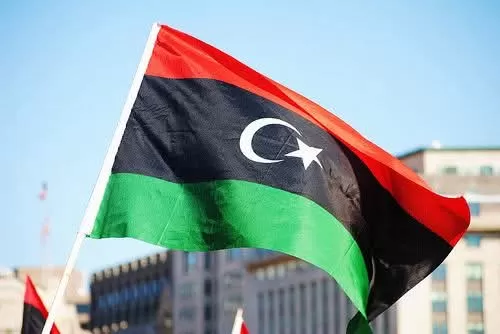
International powers offer to impose sanctions on those obstructing the resolution of the crisis in Libya.
Arabian Sea Newspaper - Special
**Arab Gulf - Follow-ups:** Influential international powers have proposed imposing sanctions on those obstructing the political and peaceful solution in Libya, according to informed Libyan political sources. The sources, which are in agreement, stated that "these sanctions may include a ban on entry to specific countries, as well as freezing the assets of those obstructing parties abroad, and excluding them from any future talks to resolve the political crisis in Libya." This development comes at a time when the UN envoy to Libya, Hana Tete, is proposing a new roadmap aimed at resolving the crisis that the country has been experiencing since the fall of the Gaddafi regime in 2011. **A Notable Shift** Libyan political analyst Hossam Al-Finnish commented, saying that "the UN and international threats to impose sanctions on those obstructing the political solution in Libya indicate a notable shift in the international community's approach to the Libyan crisis." He mentioned that presenting names and moving towards deterrent mechanisms would reduce the room for maneuver for parties that have become accustomed to slowing down or disrupting settlement paths. He pointed out that this development coincides with the roadmap of the UN envoy Hana Tete, which has found a wider echo in regional and international circles, while some active local parties have not expressed explicit objection to it, which reflects the beginning of the formation of common ground. Al-Finnish continued that: "Libya, which has long been described as a geopolitical knot at the crossroads of the Mediterranean, Africa, and the Sahara, seems today to be facing a stage of relative breakthrough in this knot after its three sides, regional, international, and internal, have begun to approach preliminary agreements on the general framework for the solution." According to his analysis, "the regional and international side is the clearest so far in the matter of consensus, while the local side still needs more understandings between the influential forces on the ground." Al-Finnish stressed that "nevertheless, major challenges still remain, especially in completing the first phase of the roadmap, which relates to organizing and reforming the High National Elections Commission and amending the laws of the electoral framework, as well as the issue of setting binding guarantees for the implementation of the electoral process and accepting its results." He said that "in addition to that, another fundamental challenge is the need to agree on the formation of a new unified government that will oversee this stage and break the state of executive division existing between two conflicting authorities, which is an essential condition for creating a political and security environment capable of absorbing the electoral requirement." The same speaker stated that "on the security concerns level, Libya has relatively moved away from the specter of a wide military confrontation, but the threats of war still exist in light of the fragility of the existing balances, especially in Tripoli." He added, saying: that there is a clear international and regional rejection of the capital sliding towards a new war due to the uncertainty of the possibility of controlling the circle of conflict if it expands, in addition to the local efforts made to avoid this scenario. He pointed out that the Presidential Council and community outreach committees have been active in containing tensions, along with security arrangements supervised by the General Staff of the Army in Tripoli through the adoption of a policy of isolated public security and holding periodic meetings between the Presidential Council and community outreach committees with the United Nations mission, which supports these efforts to ensure their continuation and development. Al-Finnish concluded his speech by saying: "Libya stands today at a crossroads; either investing in the state of international and regional consensus and turning it into a political reality that opens the door to stability, or the continuation of internal stumbling that may keep the crisis in a circle of stagnation and uncertainty, and perhaps even return it to the square of conflict." **A Necessary Step** For his part, the Vice President of the Libyan National Umma Party, Ahmed Dougha, considered that there is a need to impose sanctions on all obstructers, pointing to multiple types of sanctions that can be applied. He said, "If the UN mission follows this procedure, it will have positive results for resolving the political crisis in Libya." Dougha believes that "the success of Tete's initiative depends on the seriousness of the UN mission and the countries involved in the Libyan issue in resolving the crisis in Libya," stressing that the correct application of these mechanisms will ward off the specter of war from Libya.