
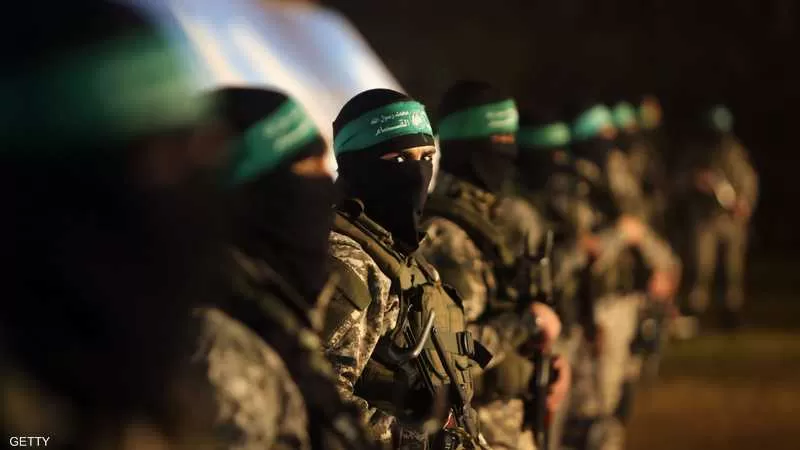
Hamas in an unprecedented predicament... Is it heading towards de-escalation or escalation?
Arabian Sea - Exclusive
Special/Palestine With the exposure of the Iranian cover and the decline in financial and political support, Hamas finds itself in one of its most complex phases since its establishment, amid changing regional and international conditions, and increasing internal field pressures. While international calls for a cessation of fighting continue, Washington is moving towards arranging a comprehensive deal that goes beyond the idea of a temporary truce. Will Hamas accept the trade-off, or will it choose confrontation? Wael Mahmoud, a media professional specializing in Palestinian affairs, confirmed during his participation in the "Newsroom" program that Hamas has lost many of its strengths, both inside and outside Gaza, noting that the movement's combat structure has eroded under the weight of Israeli strikes, while its alliance with Iran has clearly declined, especially after the direct American strike on Iranian nuclear sites. He added that Hamas "has exited the strategic alliance equation with Tehran" after regional arms such as Hezbollah and the Houthis appeared to be bystanders, and did not respond in proportion to the scale of the escalation, which revealed the fragility of what was known as the axis of resistance. Hamas' list of conditions According to what private sources told "Sky News Arabia," Hamas stipulates that its political office abroad not be touched, that no restrictions be imposed on its funds, as well as guaranteeing its participation in the administration of the sector and in the future security services, while demanding an American guarantee to stop the war for 70 days. It is remarkable that the movement, which used to accuse Washington of bias, is today demanding an official American guarantee for the truce agreement, in a clear reflection of the imbalance of power after the Gaza war and the repercussions of the Iranian-Israeli escalation. Washington is pushing for a comprehensive agreement For its part, the administration of President Donald Trump is seeking to engineer an integrated deal, which may be announced in conjunction with Israeli Prime Minister Benjamin Netanyahu's visit to the White House, according to what Professor of Political Science Dr. Hamed Fares confirmed. He pointed out that Trump, who is looking forward to reaping the "Nobel Peace Prize," wants to market a double achievement: stopping the war between Israel and Iran, and ending the conflict in Gaza. Fares pointed out that Hamas' conditions reflect "purely organizational interests," questioning the absence of any humanitarian or civil demands for the benefit of the residents of the sector, considering that the movement is facing a "golden opportunity" that may not be repeated. Arab support and international warnings Observers believe that Arab pressures, including positions issued by Qatar and Egypt, open a limited window for Hamas to join the truce. In light of regional transformations, and Israeli talk of a possible openness to a two-state solution, the Palestinian factions are now required to rearrange their internal affairs. Fares confirmed that the American-Israeli talk includes new proposals on aid management, prisoner exchange, and the withdrawal of the Israeli army to beyond the Netzarim axis, which are provisions that may pave the way for a truce leading to broader negotiations. Who controls the decision in Gaza? Wael Mahmoud stressed that Hamas no longer has the decision in Gaza, but rather the fate of the sector is linked to international and regional understandings. He said that the American administration is holding the threads of the file, starting with stopping the raids on Tehran, and ending with putting pressure on Netanyahu to accept a political agreement. He warned of losing the opportunity if Hamas continues to raise "narrow organizational" demands, stressing that the future of Gaza requires effective Arab involvement, especially from Cairo and the Gulf capitals, in formulating a political solution that guarantees the stability of the sector and prevents the recurrence of the humanitarian tragedy.