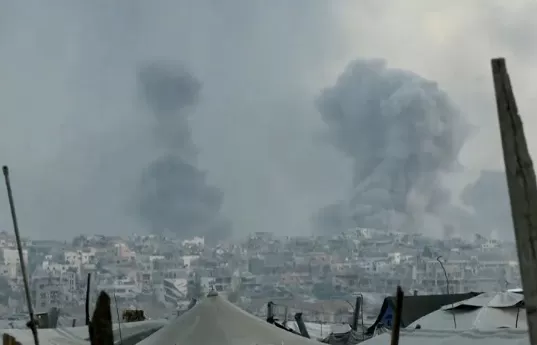


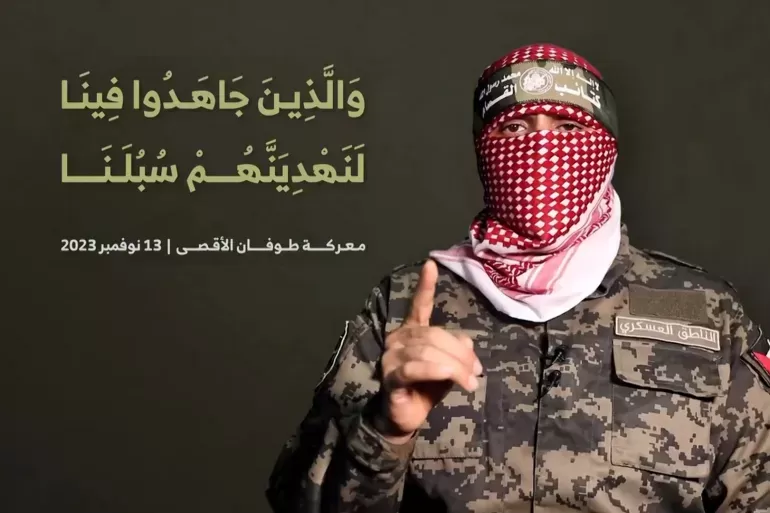
Israeli claim of assassination of "Abu Obaida," spokesman for the Al-Qassam Brigades in Gaza.
Arab Sea Newspaper - Special
Arab Gulf - Follow-ups: The Israeli occupation army's claim of targeting Abu Obaida, the spokesman for the Al-Qassam Brigades, the military wing of Hamas, nicknamed "the masked one," in a raid on Gaza City, has sparked widespread controversy on social media platforms. The official Israeli "Kan" channel said yesterday, Saturday: "Israel tried to assassinate Abu Obaida in a raid on Gaza City," while the occupation army claimed that it "targeted a central leader in the Hamas movement in Gaza City by air force planes" in cooperation with the Israeli internal security service "Shin Bet," the Southern Command, and under the supervision of the Military Intelligence Directorate. Media and Psychological Warfare Reactions on digital platforms varied; some tweeters believed that the martyrdom of Abu Obaida - if true - would not be the first nor the last of Hamas leaders who have sacrificed their lives since the beginning of the war, stressing that the resistance is still ongoing, steadfast, and advancing despite the losses. In contrast, others considered that the occupation exaggerates through its media any targeting of Abu Obaida because of his high symbolic value in Arab consciousness, stressing that the Israeli media is fully directed and subject to the directives of the security and military services. Tweeters pointed out that such news comes within the framework of "psychological warfare," as the occupation has been promoting rumors about the assassination of resistance leaders in order to confuse them and push them and their social contexts into certain behaviors that allow it to gather information in preparation for targeting them. Justifying Massacres Bloggers explained that the occupation seeks through these claims to justify the massacres it committed west of Gaza City, which claimed the lives of 8 martyrs and injured more than 20 others, mostly women and children, by claiming that it was targeting Abu Obaida. They mentioned that Israel has been committing massacres in Gaza City since the morning, bombarding it with tons of explosives and justifying it by assassinating one person, "as if the one it claims to be targeting moves from one area to another," and these people pointed out that Abu Obaida himself, whose assassination was previously announced by the Hebrew media in eastern Khan Yunis, south of the Strip, some time ago, is being used today to justify a new massacre in northern Gaza. Bloggers pointed out that Israel is using "the same old trick," so whenever it commits a massacre against civilians, it rushes to market the lie of targeting a resistance figure to justify its crimes, turning the blood of innocents into mere "collateral damage." Symbolism Beyond the Individual In contrast, activists believed that the departure of Abu Obaida would not change the facts on the ground, as the resistance is steadfast and still offering heroism, despite the martyrdom of most of the first-tier leaders, and they added that the man who enjoyed enormous symbolism remained attached to him closer to emotional feeling, like the hero in a long series that has not turned into a wide public action or pressure movement. Others recalled his speech in which he used the harshest expressions of reproach to the Arab and Islamic peoples, calling on them to move, protest, and break the restrictions, without much change in the scene afterwards. They added that Abu Obaida and his companions "thought too highly," not only of the masses, but even of the Islamic movements that used to raise the slogan of "the nation," before they turned in their view into "national" forces whose priority is development and prosperity, away from the issues of Jerusalem and Al-Aqsa, which are still in great danger. It is worth mentioning that the Israeli occupation had previously tried to target Abu Obaida in its repeated wars on the Gaza Strip, starting with the 2008 aggression, and then in 2012 and 2014, up to the "Al-Aqsa Flood" battle.