
The Egyptian parliament is engaged in a heated debate over the draft general budget.
Arabian Sea - Exclusive
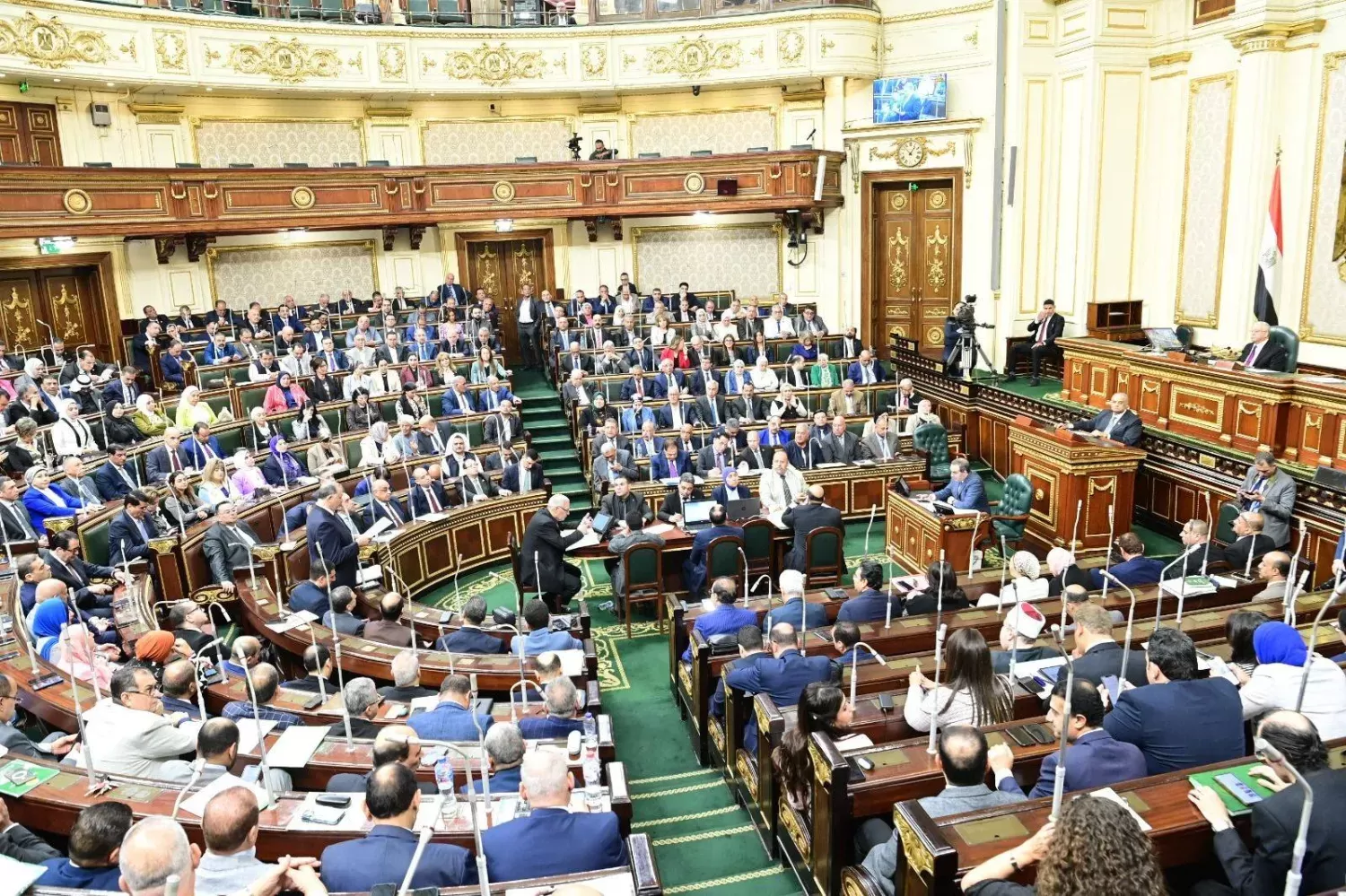
The Egyptian House of Representatives (Parliament) held heated discussions on Monday during the presentation of the state's draft general budget (2025-2026), amid controversy over the government's borrowing policy and the increase in debt interest. Others defended the budget presented by the government in "exceptional" international circumstances that require "national alignment." The heated session began with the Speaker of Parliament, Hanafi Gebali, criticizing the Ministers of Finance, Ahmed Kojok, and Planning, Rania Al-Mashat, for their late arrival, saying: "I regret the absence of the two ministers, and there are no excuses for that," considering the presence of their assistants "inappropriate." The Minister of Finance arrived late, followed by Rania Al-Mashat, before the end of the session. Gebali rejected a request to speak from the Minister of Parliamentary Affairs, Mahmoud Fawzi, to explain the reason for the ministers' absence at the beginning of the session, commenting: "There was harsh criticism from the representatives... I prevented you (the government) from criticism," adding: "I hope this is conveyed to the esteemed Council of Ministers." Member of Parliament Maha Abdel Nasser stated that "starting the session before the presence of the concerned ministers gives an image that does not befit the council." Maha Abdel Nasser, a representative of the Egyptian Democratic Party, had expressed her rejection of the draft budget during her speech in the session, attributing this to the fact that "65 percent of the budget's uses are for debt servicing." Revenues in the new Egyptian budget, which was approved by the government last March and sent to the House of Representatives, are estimated at about 3.1 trillion pounds ($61 billion) with an annual growth rate of 19 percent, and expenditures amount to 4.6 trillion pounds ($91.1 billion) with an increase of 18 percent, with an expected deficit of 1.5 trillion pounds ($29.6 billion). Opposition MP Diaa El-Din Dawood rejected the budget, saying that it "is not based on reducing public debt, but continues to manage deals that do not translate into results on the ground." MP Mohamed Abdel Aziz, a member of the "Youth of Parties" coordination, said that "debt interest has increased by 25 percent, reflecting an increase in the volume of borrowing, whether for repayment of installments or interest," adding: "Any child born this year is indebted by 41,000 pounds." MP Mohamed Badrawi pointed out in his speech at the session that "for every pound of state revenue, more than 80 piasters are lost to debt interest, and therefore very little remains to cover expenses, and then we have to borrow again to build schools, hospitals, and roads." Economy Egypt: "Heated" Parliamentary Discussions on the Draft "General Budget" Criticisms of the Delay of Government Representatives... and Controversy over Increased Loans Cairo: Rehab Aliwa Published: 17:45 - June 16, 2025 AD - 20 Dhu al-Hijjah 1446 AH The Egyptian House of Representatives during a previous session in May 2025 (Egyptian House of Representatives) Speaker of the Egyptian Parliament Hanafi Gebali (Egyptian House of Representatives) Member of Parliament Maha Abdel Nasser told "Al-Sharq Al-Awsat" that "starting the session before the presence of the concerned ministers gives an image that does not befit the council." The government presents the new draft budget in an infographic (Information and Decision Support Center) Criticisms of the budget touched on its failure to achieve the constitutional percentage for spending on the "education" and "health" files. The Egyptian constitution stipulates that the government must allocate no less than 3 percent to the health sector, 4 percent to pre-university education, and 2 percent to university education and scientific research from the gross national product. The government had announced, in the financial statement of the draft general budget, that the allocations for education (university and pre-university) amounted to about one trillion and 43 billion pounds in the draft budget, but about 50 percent of these allocations go to debt interest. MP Ahmed Farghali considered that "the government circumvented the prescribed constitutional ratios." In contrast, some defended the draft budget, especially in light of the "exceptional regional circumstance" in which it is being approved. The leader of the parliamentary majority, Abdel Hadi Al-Qasabi, said that "the people are becoming more solid and strong in the face of crises and all circumstances," praising the "fruitful and continuous cooperation between Parliament and the government in fulfilling many of the representatives' requests, such as additional approval for treatment at the state's expense worth 5 billion pounds and for hospitals worth 3 billion pounds." MP Suleiman Wahdan agreed to the draft budget, saying: "The citizen does not need numbers from us, but rather needs us to send a message of reassurance." MP Amr Darwish believed that "the current time requires us to approve." The House of Representatives will continue discussing the draft budget on Tuesday, and representatives of the government from the concerned ministers will comment on the representatives' interventions before putting the draft to a vote.