

Nvidia's (H20) Chip Breaks the Ban... Containment or Technological Arming of China?
Arabian Sea - Follow-ups
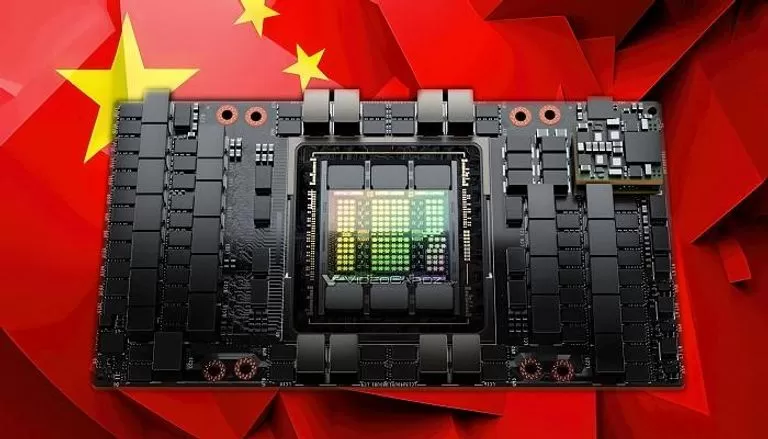
The decision by US President Donald Trump's administration to allow Nvidia to resume exporting its "H20" artificial intelligence chips to China has sparked considerable controversy. This comes amid concerns that the Trump administration's decision could boost Beijing's technological and military capabilities and undermine US supremacy in the field of artificial intelligence. According to a report published by Bloomberg News, Republican Representative John Moolenaar, chairman of the House Select Committee on the Chinese Communist Party, sent a letter to Commerce Secretary Howard Loutnik, expressing his rejection of the decision, demanding that shipments be stopped and requesting a security briefing by August 8, 2025. Moolenaar pointed out that the H20 chip, although a watered-down version of advanced chips such as the A100 and H100, is still powerful enough to drive artificial intelligence efforts in China. Moolenaar said: "The H20 chip is low-cost but very powerful in inference, and surpasses Chinese domestic capabilities, meaning it will provide a major leap in AI development there." He added that China could use these chips to develop powerful, open-source AI models, similar to the R1 model developed by DeepSeek. Debate within the administration The decision comes at a sensitive time when trade relations between Washington and Beijing are in a state of anticipation, with US efforts to obtain rare earth minerals used in vital clean energy and defense industries. Although the H20 chips are designed to comply with export restrictions, their high ability to perform inference tasks makes them attractive to Chinese companies, raising widespread debate within the US administration about the feasibility of allowing their export. While opponents of the decision believe it could strengthen China's technological capabilities, administration officials defend it as a way to keep China tied to the US technological system. Commerce Secretary Howard Loutnik said in a previous interview with CNBC: "We have to sell them enough to make their developers addicted to the American system." For its part, Nvidia confirmed that it has not yet received official approval to export the H20, but expects approval soon, according to CEO Jensen Huang. The company declined to provide further details, at a time when political pressure on it is increasing from both sides. China's position In contrast, the Chinese Ministry of Commerce described the US restrictions as "unjustified" and called on Washington to abandon what it called a "zero-sum mentality." It also denied that the export of H20 chips was part of ongoing trade negotiations, contradicting statements by some US officials. Since 2022, the United States has imposed strict restrictions on the export of advanced chips and their manufacturing equipment to China, including companies such as Huawei. These restrictions are part of a broader strategy to contain Beijing's progress in artificial intelligence and advanced technologies. But the continuing debate within the administration and Congress reflects a division in visions: Should the ban be tightened to protect US national security, or should limited exports be used as a tool to impose technological dependence on the United States? With Moolenaar's deadline approaching, tensions are rising within the halls of American politics, as the H20 chip has become a symbol of a broader battle over the future of technological supremacy between the two global powers. Al-Ain News - Yasmine El-Sayed Hani