

Houthis complicate the economic scene in Yemen with a new banknote.
Arabian Sea - Exclusive
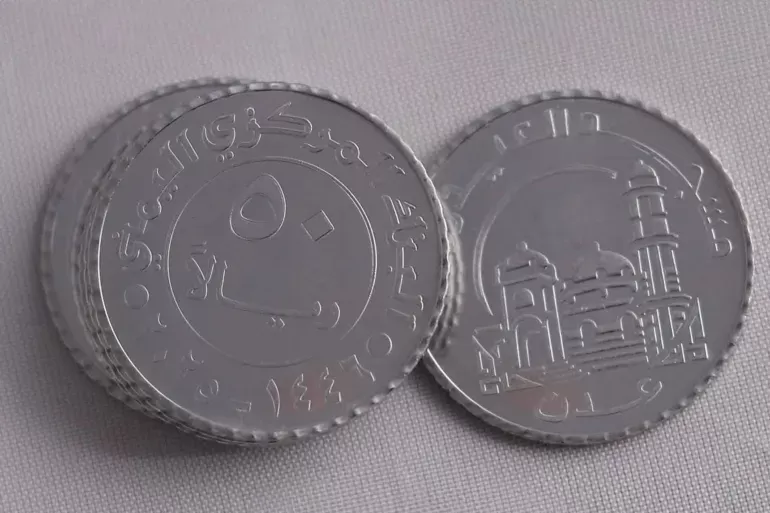
The economic and banking situation in Yemen is becoming more complex, with the Houthi group announcing the launch of the second issue of the 200-rial banknote for circulation starting today, Wednesday, days after issuing a new 50-rial coin, and the Yemeni government (internationally recognized) rejecting the measure, which it considered a "destructive and absurd act." This development reveals economic and political dimensions that exacerbate the suffering of Yemenis in a country suffering from a humanitarian crisis that is "the worst" in its modern history, according to the United Nations. Last Saturday, the Houthi group, which controls the capital Sanaa and a number of Yemeni governorates, announced the issuance of a new 50-rial coin (approximately 20 cents), according to a statement by the Yemeni Central Bank affiliated with the group. The Houthis had previously announced the minting of a 100-rial coin in April 2024, a move that was met with condemnation from the legitimate government and European missions in Yemen. In a statement, the Yemeni government rejected the Houthi measure, considering it "a continuation of the economic war waged by the militias against the Yemeni people, and a sabotage of the previous agreement between the two parties that was signed on July 23, 2024, under regional and international auspices." About a year ago, the UN envoy to Yemen, Hans Grundberg, announced an agreement between the Yemeni government and the Houthi group on "several measures to de-escalate with regard to the banking sector, following mutual measures between the two parties at the time." At that time, the Houthis announced the minting of a 100-rial coin for the first time, while the Yemeni Central Bank affiliated with the Yemeni government responded by suspending the licenses of 6 of the country's largest banks whose headquarters are located in the Houthi-controlled capital, Sanaa. At that time, the European Union, British, and French missions to Yemen condemned the Houthi decision and warned that "unilateral decisions will deepen the division of the Yemeni economy and do not serve the peace and prosperity of Yemenis." The Houthi group considered its announcement of minting a new coin to be "a well-considered and responsible measure to be an alternative to the damaged banknotes of the same denomination." According to a statement by the Central Bank in Sanaa, the group explained that this "comes within the framework of finding solutions to the problem of damaged banknotes and enhancing the quality of the national currency in circulation." It claimed that these measures "will not result in any increase in the money supply or any impact on exchange rates." For its part, the Yemeni government rejected the Houthi measures, and affirmed in a statement by the Central Bank in the temporary capital, Aden, that this act is "an absurd destructive act that targets the lives of Yemenis and exacerbates the catastrophic economic situation in the country." The government pointed out that "this dangerous escalatory act by the Houthi militias undermines the declaration of July 23, 2024 issued by the international envoy, which was sponsored regionally and internationally." The UN-sponsored agreement stipulated "the cancellation of decisions and measures against banks from both sides, and the cessation in the future of any similar decisions or measures." Dangerous escalation In this regard, Yemeni economic expert Majed Al-Daari considered the Houthi measure to be "a coup and a challenge to the legitimate government and the regional and international community." Al-Daari added in a comment to Anadolu Agency, "Printing a new currency is the most dangerous escalatory stage in the economic file, and ends all previous understandings and UN efforts related to normalizing economic conditions, ending the crisis related to the banking sector, and unifying the currency." He continued, "The Houthis have proven that they are the strongest party and control the economic file, while the government has no options to respond." Al-Daari explained that the government's problem lies in "its abandonment of the strongest decisions to punish the banks located under the control of the Houthis." He pointed out that the government could have "invested that in the monetary or banking sector, but it succumbed to UN and regional pressure and retreated from its decisions, and thus became devoid of any claws related to the economic file." Yemen is suffering from a major financial crisis, the impact of which has been increased by the cessation of oil exports since 2022, as a result of the repercussions of the conflict between the government and the Houthis, which began after the latter took control of Sanaa and several governorates at the end of 2014. "An important step" On the other hand, economic expert Dr. Rashid Al-Haddad believes that the step taken by the Houthi group is "natural and important and addresses the financial liquidity crisis in the capital Sanaa and the rest of the governorates under its control." He added in a statement to Anadolu Agency, "This step has no inflationary effect on the exchange rate of the currency in the areas under Houthi control, and falls within the framework of addressing the liquidity crisis that the local market is suffering from." Al-Haddad explained that the Houthis "control the Yemeni market (70%), which necessitates them to develop solutions and treatments in light of the presence of large quantities of currency that were printed before 2014, and are now considered damaged." He pointed out that the group "will proceed with these treatments despite the US restrictions imposed on it and its designation as a terrorist group." On January 17, 2024, the United States designated the Houthi group as a "global terrorist organization" in response to its continued attacks on civilian ships in the Red Sea, and the decision entered into force 30 days after the designation decision. Parallel economy Professor of Economics at Aden University, Dr. Aref Al-Saqqaf, said that the Houthis' announcement of printing a new currency, whether coin or paper, is "a direct challenge to the Yemeni government as the internationally recognized body for managing monetary policy in Yemen." Al-Saqqaf added, "Printing a new currency deepens the monetary division in the country, and creates a dual economic reality that increases the suffering of citizens and complicates the movement of trade between governorates." He continued, "This announcement represents a political and economic message to the regional and international community that the Houthi group is imposing a fait accompli and seeking to manage a parallel economy outside of legitimacy, which may affect the chances of a political settlement and raise concerns about the unity of the Yemeni financial system." Al-Saqqaf said that "the likely result of this monetary issuance is more loss of confidence in the national currency, increased reliance on foreign currencies, and an expansion of the circle of recession and economic division in the country." Source: Al Jazeera - Agencies