


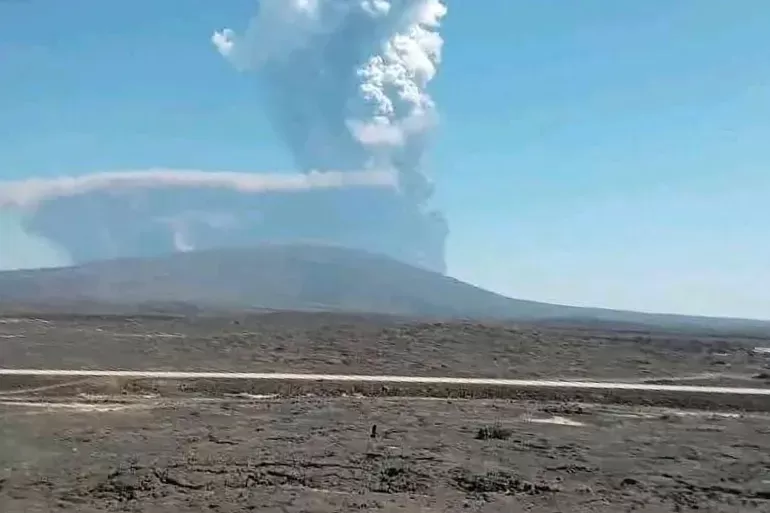
Ethiopian Hayli Gubbi volcano erupts after 12,000 years
Arab Sea Newspaper - Follow-ups
The Haleagubi volcano in northeastern Ethiopia erupted in a rare geological event, the first in about 12,000 years, according to the Smithsonian Institution's Global Volcanism Program. The volcano, which is about 500 meters high, released massive plumes of smoke and ash that rose to 14 kilometers before the eruption subsided after hours. The volcano is located in the Afar region near the border with Eritrea, within the tectonically active Rift Valley area, and ash clouds have spread with the winds towards Yemen, Oman, India, and northern Pakistan, according to the Toulouse Volcanic Ash Monitoring Center. In Yemen, authorities warned of the danger of ash to health and the environment in the governorates of Hodeidah, Ibb, and Dhamar, noting that the dust contains fine particles of volcanic rock and glass that can travel hundreds of kilometers depending on the prevailing winds. They called on citizens to follow preventive measures, including staying indoors, wearing masks and goggles when going out, protecting water sources, and cleaning surfaces carefully after the clouds subside. Yemeni social media recorded a widespread wave of concern among citizens, who documented scenes of ash and dust gathering in the sky, with questions about its health and environmental effects. The weather forecasting center stressed the need to prepare to deal with the effects of the volcano on public health, especially for people with respiratory diseases. It is reported that the volcano is located in a remote and sparsely populated area of Ethiopia, and no casualties have been recorded, while the Ethiopian authorities continue to monitor the situation to assess any potential damage.