


Typhoon "Fung-Wong" Reveals the True Cost of Climate Ahead of COP30
Arab Sea Newspaper - News Updates
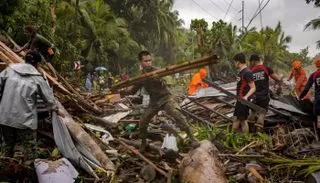
A recent study highlights the shocking dimensions of escalating climate losses around the world, emphasizing that global warming has become the biggest driver of hurricane intensity and increasing economic and human damage, which reinforces the urgent need to take decisive steps during the COP30 climate conference. New data indicates that the direct economic damage caused by the violent Typhoon Vongfong in the Philippines has increased by about 40% as a result of high carbon dioxide emissions from burning fossil fuels, exacerbating the impact of the typhoon on homes, health facilities, businesses and infrastructure, according to "Al-Ain News." Researchers at Imperial College London adopted an "attribution" methodology, which compares the intensity of the current hurricane with a hypothetical hurricane in a world without global warming, to determine the amount of damage directly related to climate change. With fossil fuel emissions continuing to reach record levels in 2025, scientists warn that hurricanes will become more powerful and destructive, with estimates suggesting that losses could rise by as much as 62% in a world that is 2 degrees Celsius warmer, according to The Guardian. The study shows that warming caused by human activity increased rainfall during Typhoon Vongfong by 10.5%, increased wind speed by 5%, and also contributed to the exacerbation of Typhoon Kammuri, which recently caused the death of at least 224 people. Dr. Emily Theokritoff of Imperial College confirmed that these studies reflect only a limited part of the enormous human and economic cost left by the two hurricanes, noting that the analysis does not include long-term health effects. She added: "With the launch of the 30th session of the Conference of the Parties, a painful reminder emerges of the need to reduce emissions immediately, and of the moral responsibility to increase funding for losses and damages, and to expand adaptation efforts in the most vulnerable countries." Attribution studies are becoming increasingly important in light of the increasing lawsuits to hold major fossil fuel companies accountable, with recent reports linking their emissions to dozens of deadly heat waves. Scientific evidence indicates that the climate crisis is producing extreme heat waves that would not have occurred without industrial emissions, while excessive heat is causing one death every minute around the world.