

After disappearing for 20 years, the world's smallest snake reappears.
Arabian Sea Newspaper - Special
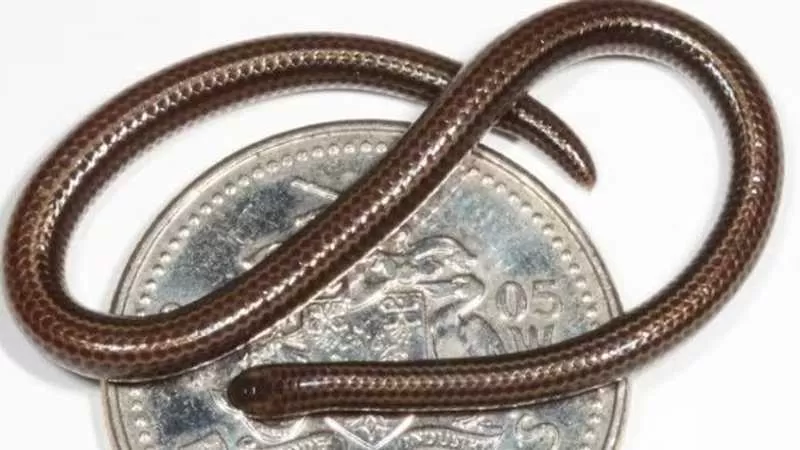
((Arabian Sea)) Translations: The "Barbados threadsnake," the smallest snake in the world, has reappeared after being missing for nearly 20 years. The Barbados snake, which is between 3 and 4 inches long, is the smallest snake in the world and had been missing for two decades, as scientists had not seen it since 2006. A report by "USA Today" stated that researchers discovered the Barbados snake during a recent environmental survey in March, in the middle of the island of Barbados, where it was found hiding under a rock in the rainforest, in the Caribbean country. How was the Barbados snake discovered? During an environmental survey of the forests in Barbados last March, by the "Re:wild" organization in partnership with the Ministry of Environment and Beautification in Barbados, researchers discovered the snake hiding under a rock. It was then taken to the University of the West Indies for examination, where it turned out to be indeed the Barbados threadsnake, which had disappeared since 2006, and then it was returned to the forest. The Ministry of Environment and National Beautification in Barbados had been searching for this snake, and a number of local reptiles for more than a year, as part of a project to protect local reptiles. This snake is also listed on the "Re:wild" organization's list of searching for lost species, which is a list of more than 4,300 species of plants, animals, and fungi that have not been seen or officially documented for at least 10 years. Why is the Barbados snake so rare? The "USA Today" report attributed the rarity of Barbados threadsnakes to the fact that they reproduce sexually, and females lay only one egg at a time. Connor Blades, a project officer at the Ministry of Environment and Beautification, said: "These small snakes cannot find other snakes because they are unable to travel long distances, so they will not mate and will not maintain their numbers." When asked why the snake was returned to the forest after being examined, Blades said that he did not see the need to keep it, especially since the process of determining the snake's gender and age requires killing it. He added: "It's the only Barbados snake we've seen in 20 years." The "Re:wild" organization also explained that the forests, which are the natural habitat of the snakes, have been removed and converted into agricultural land, which has caused a decline in the numbers of the Barbados threadsnake.