

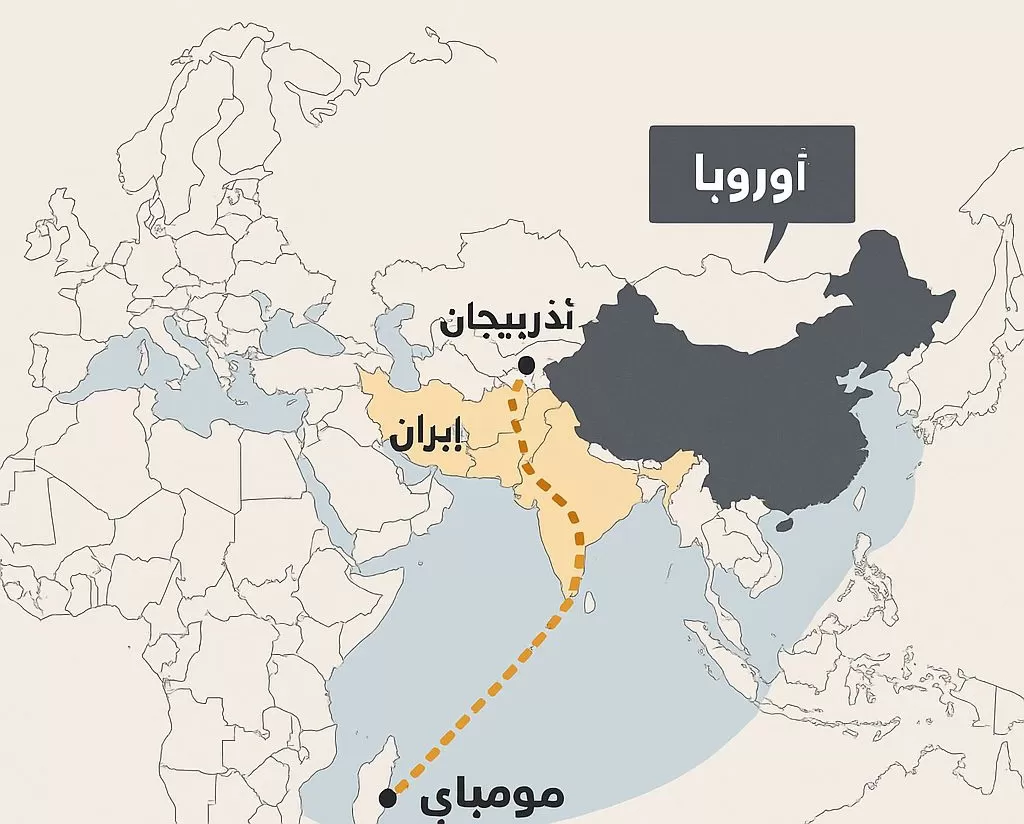
The Golden Road Between India and Europe: A Trade Route or a Strategic Battleground?
Arabian Sea Newspaper - Special
Amidst accelerating geopolitical shifts, the "Golden Route" emerges as one of the most important global trade corridors linking India and the European continent via Central Asia and the Middle East. However, what appears to be a vital economic corridor that enhances trade exchange is turning into an arena of tension and conflict between regional and global powers vying for influence and control over this vital network. This route holds great hopes for developing the Indian economy and promoting regional integration, but at the same time, it reflects the complex political challenges that may redraw the map of global trade and the balance of power in the 21st century. In this analysis, we review the political and economic dimensions of this vital corridor and address its potential impacts on regional stability and the global economy. The Economic Importance of the "Golden Route" India, as one of the fastest-growing economies in the world, seeks to strengthen its trade ties with Europe to provide broad and diverse export opportunities and to benefit from modern transportation networks that provide faster and cheaper access to goods. The "Golden Route" is based on the development of infrastructure such as railways, land roads, and seaports that pass through strategic countries in Central Asia and the Middle East, such as Iran, Turkey, and Azerbaijan. These corridors give India an important alternative outlet to traditional sea routes that pass through the Strait of Hormuz or the Suez Canal, which suffer from geopolitical risks and delays. The Political Dimension and the Fueling of Conflicts However, the "Golden Route" constitutes a strategic alternative that competes with other initiatives such as the Chinese "New Silk Road" (Belt and Road Initiative), which provokes the ire of regional and global powers seeking to extend their influence over vital trade routes. China, for example, sees these corridors as a threat to its commercial and political position, as they may lead to a reduction in the dependence of India and European markets on transport corridors controlled by China. This opens the door to diplomatic and trade conflicts, in addition to power struggles between major powers. The Impact of Conflict on the Global Economy Fueling conflicts over trade routes may raise transportation costs and increase the instability of global supply chains, which are still suffering from the repercussions of the Corona pandemic. Also, the countries located on this route are exposed to political and economic pressure from major powers to side with one party or another, which complicates opportunities for regional cooperation and threatens sustainable development projects. Local and Regional Challenges Axis countries such as Iran, Turkey, and Azerbaijan also face internal and regional challenges, such as economic sanctions, regional conflicts, and political divisions that may hinder the progress of the "Golden Route" or its transformation into a safe and stable corridor. Also, conflicts in some of these regions may negatively affect trade and encourage foreign powers to intervene directly or indirectly. Future Opportunities Despite the risks, the "Golden Route" holds promising opportunities to enhance regional economic integration, develop infrastructure, and increase joint investments, especially if the countries concerned succeed in establishing transparent and stable cooperation mechanisms away from regional conflicts. This route can contribute to diversifying options for India and Europe to avoid dependence on routes that may be subject to risks. The "Golden Route" is not just a new trade corridor, but a new arena for the struggle for influence in Asia and the world, between major powers seeking to ensure their economic and political interests. Success in investing in it depends on the ability of the parties concerned to overcome differences and build sustainable cooperation that promotes peace and development, or it will become a new point of tension that threatens regional and global economic stability.