

**Arab Sea - Follow-ups:**
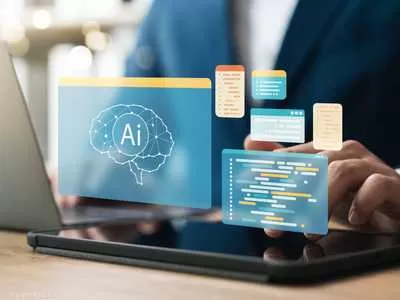
Artificial intelligence is no longer just a tool to aid technology or a means to improve the efficiency of industries, but has become a major player in the field of medicine, opening up new horizons for early diagnosis and prediction of diseases years before they appear.
While some see this breakthrough as a revolution that could change the face of medicine globally, others warn of the dangers of over-reliance on algorithms in matters that directly affect human life.
**Algorithms Uncover the Hidden**
In recent years, artificial intelligence systems have made remarkable progress in analyzing medical images and discovering subtle signs of chronic diseases that are difficult for the human eye to notice. For example, global companies have developed systems capable of analyzing lung images to detect indicators of lung cancer in its early stages with an accuracy rate exceeding 90 percent, a rate that sometimes exceeds traditional diagnosis.
And it did not stop at tumors, as algorithms have emerged that can predict the likelihood of developing heart disease by analyzing retinal images, or detect Alzheimer's early by studying speech patterns and facial movements.
**Promising Egyptian Experiments**
Ahmed Al-Badri, professor of radiology at the Faculty of Medicine in Qasr Al-Aini, says that the hospital has already started implementing an experimental project that relies on artificial intelligence to analyze CT scans of the liver.
He explained that "the algorithms helped us discover small tumors that were difficult to notice with the human eye, and also saved a lot of time in reviewing the hundreds of images that the doctor deals with daily."
He added: "This is not the only attempt in Egypt. There are research teams at Alexandria University working on developing systems to predict the complications of diabetes, based on data from Egyptian patients, which makes the results more accurate than foreign programs that are built on different environments."
He also points out that the National Research Center has started a parallel project in the field of chest diseases, which aims to build a national database of X-ray images, to be a reference for doctors and used in training algorithms in the future, "the idea."
He continued: "To have a healthcare system supported by artificial intelligence that suits the specificity of the Egyptian situation, instead of relying entirely on imported solutions that may not be compatible with the nature of our patients."
**Technology Expert Opinion**
Mahmoud Sabri, professor of computer engineering and artificial intelligence systems at Cairo University, says that "predicting diseases using algorithms is no longer a fantasy, but is the result of the availability of huge data and the development of computing capabilities, but the biggest challenge lies in how to ensure that this data is representative of all groups, so that bias in the data does not lead to wrong medical decisions."
He added: "Artificial intelligence is not a substitute for the doctor, but is more like a magnifying glass that helps him see what cannot be noticed by traditional methods. The future is heading towards cooperation between man and machine, not conflict between them."
**A Future Industry Worth Billions**
Ashraf Al-Bayoumi, an economist and professor of health economics at Cairo University, tells the "Sky News Arabia" website that investing in medical artificial intelligence is no longer a recreational option but a strategic necessity.
He explained that "global reports talk about a market that exceeds $180 billion by 2030, which means that countries that invest early in this industry will reap huge economic returns, in addition to the direct health benefits."
He added: "In the Arab world, artificial intelligence can reduce the bill for importing medicines and medical technologies if it is localized, especially since the cost of early diagnosis through algorithms is much less than the cost of treating diseases in their late stages."
Abdel Moneim stressed that Egypt has a real opportunity to lead this sector regionally if universities and research centers are integrated with start-up companies, and a legislative environment is provided that accommodates this technological leap. "The matter is no longer just a medical technology, but an integrated industry capable of creating new jobs and increasing the gross domestic product.
**The Future... Integration, Not Exclusion**
It is certain that artificial intelligence will not replace doctors in the near future, but will work alongside them as an aid that enhances the accuracy of diagnosis and saves time. The real challenge lies in how to integrate this technology in a responsible and balanced manner that ensures the benefit of its enormous capabilities, while maintaining the role of humans as the final decision-maker.
In the end, the question remains open: Can the day come when artificial intelligence tells us about the disease we may get in 10 years?
It may seem closer to science fiction so far, but it is gradually turning into a reality that imposes itself in diagnostic rooms and research centers around the world.