

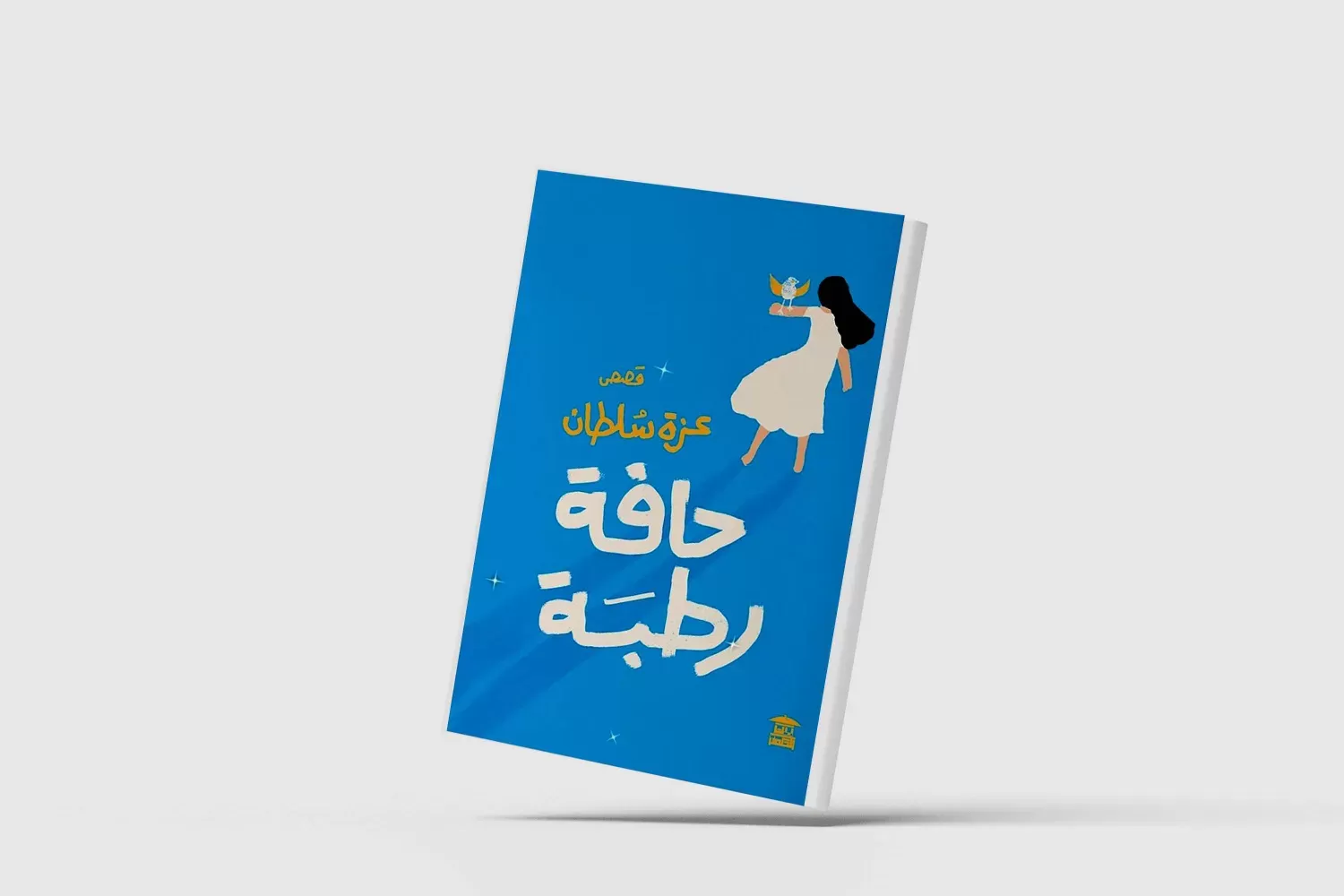
"A Wet Edge"... Stories of Women in Exile
Arabian Sea - Exclusive
The short story collection "A Moist Edge" by Egyptian writer Azza Sultan has been published by Dar "Beit El Hekma" in Cairo. It generally deals with the suffering in its various forms that women endure in exile, especially when they are required to find a job and meet the expectations of others, especially family and children. Thus, the forms of alienation, psychological and geographical, are varied across the 15 stories of the collection, where the suffocating, invisible siege is applied to the chests, and the tongue of the main characters speaks of what they feel of silent suffering that devours the soul. What is striking in these texts is that, despite the gloomy nature of their atmosphere, they are woven with delicacy and a subdued tone that did not get involved in blunt, direct expression, as the author managed to present the sadness in a transparent way so that we can see what is behind it, so we do not stand at the circles of worries, but rather the pain is dismantled deliberately to gradually reach its source and be able to see clearly. In the story that bears the name of the collection, there is a mother who borrows a trivial amount to bring gifts to her children, who will not understand how she returns from traveling and does not make them happy on the pretext that she did not find a job. In "Free Drink," the heroine fears that she will lose her ability to speak because she has not spoken to anyone because of the long nights of loneliness. In "A Wide Dress," the city's hooves trample the heroine's face and nerves after 7 months without getting a job, while some other titles came to indicate their content clouded with clouds of sorrow, such as "A Heart That Accommodates Sadness and Alienation," "Death on Another Mission," and "A Hot Day and a Long, Cold Corridor." From the atmosphere of the short story collection, we read: "Whenever despair extended some of itself into my soul, I tried to renew myself. Two days ago, I bought a new blouse without caring about the brand, although I was careful not to give the impression of its cheap price. I learned this trick thanks to the fashion advice from my ex-husband. After I chose the blouse, which was formal and suitable for several occasions and its colors were between beige and black, I received a call to schedule a personal interview. I almost danced in my place. I went to the closet, took out the blouse, and hugged it. My joy was great, and all the blame I had directed at myself for spending twenty dirhams to buy something I did not need disappeared. At the appointed time, I went to the indicated place and met the official. I have become very experienced in interviews. I was calm and smiling, the scent of my perfume filling the room around me. We discussed everything, and it seemed that he was convinced of my skills and saw me as the right person for the job, which qualified us to move on to talking about the salary. He tried to lure me to say my perception of the salary with a clear number, but I was more aware than to fall into this trap. We stayed in this circle for ten minutes. There were more than ten people working in the place. Most of them were between twenty and late twenties, boys and girls. And from a quick scan of their faces, they reflected different regions of the world. I was happy that I distinguished an Egyptian among them and began to feel comfortable that there was someone I would talk to in Arabic."