
"Egyptian Caricature"... A History of Satirical Criticism
Arab Sea Newspaper - News Updates
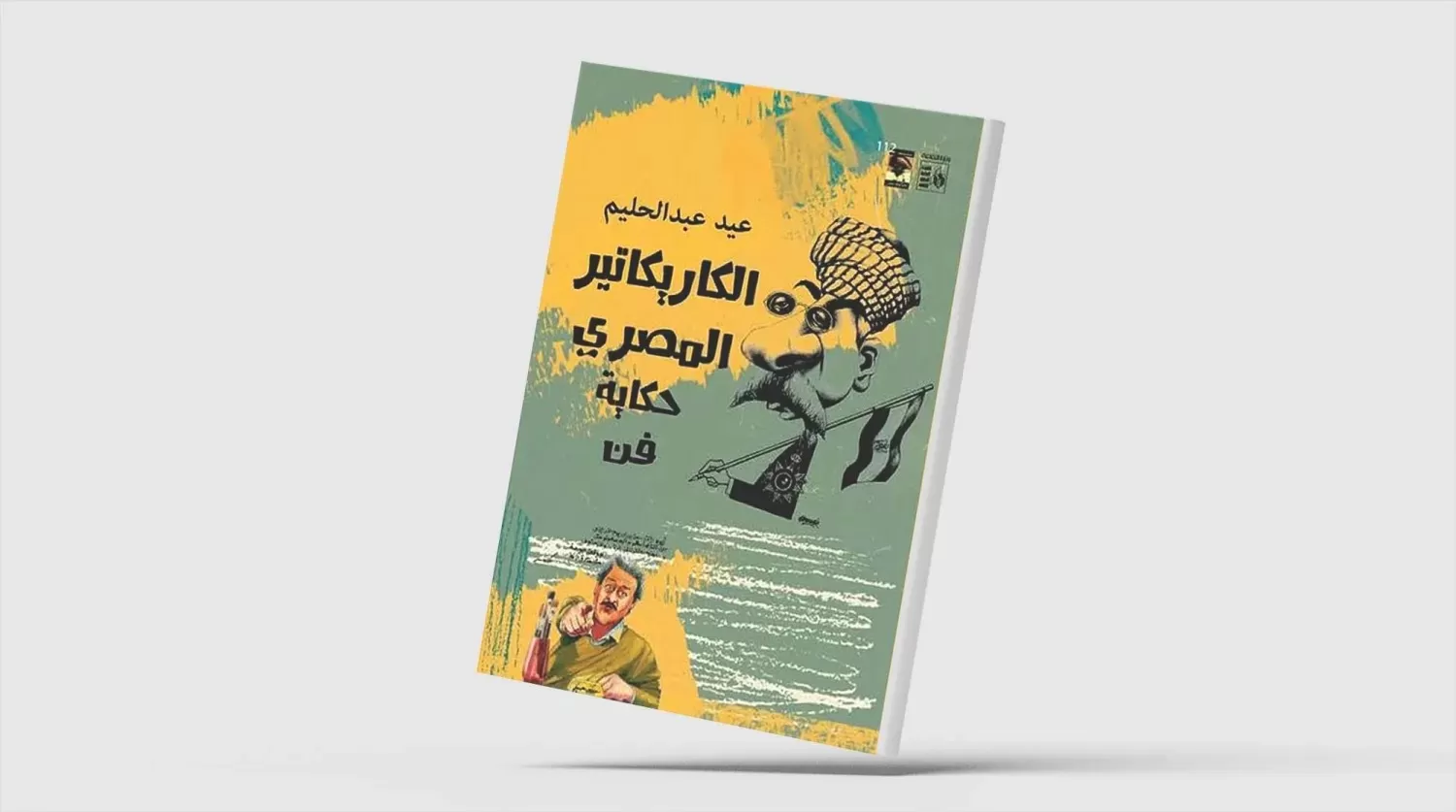
Newly published by the "Egyptian Identity" series of the General Authority for Cultural Palaces is the book "Egyptian Caricature: A Tale of Art" by poet and journalist Eid Abdel Halim, in approximately four hundred pages. It represents the culmination of four years of effort spent tracing this art, which throughout its history has presented attempts at social and political criticism of daily, political, and economic conditions in a satirical manner. The book is an attempt to analyze the characteristics of the Egyptian caricature school and its expression of society, and to make this art for the people. Abdel Halim presents an approach and analysis of forty contemporary Egyptian caricature artists, relying on personal interviews and conversations with many of them, to present a social vision of this art, especially after the January Revolution, and to provide a comparison between the generation of pioneers and the new generation of artists, and the differences between them. For example, the pioneers relied heavily on the text accompanying the drawing, while the new artists tend more towards silent drawing that is expressive in itself, without comments. Also, the pioneers had the idea of pairing an author or idea owner with an artist who implements it, as was the case in the Al-Akhbar newspaper school in the duality of writer Ahmed Ragab and artist Mustafa Hussein, where the former would put the idea and the latter would implement it, while the new generation does not tend to these duets, as the artist is the author, the idea owner, and the implementer. The book begins with a historical introduction about the origins of caricature art and its journey in Egypt, starting with Yaqoub Sanua, and Saroukhan, who is considered the first true caricature artist in the twentieth century, then Abdel Moneim Rakha, the first Egyptian to work in caricature art. The author then dwells at length on the various caricature schools in the Egyptian press, such as the "Rose al-Youssef" and "Sabah al-Khair" schools, which made a major breakthrough in caricature art, and their symbols of caricature artists such as Hassan Fouad, Hegazy, Salah Jahin, Hassan Hakim, Zuhdi al-Adawi, and Abdel Sami, the "Al-Gomhouria" school and its pioneer Toghan, and the "Akhbar Al-Youm" school led by Mustafa Hussein, in addition to the caricature artists who worked with the leftist press and emerged through it, such as Bahgat Othman. After this historical introduction, the body of the book begins, focusing on presenting forty contemporary caricature artists, especially those who emerged after the January 2011 Revolution, with the emergence of new press outlets and the spread of the private press, which provided an opportunity for a new generation and a different trend in caricature, dedicating a chapter to each of them dealing with his style, with examples of his most famous works, including Ahmed Ezz Al-Arab, Mustafa Rahma, Amr Selim, Abdullah, Makhlouf, Samir Abdel Ghani, Doaa El-Adl, Mohamed Omar, Ahmed Abdel Naim, Amr Fahmy, and other artists from several generations, but they share the emergence of a new sense after the revolution and expressing it, even though the seeds of this generation began with Amr Selim in the first issue of Al-Dostour newspaper, and he was a patron for the younger artists, and most of them owe him a debt of gratitude. The book also includes a chapter on the Egyptian Caricature Art Association and its role in sponsoring talented artists, and its publication of "Caricature" magazine for the first time under the leadership of artist Mustafa Hussein, when he was president of the association, and then continued after him under the presidency of artist Jumaa Farahat. There is another chapter on the International Caricature Art Festival, and a chapter on the Caricature Museum established by artist Mohamed Abla. Source: Al-Sharq Al-Awsat