


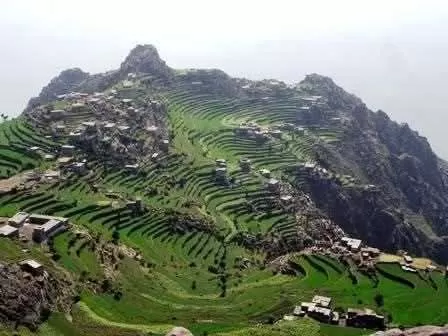
Mount Nabi Shu'ayb "The Highest Mountain" in the Arabian Peninsula
Arabian Sea Newspaper - Special
Arab Sea - Reports: Mount Nabi Shu'ayb is considered one of the holy mountains among the people of Yemen and all Muslims, due to its containing the shrine and tomb of the Prophet Shu'ayb, peace be upon him. The tomb is located in a small, closed room, its walls painted white, and there is old incense placed on the grave, indicating that the grave has been a sacred place since ancient times. It was visited by many visitors, considering the shrine of the Prophet Shu'ayb as one of the shrines of the righteous, to seek healing from diseases or to pray for a specific need. Mount Nabi Shu'ayb is one of the most prominent and highest mountains in the Arab world, rising to about 3,700 meters above the level of clouds, which causes a significant drop in temperatures during the winter, where it may drop below zero. Mount Nabi Shu'ayb is located in the Republic of Yemen, specifically in the city of Sana'a. Visitors are still flocking to the shrine and tomb of the Prophet Shu'ayb, despite the uncertainty as to whether this shrine is indeed the tomb of the Prophet Shu'ayb mentioned in religious books. Some say that there was another prophet named Shu'ayb whom God sent to guide the people of Yemen. In addition, there are shrines of our master Shu'ayb, peace be upon him, in Lebanon, Jordan, and Palestine, in addition to the shrine in Yemen. The Prophet Shu'ayb, peace be upon him, was mentioned in the Holy Quran several times, and his origin goes back to the Kingdom of Saudi Arabia, from a city called Madyan. The people of Madyan were known for cheating in financial transactions, as they did not give people their rights and manipulated measures and weights, leading to their increase or decrease when selling. Although God Almighty sent them the Prophet Shu'ayb, peace be upon him, to call them to goodness, truth, righteousness, and the oneness of God, they did not respond to him and denied his prophecy. The people of our master Shu'ayb worshiped the thicket, which is a group of trees, so Shu'ayb, peace be upon him, called them to abandon the worship of the thicket and worship God alone, without any partners. He also reminded them of the torment that befell the peoples of previous prophets, such as the people of Noah and Hud. However, only a few of them followed him, even threatening him with death and expulsion if he did not return to their religion. Then a torment from God descended upon them in the form of a black cloud that struck them. The Prophet Shu'ayb was known for his eloquence and rhetoric to the extent that he was called "the Preacher of the Prophets." Mount Nabi Shu'ayb has many historical sites that add to its historical richness. Among the most prominent of these sites: The location of the noble tomb: It is said to be located on the top of the mountain. Ancient ruins: There are many archaeological remains that testify to the ancient civilizations that passed through this place. Other religious sites: Several religious sites can be found that may be ancient temples or places of worship in the vicinity of the mountain. These sites add an element of historical and religious attraction to Mount Nabi Shu'ayb, making it a destination for visitors and researchers alike. Mount Nabi Shu'ayb contains many historical and religious sites that add to its tourist and religious appeal. These sites are located in the Bani Matar district of the Sana'a Governorate, on the Al-Hudaydah road, and rise 3,700 meters above sea level, making it the highest peak in the Arabian Peninsula and the Levant. Prominent sites: Nabi Shu'ayb Mosque: This mosque is one of the most important historical sites on the mountain. The mosque is built in ancient architectural styles and is a center for worship and religious gatherings. The mosque retains many inscriptions and decorations that confirm its ancient history. Dome of the Tomb of Nabi Shu'ayb: Includes the dome that is said to contain the tomb of the Prophet Shu'ayb bin Mahdam. The shrine has a high religious status and is considered an attraction for visitors and worshipers who come to seek blessings and supplication. Ancient ruins: The mountain includes several ancient ruins that are considered evidence of the civilizations that passed through the region. These ruins vary between ancient building stones and historical tombs, in addition to some writings and inscriptions that date back to those periods. Tombstones and rock inscriptions: There are many tombstones and rock inscriptions that bear names and dates dating back to ancient times, which enhances the historical value of the mountain. Importance of historical sites: These sites contribute to highlighting the rich history and cultural heritage of the region. It is considered a destination for visitors from researchers in history and archeology. - It adds a religious and spiritual character, making it a favorite place for pilgrimage and visitation. Mount Nabi Shu'ayb, which is located in the Bani Matar district of the Sana'a Governorate and rises 3,700 meters above sea level, is one of the most valuable and important mountains in religion and history. This peak is distinguished by being the highest in the Arabian Peninsula and the Levant, which adds to its unique geographical position in the region. Religious importance: Location of the Tomb of the Prophet Shu'ayb: It is believed that the summit of the mountain contains the tomb of the Prophet Shu'ayb bin Mahdam, which is a site of great religious importance for the worshipers of the region and those seeking blessings and supplication to God. This site makes the mountain a spiritual center and a destination for pilgrims and visitors. The Mosque and Dome: The mountain contains a historical mosque and dome, which are said to be related to the story of the Prophet Shu'ayb. The mosque continues to attract worshipers and devotees from all over the region, adding to its religious status. Historical importance: Historical Testimonies: The influence of Mount Nabi Shu'ayb extends to the depths of Yemeni history; in ancient times, it witnessed events that were recorded in the inscriptions and monuments on the mountain. Historians, especially Al-Hamdani, say that the Bani Matar region was the scene of many historical events, which increases the importance of this mountain. Prominent Archaeological Site: From stone inscriptions to ancient tombs, the mountain's archaeological site enhances its value and academic interest from researchers in the fields of history and archeology. It can be said that Mount Nabi Shu'ayb combines history, religion, and culture, which gives it great importance and makes it an invaluable destination for visitors and researchers alike. Popular Myths and Heritage Stories: Mount Nabi Shu'ayb occupies a special place not only because of its geographical location or religious history, but also because of the popular myths and heritage stories that have been passed down through generations. These legends add a spirit of mystery and attraction to the mountain, making it an interesting subject for many stories and narratives. The most prominent legend: Prophet Shu'ayb and Nebuchadnezzar: The legend says that the Prophet Shu'ayb bin Mahdam bin Dhi Mahdam Al-Hadhuri was sent to the people of Mukhallaf Hadhur to call them to faith, but they refused his call and killed him. It is said that God sent Nebuchadnezzar to destroy their country and rid them of God's wrath. This legend carries within it meanings of mercy and divine justice.