

Trump: "I was able to stop 6 wars, one of them related to Egypt"... What is the truth of the matter?
Arab Sea Newspaper - Special
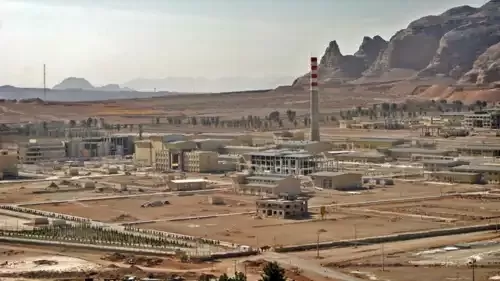
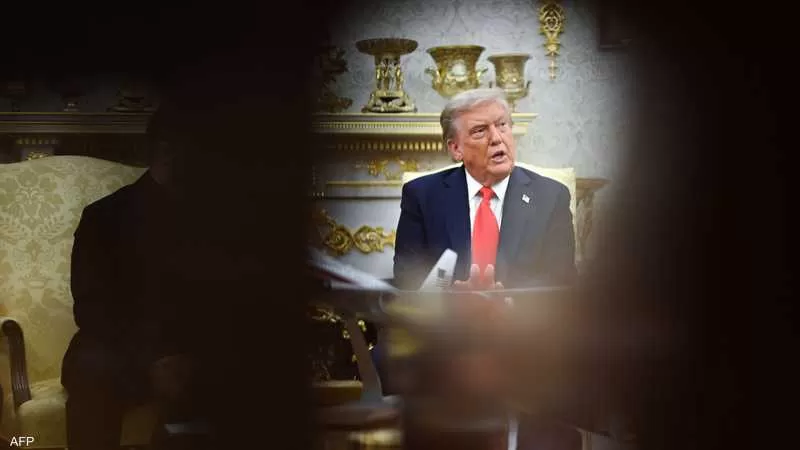
**Arab Gulf News - Translations:** U.S. President Donald Trump reiterated his claim that he was able to stop 6 wars, including one that almost broke out between Egypt and Ethiopia, and that the war between Ukraine and Russia would be the seventh, portraying himself as a peacemaker worthy of the Nobel Prize, amid questions about the nature of these wars and the accuracy of his statements. The "Axios" website pointed out that most of the conflicts that Trump claimed to have ended have not been fully resolved, or a formal agreement has not been signed, such as the conflict between Egypt and Ethiopia, although he has achieved several diplomatic breakthroughs since the beginning of his second term, amid his efforts to obtain the Nobel Peace Prize. The website explained that it sent a list of the conflicts mentioned by Trump to the White House to confirm whether they were the six wars intended, and the White House confirmed this and added a seventh conflict, and Axios clarified these conflicts. Egypt and Ethiopia Egypt and Ethiopia entered into a diplomatic crisis due to the Ethiopian Renaissance Dam, which was built on the Nile River, and Cairo fears that this dam will threaten its water security. The White House told "Axios" that this war should be considered resolved by Trump, despite the absence of a real war or the signing of any peace agreement. The American president claimed that a war would have broken out between Cairo and Addis Ababa if it were not for his intervention. Trump sought to end this crisis in his first term, but he failed to do so after Ethiopia withdrew from the negotiations. Ethiopia accuses Trump of inciting war after he stated that Egypt might "blow up the dam." Armenia and Azerbaijan Armenia and Azerbaijan signed a peace agreement in recent weeks at the White House under the auspices of Trump. The two countries have entered into a series of border disputes since the 1980s, the latest of which was in 2023. The two sides agreed to put an end to their conflicts and establish a major transit route between their territories, which will be called the "Trump Peace and International Prosperity Road." Democratic Republic of Congo and Rwanda The Democratic Republic of Congo and Rwanda have been fighting for years over their borders, which has led to the displacement of millions of people and created a humanitarian crisis. The two countries signed a peace agreement under American auspices at the White House last June. However, the Congolese army and the "M23" movement, supported by Rwanda, exchanged accusations of violating the agreement and carrying out attacks and mobilizing forces. Iran and Israel The United States supported Israel in its war against Iran, and last June bombed some of Iran's nuclear facilities. After that, the White House brokered a ceasefire agreement between Iran and Israel, but controversially, the United States was a party to the conflict. However, the White House claims that its attacks weakened the Iranian nuclear program and reduced the risk of a new conflict breaking out. But the revival of the conflict is likely, as Israel affirms its right to attack Tehran if it returns to building its nuclear program, while no progress has been made in the nuclear negotiations. India and Pakistan Last year, Trump announced that he had used American trade leverage to force India and Pakistan to de-escalate and sign an immediate and complete ceasefire. But India rejects any external interference in its conflict with Pakistan and denied Trump's claims that he intervened and stopped the ceasefire. Cambodia and Thailand Cambodia and Thailand announced last June that they had reached an agreement to end a 5-day border conflict that resulted in the death of dozens and the displacement of thousands. The ceasefire agreement was signed in Malaysia, after pressure from Trump and his threat to stop trade deals with the two countries, but the two countries exchanged accusations of carrying out attacks after the agreement. Serbia and Kosovo Kosovo seceded from Serbia in 2008 after a decade of war, but Serbia did not recognize its independence and remained in conflict over national identity and sovereignty. The Trump administration announced in 2020 that it had reached a limited agreement between the two countries called the "Washington Agreement," but it was a short-term agreement and limited to economic affairs, but the tension between the two countries remains, according to "Axios."