


IAEA: Nuclear materials may cause radioactive and chemical contamination inside Iranian facilities.
Arabian Sea - Exclusive
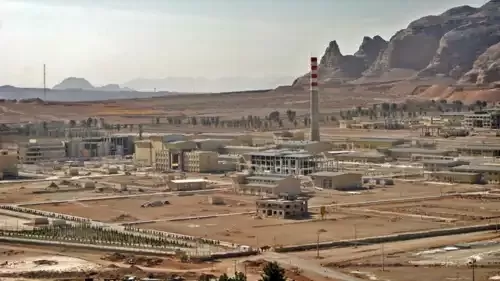
Written by Mohamed Mekki The American attack on three Iranian nuclear sites has raised concerns in the six Gulf Cooperation Council (GCC) countries (Saudi Arabia, Qatar, the United Arab Emirates, Bahrain, Oman, and Kuwait), as geography plays a role in fueling fears of the expansion and continuation of confrontations in the region. The reason behind the Gulf concerns lies in the fear of any radiation that may result from America's strike on Iranian nuclear sites. However, what instilled some reassurance and relief among the Gulf people and residents in the region came from the General Secretariat of the Gulf Cooperation Council and the International Atomic Energy Agency. Statement of the General Secretariat of the GCC The General Secretariat of the Gulf Cooperation Council announced "the absence of any abnormal radiation levels in any of the GCC countries so far (June 22, 2025)," and said in a statement that the environmental and radiation indicators are still within safe and technically permissible levels, in light of the events witnessed in the region today (Sunday, June 22, 2025). The General Secretariat of the GCC based its reassurance statement on the report of the Council's Emergency Management Center, and said that in coordination with the competent authorities in the member states, the situation and its developments will be continuously monitored through monitoring and early warning systems, and the reports issued by it will be published continuously as soon as they are received. What did the International Atomic Energy Agency say? In a report issued by the International Atomic Energy Agency on June 22, 2025, the same day that America launched attacks on Iranian nuclear sites, it confirmed that no increase has been recorded so far (today, June 22, 2025) in radiation levels outside the three Iranian nuclear sites that were subjected to American attacks, and renewed its call for restraint and taking the necessary steps to reach a diplomatic solution. The Director-General of the Agency, Rafael Mariano Grossi, called for an emergency meeting of the Agency's Board of Governors, scheduled to be held on Monday (June 23, 2025) "due to the increasing seriousness of the situation regarding nuclear safety and security." The Agency's report stated that the Iranian authorities informed the International Atomic Energy Agency that no increase in radiation levels outside the sites had been recorded after the recent attacks on three Iranian nuclear facilities, including the Fordow uranium enrichment site. Grossi said: "We do not expect any health consequences for people or the environment outside the targeted sites so far." He reported that the Agency will continue to monitor and assess the situation in Iran, and will provide further updates when additional information becomes available. According to the latest information verified by the International Atomic Energy Agency before the start of the attacks on Iran, the three sites targeted by the United States - which also include Isfahan and Natanz - contain nuclear materials in the form of uranium enriched to varying levels, which may cause radioactive and chemical contamination inside the facilities that were bombed. Grossi stressed that nuclear facilities "should never be attacked," and called for a cessation of hostilities until the Agency can resume vital inspections in the country, including the necessary verification of Iran's stockpile of highly enriched uranium. The Director-General of the Atomic Energy Agency stressed the importance of continuing to exchange information in a timely manner with Iran on issues related to nuclear safety, security and safeguards.