

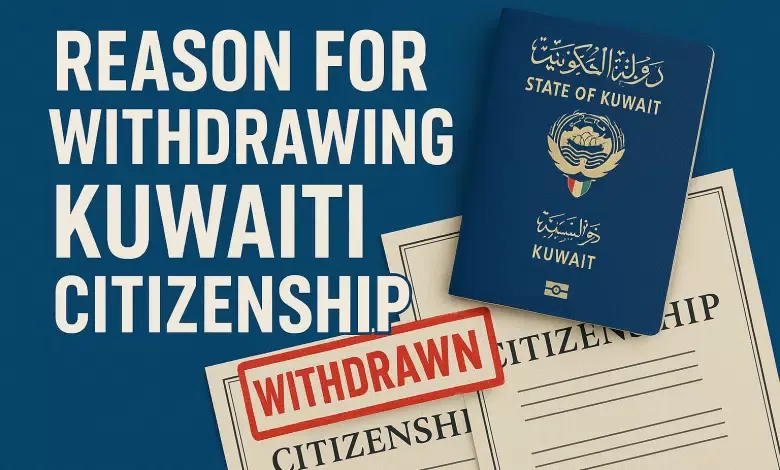
Revoking the Kuwaiti citizenship of Sheikhs Hezam and Dhaidan bin Hithleen sparks tribal and political controversy.
Arab Sea Newspaper - Special
The withdrawal of Kuwaiti citizenship from Sheikhs Hazam and Dhaidan bin Hithleen sparks tribal and political controversy. Kuwaiti authorities recently announced, through the official gazette, the withdrawal of citizenship from Sheikhs Hazam Dhaidan Khaled bin Hithleen and Dhaidan Khaled Mohammed bin Hithleen, along with all those who acquired it through them. The decision, confirmed by local media accounts, was issued without disclosing its direct reasons, which opened the door to a wide debate inside and outside Kuwait. The two Sheikhs belong to the Al bin Hithleen family, one of the most prominent tribal families in the Gulf, with a well-established presence in the Ajman tribe, which has played influential political and military roles since the 19th century, and has historically been closely linked to the Al Saud family in Saudi Arabia. The decision comes within the framework of an extensive government campaign that began in late 2024, targeting hundreds of cases that the authorities described as violating the conditions of citizenship. Citizenship was revoked from 363 people, along with those who acquired it by dependency, based on Article (21 bis A) of the Kuwaiti Nationality Law, which allows for the revocation of citizenship in cases of forgery, dual nationality, or what is considered a threat to national security. However, the withdrawal of citizenship from tribal figures the size of the bin Hithleen Sheikhs has sparked special reactions, as observers considered that the step has political and social dimensions that may redraw the relationship between the state and tribal components, while others stressed that it embodies the application of the law and the protection of national identity. On social media platforms, opinions were divided between supporters who see the decision as a "necessary reform" of the citizenship file, and opponents who consider it a "violation of the social fabric and a blow to historical symbolism" within the tribes. The controversy over the repercussions of the decision is expected to continue, especially with concerns about its impact on the rights of those affected and their families, at a time when calls are rising for more transparency in addressing this sensitive file that touches on the identity of individuals and the stability of society.