

Report: Israel is expanding its de facto borders beyond October 7
Arab Sea Newspaper - Special
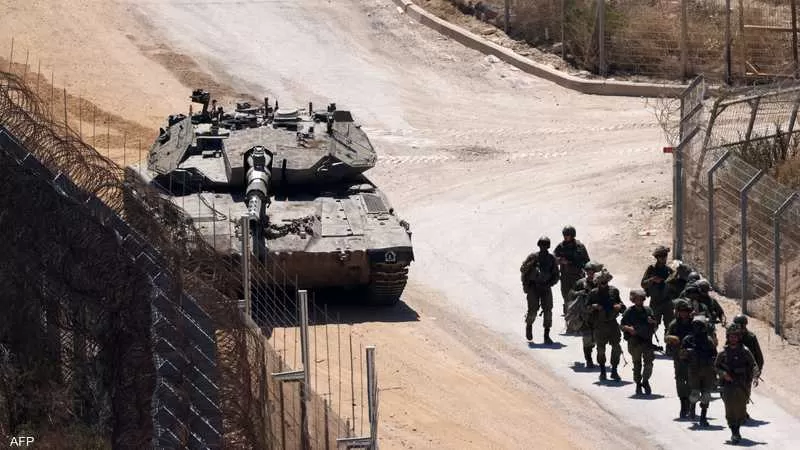
**Arab Gulf_Translations:** Satellite images and social media videos have revealed Israel's expansion of its network of fortifications beyond its borders, with the aim of creating buffer zones with Lebanon, Syria, and the Gaza Strip. NBC News quoted Israeli officials as saying that "the military doctrine approved after the October 7, 2023 attacks aims to prevent armed factions hostile to Israel from being stationed near its borders." However, critics warn that these operations have effectively expanded Israel's borders, violated the sovereignty of its neighbors, and increased the risk of igniting conflicts. Israeli Defense Minister Yoav Gallant said in a statement earlier this year: "Unlike in the past, the Israeli army does not evacuate areas that have been cleared and controlled. The army will remain in the security areas as a barrier between the enemy and the communities, whether in a temporary or permanent situation in Gaza, as well as in Lebanon and Syria." An NBC News analysis of satellite images and videos showed that the Israeli army has built an integrated network of fortifications outside its recognized borders with Lebanon, Syria, and the Gaza Strip. Gaza Satellite images reveal the presence of at least 40 active Israeli military bases inside Gaza, excluding aid distribution sites. The images also showed the deployment of dozens of small bases, some of which include communications sites and supply depots. Since the end of the truce, the Israeli army has established a new military corridor known as the "Morag Corridor" to control the area between Khan Yunis and Rafah in the southern Gaza Strip, about (15 kilometers) long, which has become a major point of contention in ceasefire negotiations. Israel continues to expand military bases in Gaza by storing more supplies, building tents, and mobilizing military vehicles in strategic locations. Lebanon In Lebanon, despite the ceasefire agreement in February, which stipulated the withdrawal of the Israeli army from Lebanon, Israel maintains five positions on Lebanese hills, according to satellite images and social media videos. Despite international protests, these sites have expanded since the truce, with trees being removed to erect protective walls and earth berms overlooking the valleys of southern Lebanon. The network quoted an Israeli army spokesman as saying: "The forces are present "temporarily" at these border sites," without specifying a date for withdrawal, or responding to questions about the contradiction with Gallant's statements about the need for permanent buffer zones. Syria In Syria, after the fall of the Bashar al-Assad regime in December 2024, the Israeli army continued to carry out strikes on military sites and support Druze gatherings. Along the border, Israel has established 6 military points in the UN buffer zone established after the 1973 war. Israel has established two additional bases or sites inside Syrian territory, and satellite images showed Israeli units digging a 20-mile (approximately 30-kilometer) trench that extends across half the region, as part of what it calls the "New East Strategy." Gallant had previously confirmed that the aim of these measures is to ensure that southern Syria remains demilitarized. Official Israeli videos also showed the deployment of army forces on the summit of Mount Hermon, which separates Syria and Lebanon, as the highest point on the eastern Mediterranean coast, clearly overlooking southern Lebanon and Damascus. Supporters of expanding the borders believe that it enhances security, while critics warn that this policy may provoke Israel's neighbors, exhaust its forces, and lead to the outbreak of wider conflicts.