

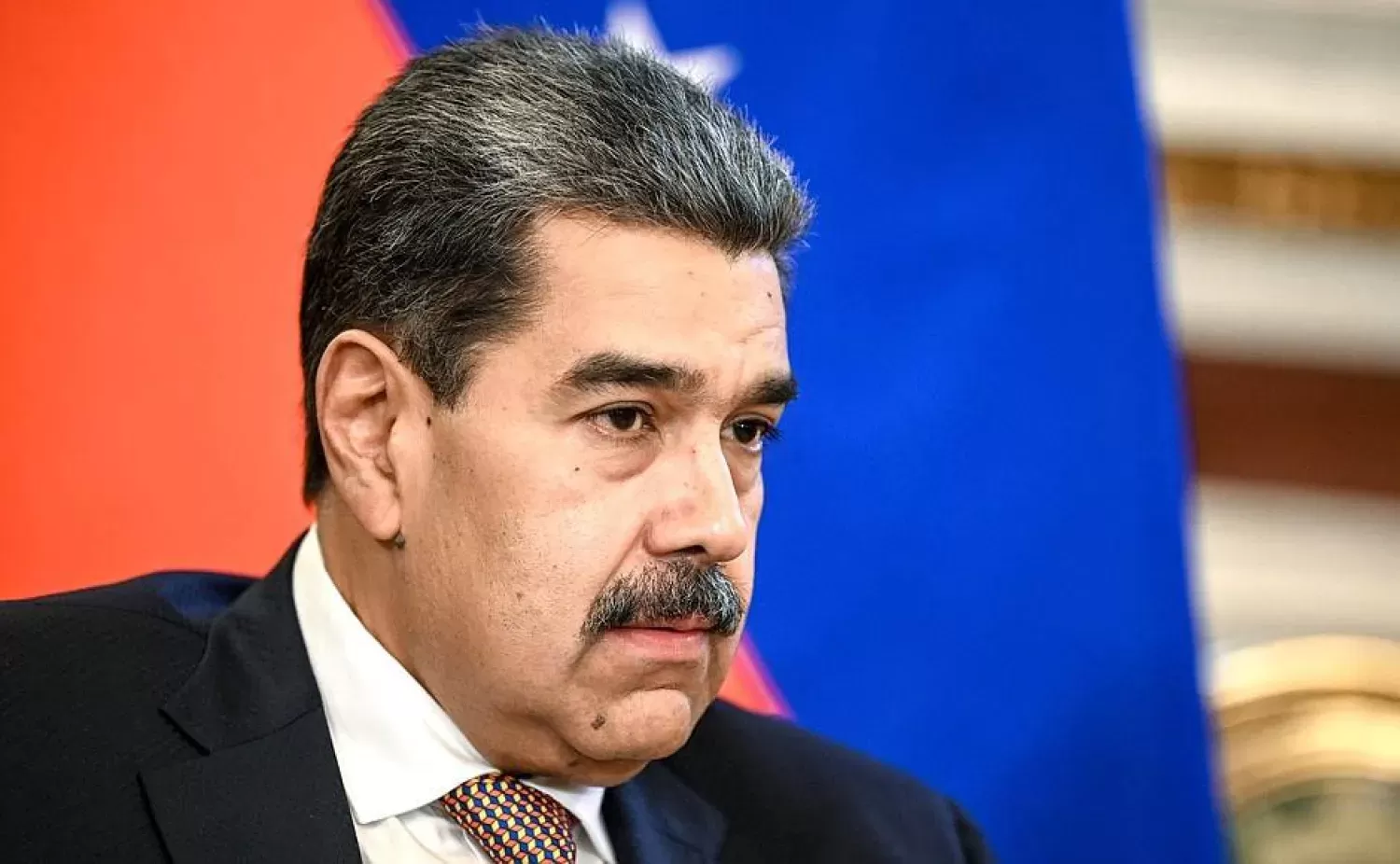
Washington earmarks $50 million for the capture of the Venezuelan president.
Arab Sea Newspaper - News Updates
Arab Sea - Follow-ups: U.S. Attorney General Pam Bondi announced a $50 million reward for information leading to the arrest of current Venezuelan President Nicolás Maduro. Bondi said Maduro poses a threat to U.S. national security. She noted that authorities have seized assets linked to him worth more than $700 million, including two aircraft and nine vehicles. She described the Venezuelan president as one of the "biggest drug traffickers in the world." She also accused the Venezuelan president of collaborating with criminal networks such as the Venezuelan "Tren de Aragua" and the Mexican "Sinaloa Cartel," and engaging in drug trafficking and organized crime activities. The Venezuelan government condemned the decision, and Foreign Minister Ivan Gil described the reward as "pathetic" and "ridiculous," considering it merely a "smokescreen" intended to confuse public opinion. This development comes in the context of a long-standing tension between Washington and Caracas for years, as the United States accuses Maduro of corruption and human rights violations, while Venezuela describes U.S. sanctions as an "economic war" to overthrow the government. In 2020, the U.S. State Department had allocated an initial reward of $15 million, before raising it to $25 million, reaching the current figure, which is the highest in the history of U.S. pursuits of a president in power. Observers said that Washington's announcement of a record $50 million reward for the capture of Venezuelan President Nicolás Maduro reveals an unprecedented level of escalation in relations between the two countries. The move, which came after U.S. accusations against Maduro of collaborating with transnational criminal networks, represents the culmination of a long path of pressure that included harsh economic sanctions and prosecutions. They pointed out that Caracas' angry response, describing the decision as "ridiculous" and "pathetic," reflects the Venezuelan government's awareness of the extent to which the head of power is being directly targeted, which may further complicate the suffocating political and economic crisis the country is experiencing. The U.S. move sends a dual message: tightening the noose on Maduro internally, and mobilizing international support for a policy of isolating his regime externally, in light of the displacement of millions of Venezuelans and the deterioration of living conditions, despite the country's oil wealth.